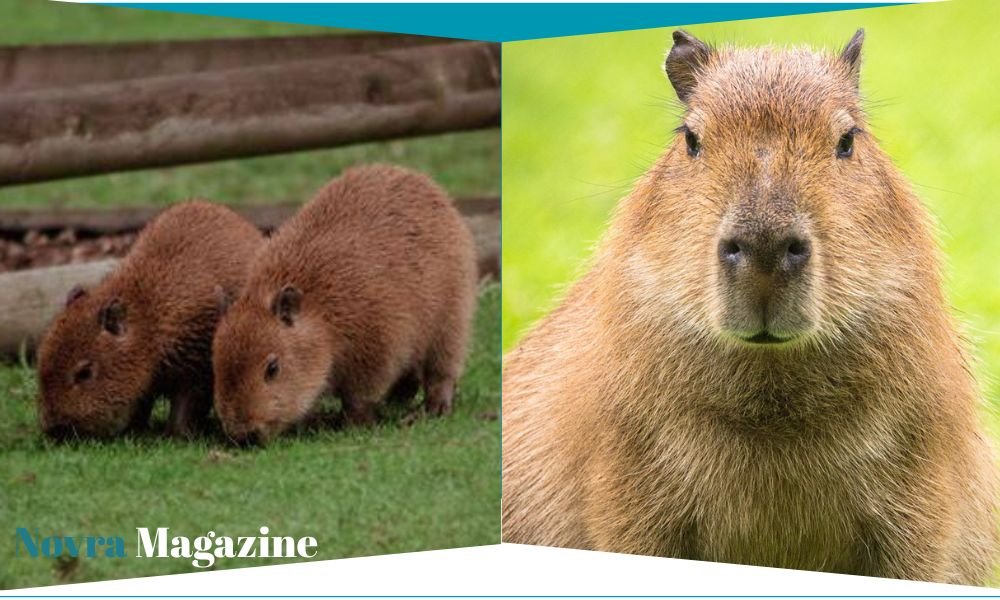
Have you seen the word Cadibara online and wondered what kind of animal it is? The answer is much simpler than it looks. Cadibara is commonly used online when people mean the capybara, the big, calm-looking animal that loves water. The correct and widely accepted English name is capybara. It is the largest living rodent in the world, but its peaceful face and relaxed behavior have helped make it look more like an internet star than a giant relative of the guinea pig.
What Is Cadibara?
Let’s understand this simply.
Cadibara is not the official scientific name of a separate animal. Major animal references use the spelling capybara.
When people search for Cadibara, they are usually looking for information about the capybara.
The animal’s scientific name is Hydrochoerus hydrochaeris. It belongs to the rodent group, which also includes animals such as guinea pigs, mice, and squirrels.
But there is one big difference.
A capybara can become much larger than the small rodents most people know. In fact, the San Diego Zoo describes it as the largest rodent in the world.
So, if you came here after seeing “Cadibara” in a caption, meme, video, or search result, you have most likely found the animal you were looking for.
Is Cadibara the Same as Capybara?
In normal online use, yes.
Cadibara is often treated as another spelling of capybara, rather than the name of another species.
Trusted wildlife references do not list Cadibara as a separate species. They use capybara for Hydrochoerus hydrochaeris and also recognize the smaller related species called the lesser capybara.
Think about it like this.
Someone may hear a word in a video before ever seeing it written down. Later, they may type the word the way it sounded to them.
That can create spellings that spread online even when they are not the official spelling.
For readers searching Cadibara, the important thing to remember is simple: the real animal behind the word is the capybara.
Why Does the Cadibara Look So Unusual?
A capybara has a look that is hard to forget.
Its body is large and round. Its legs are fairly short. Its head is wide, and it has small ears and a short-looking face.
Some people think it looks like a giant guinea pig. That comparison makes sense because capybaras and guinea pigs are related.
Adult capybaras can grow around 100 to 130 centimetres long. The San Diego Zoo says their weight can range from about 27 to 79 kilograms, depending partly on sex.
That means this is not a tiny animal you could mistake for a pet hamster.
A fully grown capybara is a large, strong mammal.
Where Does the Cadibara Live?
The real home of the capybara is mainly South America.
Capybaras are strongly connected with water. They can live near rivers, ponds, marshes, wetlands, and other places where water is easy to reach.
They are found across much of South America, with the common capybara native to the continent apart from Chile.
Water is not just somewhere a capybara goes for fun.
It is an important part of its life.
Capybaras use water to cool their bodies, move around, hide from danger, and find some of the plants they eat.
This is why pictures of capybaras sitting in ponds or slowly swimming are not unusual. That behavior is part of their natural way of living.
Can a Cadibara Really Swim?
Yes. Capybaras are very good swimmers.
Their feet are partly webbed, which helps them move through water.
Their eyes, ears, and nostrils also sit high on their heads. This means much of the body can stay underwater while the important parts of the head remain above the surface.
Even more surprisingly, a capybara can remain underwater for several minutes when it needs to hide from danger. The San Diego Zoo reports that it can stay submerged for up to about five minutes.
Imagine a very large guinea pig quietly disappearing into a pond.
That gives you a good idea of why the capybara seems so strange and interesting to many people.
What Does a Cadibara Eat?
Capybaras are herbivores.
That simply means they mainly eat plants.
Grass forms an important part of their diet. They also eat water plants and may eat other plant foods depending on what is available.
The San Diego Zoo Wildlife Explorers notes that grasses and water plants are important foods, while reeds, grains, melons, and squash may also be eaten when conditions change.
They do not need to hunt another animal for dinner.
Much of their day can be spent resting, staying close to water, or feeding on plants.
That slow lifestyle is one reason they often look so peaceful in photographs.
Why Are Capybaras Often Seen in Groups?
Capybaras are social animals.
This means they normally do not spend all of their lives alone.
A group may include males, females, and younger animals. Groups of around ten are common, although larger gatherings can happen, especially when environmental conditions bring many animals together.
Living together can help them watch for danger.
One animal may notice a threat before the others do.
Capybaras also make several sounds to communicate. These can include barks, chirps, whistles, huffs, and purr-like sounds.
So although viral videos sometimes make them look as if they simply sit quietly all day, their social lives are more active than they may first appear.
Why Does the Cadibara Look So Calm?
This is one of the biggest reasons people enjoy capybara videos.
The animal often appears relaxed.
You may see one sitting beside another capybara, resting in water, eating grass, or simply staying still while birds are nearby.
But it is important not to turn an internet image into a rule about every individual animal.
Capybaras are wild animals.
They can become frightened, defend themselves, or behave differently depending on the situation.
Their natural social behavior does help explain why they can often live peacefully near members of their own group. Still, “friendly with everything” is more of a popular internet image than a promise about every capybara.
Why Is Cadibara Popular Online?
There is something very easy to like about the capybara.
Its face often looks serious while its body seems completely relaxed.
It may sit in water without moving much. It may slowly chew grass. It may stand beside another animal and look as if nothing in the world is bothering it.
That makes excellent material for funny videos and memes.
People can add captions about staying calm, ignoring problems, relaxing, or simply enjoying life.
The animal needs to do almost nothing for the joke to work.
The spelling Cadibara has also appeared on websites and in online searches, usually in content that connects the term directly with capybaras. However, there is no good evidence that Cadibara has become a new official animal name.
For accurate wildlife information, capybara remains the spelling readers should use.
Are Capybaras Really Giant Guinea Pigs?
Not exactly, but the comparison has some truth behind it.
A capybara is not simply a guinea pig that grew very large.
It is its own animal.
However, the animals are related. Capybaras belong to the family Caviidae, the same wider family that includes guinea pigs and related animals.
So when someone looks at a capybara and thinks, “That looks like a giant guinea pig,” they are noticing a real family resemblance.
It is just important to remember that they are different animals with different needs and lifestyles.
How Big Can a Cadibara Get?
This is where the animal becomes even more impressive.
A capybara can reach roughly 1 to 1.3 metres in length.
Some adults can weigh more than 70 kilograms.
That can make a large adult heavier than many people expect when they first see one online.
Photos can sometimes make capybaras look small because they are sitting low to the ground.
Seeing one standing next to a person gives a much better idea of its real size.
Do Capybaras Have Tails?
Capybaras do not have the long, easy-to-see tail that many people expect from a rodent.
Their body has a rounded shape, and the tail is extremely reduced.
This helps give the animal its unusual appearance.
Its body can almost look like one large brown shape sitting on four short legs.
Add its small ears and calm expression, and it is easy to understand why the capybara has such a memorable look.
Are Capybaras Dangerous?
Capybaras are often described as calm animals, but that does not mean people should treat them like toys.
They are large wild mammals with strong teeth.
A frightened or stressed animal may protect itself.
The safest choice is to respect its space and follow the instructions of trained staff when seeing capybaras in a zoo or wildlife facility.
Cute does not always mean safe to touch.
That rule is useful for almost every wild animal.
Can You Keep a Cadibara as a Pet?
This question appears often because capybaras can look gentle in videos.
But keeping one is very different from watching one online.
Capybaras are large, social, water-loving animals. They need suitable space, access to water, the right food, and proper animal care.
Rules about owning exotic animals are also different from one country, state, or local area to another.
So a capybara should never be bought simply because it looks cute on social media.
A person would first need to check local law and understand the animal’s full welfare needs.
In many cases, enjoying capybaras at a responsible zoo or wildlife centre is much easier than trying to keep one at home.
How Long Does a Capybara Live?
Lifespan can change depending on the animal and the conditions in which it lives.
According to the San Diego Zoo, capybaras may live up to around 10 years in the wild and up to around 12 years under expert human care.
Food, predators, illness, habitat, and professional care can all affect how long an individual animal lives.
So there is no single age that every capybara will reach.
What Animals Hunt Capybaras?
Being large does not mean a capybara has nothing to fear.
Young capybaras can face danger from several predators.
Animals such as caimans, large snakes, birds of prey, and wild cats may prey on them. Adult capybaras can also be threatened by jaguars.
Water can become an important escape route.
If danger appears, a capybara may rush toward water and use its strong swimming ability to get away.
Suddenly, that relaxed animal from a funny video looks much better built for survival.
Is the Cadibara Endangered?
The common capybara is not currently considered an endangered species.
It is listed as Least Concern, meaning the species as a whole is not presently in one of the threatened categories used for animals facing a high risk of extinction.
That does not mean every local population is completely safe.
Habitat loss, hunting, and other human activity can still cause problems in some places.
This is why protecting wetlands and other natural habitats remains important.
What Is the Lesser Capybara?
Here is something many people do not know.
There is more than one living species in the genus Hydrochoerus.
The famous large animal is Hydrochoerus hydrochaeris, usually called the common or greater capybara.
There is also a lesser capybara, scientifically called Hydrochoerus isthmius. It is smaller and is found in a more limited area.
This is a real scientific difference.
By comparison, Cadibara is not the scientific name of a third species.
That is an important point because online spelling can easily make a simple topic seem more confusing than it really is.
Why Should We Use the Correct Spelling?
Using capybara helps readers find reliable information.
If you search using the correct name, you are more likely to reach zoos, wildlife organisations, scientific information, and established reference sites.
Using Cadibara is not a serious problem in a casual meme or search.
People can normally understand what it means.
But for school work, wildlife articles, animal research, or factual writing, capybara is the better spelling.
Think about it like this: Cadibara may help you find the trend, but capybara helps you find the animal.
What Makes the Capybara So Special?
The capybara brings together several surprising features.
It is a rodent, but it can become very large.
It spends a lot of time close to water.
It swims well.
It eats plants.
It lives socially.
And despite its impressive size, it has become famous online mainly because people see it as calm and cute.
That is a strange mix, and it helps explain the animal’s appeal.
A capybara does not need bright colours, huge horns, or a frightening roar to get attention.
Sometimes sitting quietly in a pond is enough.
Final Thoughts
The mystery of Cadibara has a very simple answer.
It is not a newly discovered giant animal or a secret species with a strange name. In most online uses, Cadibara refers to the capybara, the large, plant-eating, water-loving rodent from South America.
The correct spelling matters when you want reliable animal information.
But the unusual spelling also shows how internet language works. A word can be typed differently, shared again and again, and suddenly make thousands of people curious about the real thing behind it.
And in this case, the real animal may be even more interesting than the viral word.
FAQs About Cadibara
What does Cadibara mean?
Cadibara is commonly used online when people are referring to a capybara. It is not the standard scientific or English name of a separate animal.
Is Cadibara a real animal?
There is no officially recognised animal species named Cadibara. The animal normally meant by the term is the capybara.
What is the correct spelling: Cadibara or capybara?
The correct standard English spelling is capybara.
Is a capybara a rodent?
Yes. A capybara is a rodent and is the largest living rodent species in the world.
Where do capybaras live?
They live mainly in South America and are strongly connected with rivers, ponds, marshes, wetlands, and other areas near water.
Can capybaras swim?
Yes. They are strong swimmers and can stay underwater for several minutes when needed.
What do capybaras eat?
They mainly eat plants, including grass and water plants.
Are capybaras friendly?
They are social animals and often look calm, but they are still wild animals. People should give them proper space and treat them with care.
Can a capybara be kept as a pet?
Laws differ by location. Capybaras also need special care, plenty of space, social contact, suitable food, and access to water. They are not simple household pets.
Why is Cadibara popular online?
The word is connected with the online popularity of capybaras. Their calm expressions, unusual size, love of water, and relaxed-looking behavior make them popular in memes, pictures, and short videos.
For more info, visit novra magazine