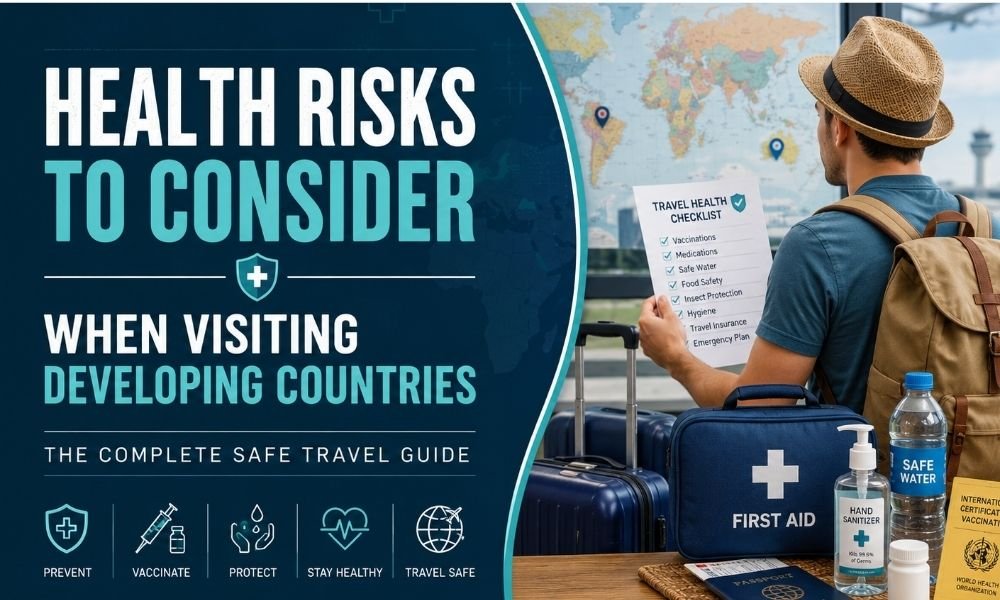
Health risks in developing countries include mosquito-borne diseases, food- and water-borne illnesses, airborne infections, rabies, heat and altitude sickness, and sunburn. Prevent these with vaccines, safe food and water, insect repellent, and travel insurance.
Why Traveling to Developing Countries Needs Extra Health Care
Health care in many low-income countries is not the same as back home. Hospitals may be far away or short on supplies. Tap water is often unsafe to drink. Mosquitoes can carry serious diseases.
You may meet germs your body has never faced. That is why a little planning goes a long way. Do you want to spend your trip sightseeing, or stuck near a bathroom?
Common Infectious Diseases Travelers Should Know About
Many travel illnesses come from bugs, food, water, or other people. Let’s split them into three groups.
Mosquito-Borne Diseases
A single bite can pass on a serious illness. These tiny bugs are the biggest health threat in many warm regions.
| Disease | How You Get It | Common Signs | How to Prevent |
| Malaria | Bites at night | Fever, chills, sweating | Anti-malaria tablets, bed nets |
| Dengue Fever | Bites in the day | High fever, aches, rash | Repellent, cover your skin |
| Zika Virus | Mosquito bites | Mild fever, rash | Repellent; risky in pregnancy |
| Chikungunya | Mosquito bites | Fever, joint pain | Repellent, long sleeves |
| Yellow Fever | Mosquito bites | Fever, yellow skin | Vaccine (required in some countries) |
Food- and Water-Borne Diseases
Dirty food and water cause more traveler illness than anything else. That ice cube or street snack can carry germs you cannot see.
| Disease | Where It Comes From | Common Signs | How to Prevent |
| Cholera | Unsafe water | Watery diarrhea, dehydration | Safe water, vaccine if advised |
| Typhoid Fever | Bad food or water | Fever, weakness, belly pain | Vaccine, safe food |
| Hepatitis A | Bad food or water | Tiredness, yellow skin, nausea | Vaccine |
| Traveler’s Diarrhea | Bad food or water | Loose stools, cramps | Clean food, wash hands |
| Dysentery | Dirty food or water | Bloody diarrhea, fever | Safe food, clean hands |
Airborne and Person-to-Person Diseases
Some illnesses spread through the air or by close contact. Crowded buses, markets, and trains raise your chance of catching them. Watch out for these:
- Tuberculosis (TB): Spreads through coughs and sneezes.
- Measles: Very catching, but a vaccine protects you well.
- Meningitis: Can turn serious fast; some trips need a vaccine.
- Flu and colds: Common on planes and in packed crowds.
Washing your hands often is one of the best ways to stay well.
Travel Vaccines and Preventive Medicine You May Need
Vaccines are your first line of defence. The shots you need depend on where you go and what you plan to do.
Common travel vaccines include:
- Hepatitis A and B
- Typhoid
- Yellow fever
- Rabies (for rural or animal-close trips)
- Cholera (for higher-risk areas)
You might need anti-malaria tablets too. Some vaccines take weeks to start working, so timing matters. Not sure what you need for your trip? A travel nurse can build a plan just for you. Book a travel health appointment at our travel clinic to get the right shots before you fly.
Food and Water Safety Tips to Avoid Getting Sick Abroad
Your stomach is often the first thing to suffer abroad. A few habits can keep it happy.
- Drink bottled or boiled water only. Check the seal on the bottle.
- Skip ice unless you know it is made from safe water.
- Eat hot, freshly cooked food. Heat kills most germs.
- Peel fruit yourself. Bananas and oranges are safe bets.
- Avoid raw salads washed in tap water.
- Wash your hands before every meal, or use hand gel.
One simple rule helps: boil it, cook it, peel it, or forget it.
How to Protect Yourself from Mosquitoes, Insects, and Animal Bites
Bites are more than itchy. They can pass on disease. Here is how to lower your risk:
- Use insect repellent with DEET on skin and clothes.
- Sleep under a bed net, best if treated with bug spray.
- Wear long sleeves and trousers at dawn and dusk.
- Stay away from stray animals, even cute ones. Dogs and monkeys can carry rabies.
- Clean any bite or scratch right away with soap and water.
Bitten or scratched by an animal? See a doctor fast. Rabies is deadly once signs start, but a jab soon after can save your life.
Environmental and Climate-Related Health Risks
The weather and land can test your body too. Hot, sunny, or high places bring their own problems.
- Heat and dehydration: Drink plenty of water and rest in the shade.
- Sunburn: Use strong sunscreen and wear a hat.
- Altitude sickness: In high spots like the Andes, climb slowly and drink plenty of water.
- Air pollution: Big cities can have thick smog. A mask helps if you have asthma.
- Unsafe swimming: Some rivers and lakes carry parasites. Ask locals first.
Post-Travel Health: Symptoms You Should Never Ignore After Returning Home
Feeling off after your trip? Some illnesses show up days or weeks later. See a doctor if you notice:
- Fever that will not go away
- Ongoing diarrhea or belly pain
- Yellow skin or eyes
- Odd tiredness or night sweats
- A rash that spreads
Tell your doctor where you traveled. Malaria, for one, can appear weeks after a bite. Early care makes a big difference.
Your Travel Health Checklist Before You Leave
Let’s put it all together. Use this checklist so nothing slips through the cracks.
Health Documents to Pack
- Vaccine records (yellow fever card if needed)
- Travel insurance papers
- A doctor’s note for any medicines
- Copies of your prescriptions
What to Put in Your Travel Medical Kit
- Pain relief and fever tablets
- Diarrhea medicine and rehydration salts
- Plasters, bandages, and antiseptic
- Insect repellent and sunscreen
- Personal medicines, in their original boxes
Emergency Contacts and Insurance Details
- Local emergency number
- Your insurance helpline
- Nearest embassy contact
- A family member back home
Last-Minute Health Preparation Tips
- Book your travel clinic visit 4 to 6 weeks early
- Refill all prescriptions
- Check the latest travel health advice for your country
- Pack medicines in your hand luggage