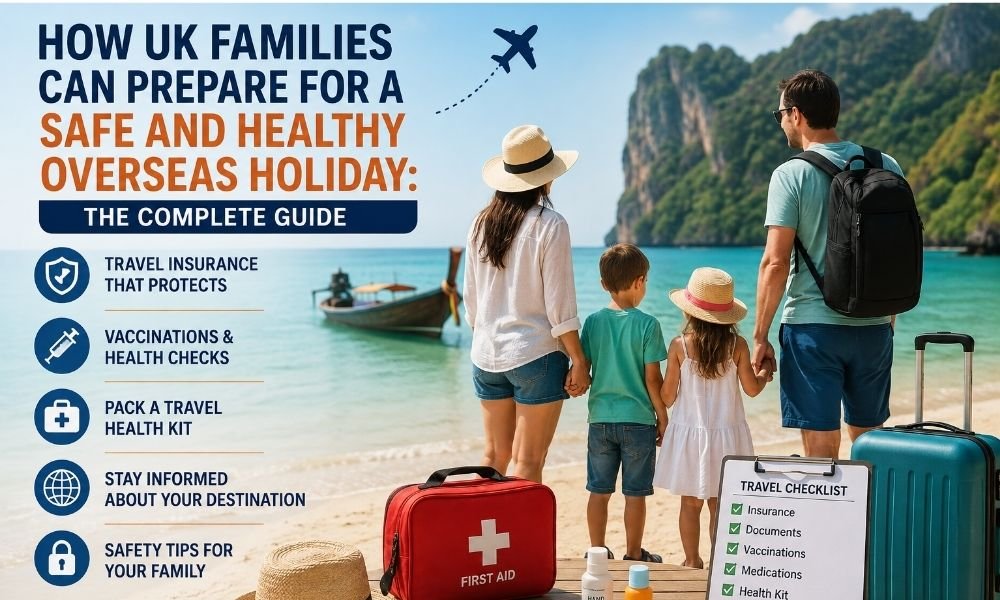
Planning a family holiday abroad is exciting but needs early preparation to avoid stress. Proper planning reduces problems and boosts enjoyment.
This guide covers health, packing, documents, and safety to help you travel confidently.
What Is the Best Way for Families to Prepare for a Safe and Healthy Overseas Holiday?
Start planning at least six to eight weeks before departure. For example, if you are travelling from my hometown of Liverpool, book an appointment with a local travel clinic, check every passport’s expiry date, confirm the visa requirements for your destination, and arrange suitable travel insurance. Pack a family health kit containing child-friendly medicines, sun cream, and oral rehydration sachets. Keep photocopies of all important documents, both printed and stored digitally. Read the sections below for step-by-step guidance on each area.
Why Planning Ahead Makes Family Travel Safer
Early planning helps fix issues early. Finding an expired passport weeks before travel is stressful but manageable; at the airport, it means no flight.
For families specifically, planning matters more because children’s needs change fast. A toddler, a teenager, and a grandparent travelling together need different things: different vaccinations, different food safety rules, different heat thresholds. Planning lets you account for all of them.
Research Your Destination Before You Travel
Many families skip this step entirely. They look at the hotel photos, check the beach reviews, and stop there. That leaves a lot of gaps.
Before you travel, look up the UK government’s travel advice page for your destination. It is updated regularly and covers safety, entry rules, and health warnings.
Entry Requirements, Visas, and Passport Validity
Most countries require your passport to be valid for at least six months beyond your return date. Some require three months. Check the specific rule for your destination, not what you remember from last time.
| Destination | Passport Validity Required | Visa Needed for UK Citizens? |
| Spain (Schengen) | Valid for duration of stay | No (up to 90 days) |
| Turkey | 6 months beyond return | No (up to 90 days) |
| USA | Valid for duration of stay | ESTA required |
| India | 6 months beyond return | Yes, apply in advance |
| Thailand | 6 months beyond return | No (up to 30 days) |
Check your children’s passports too. Children’s passports expire after five years, not ten.
Local Health Risks and Vaccination Recommendations
Some destinations carry risks that simply do not exist in the UK. Malaria, typhoid, hepatitis A, and yellow fever are the common ones, and they are entirely preventable with the right vaccinations or tablets.
Weather, Climate, and Seasonal Considerations
Travelling to Southeast Asia during monsoon season or to Egypt in August with young children? Both are manageable, but only if you plan around them. Check average temperatures and rainfall for the specific months you are travelling, not just the general climate.
A child dehydrates much faster than an adult in extreme heat. Elderly travellers are more vulnerable to heatstroke. Knowing what to expect means you can pack accordingly and plan your days to avoid midday heat.
Schedule Medical Checkups and Necessary Vaccinations
Book a travel clinic appointment 6-8 weeks before departure. This is true for:
- Families travelling to Africa, Asia, or Latin America where vaccine-preventable diseases are more common
- Children under five whose immune systems are still developing
- Elderly grandparents joining the trip who may have different health considerations
- Anyone with a long-term health condition; some destinations pose specific risks for people with asthma, diabetes, or heart conditions
At the appointment, a travel health nurse will review your destination, your family’s vaccination history, and recommend what is needed. Many routine NHS vaccinations may already be up to date; the clinic will confirm.
Prepare Important Travel Documents
Lost or wrong documents cause a significant number of holiday disasters every year. Get this right before you leave.
Documents every family member needs:
- Valid passport (check expiry dates for everyone)
- Visa or ESTA if required
- Travel insurance policy number and emergency contact
- European Health Insurance Card (EHIC) or Global Health Insurance Card (GHIC) still valid in some countries
- Hotel booking confirmations
- Flight tickets (printed and on your phone)
- Travel vaccination certificates (yellow fever in particular is checked at entry in some countries)
Make two copies of everything. Leave one set at home with a trusted person. Keep the other in your hand luggage separate from your actual documents.
Food and Water Safety Tips for Families
Travellers’ diarrhoea is the most common illness affecting people abroad. Children are more vulnerable because dehydration sets in faster for them. A few practical habits cut the risk significantly.
Safe Drinking Water Practices
In countries where tap water is not safe to drink, the rule is simple: bottled water only for drinking, brushing teeth, and making up baby formula. Check that bottle seals are intact before you open them.
Avoid:
- Ice in drinks unless you are certain it is made from filtered water
- Drinks from street vendors unless the bottle is sealed
- Tap water in hotel rooms (even 4-star hotels, in some destinations)
Choosing Family-Friendly Restaurants
Busy restaurants with high table turnover tend to be safer. Food that sits in warming trays for hours is a risk. Look for places where the food is cooked fresh in front of you; street food that is grilled to order is often safer than a buffet that has been standing for two hours.
Ask how dishes are prepared if you are unsure. Most restaurants in tourist areas are used to these questions.
Preventing Food Poisoning
The golden rule abroad: cook it, peel it, or leave it. Raw salads washed in local water, unpeeled fruit from market stalls, and undercooked meat are the most common culprits.
Children’s immune systems are less developed. Be stricter with what they eat than you might be for yourself.
Frequently Asked Questions
How far in advance should families prepare for an overseas holiday?
Start preparations 6-8 weeks before travel, or 8-12 weeks for complex health needs.
What should be included in a family travel first aid kit?
Carry basic meds, sun cream, and destination-specific health items.