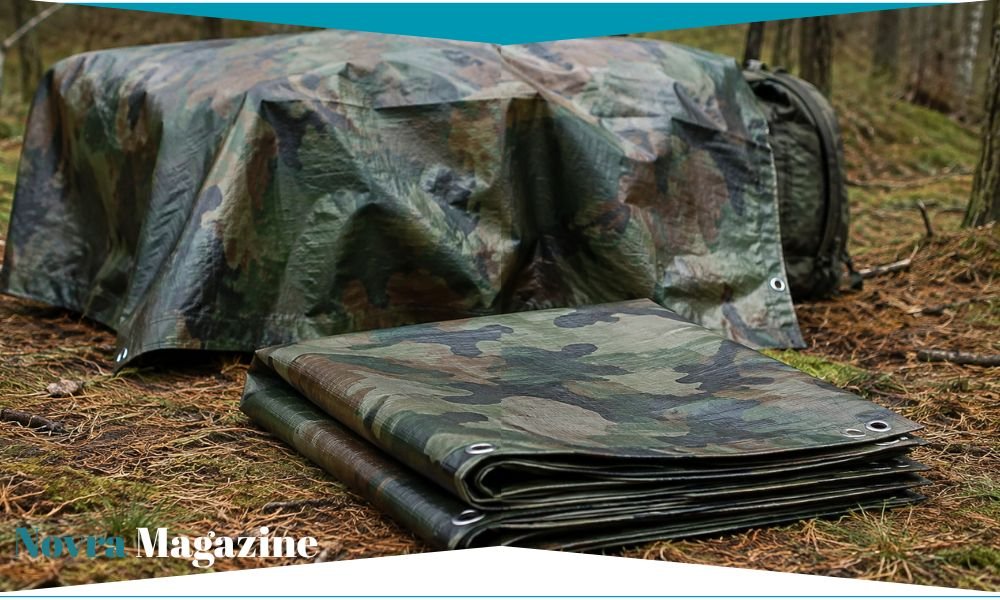
Tarnplanen may look like the name of a new outdoor brand, but it is actually much simpler. The word comes from German and refers to camouflage tarps or covers that help protect things while making them less easy to see. The German dictionary Duden explains that tarnen means to hide or disguise something by covering it or helping it blend with its surroundings. Modern Tarnplanen can appear in camping, hunting, wildlife watching, outdoor work, and military settings. However, not every camouflage tarp has the same material, strength, or level of water protection.
Quick Bio of Tarnplanen
| Detail | Information |
|---|---|
| Name | Tarnplanen |
| Language | German |
| Singular Form | Tarnplane |
| Simple Meaning | Camouflage tarps or camouflage covers |
| Main Purpose | Covering, protection, and visual concealment |
| Common Uses | Camping, hunting, wildlife watching, outdoor work, military use |
| Common Materials | Polyester, coated fabric, canvas, nylon, or similar tarp materials |
| Waterproof? | Depends on the exact product |
| Common Patterns | Woodland, green, brown, desert, or other camouflage styles |
| Historical Link | Military camouflage and shelter systems |
| Modern Civilian Use | Outdoor shelter, gear cover, shade, ground cover, privacy |
| Important Fact | Tarnplanen is a general German term, not one single brand |
What Does Tarnplanen Mean?
The meaning becomes easy when we look at the German words behind it.
Tarnen means to camouflage, disguise, or make something harder to notice. Duden explains it as protecting something from being seen or recognized by covering it or matching it with its surroundings.
Meanwhile, Plane means a large protective sheet made from strong, water-resistant material.
Duden says a Plane can cover things such as open vehicles or boats to protect them from weather. Its plural is Planen.
So, in very simple English:
Tarn + Planen = camouflage tarps or camouflage covers.
The singular form is Tarnplane.
The plural is Tarnplanen.
Is Tarnplanen a Real German Word?
Yes, the parts of the term are real German words, and German retailers use Tarnplane for real camouflage covers.
For example, Decathlon Germany sells a product described as a “Jagd-Tarnplane,” meaning a hunting camouflage tarp.
Other German stores also use Tarnplane for camouflage-patterned tarps and outdoor shelters.
Therefore, Tarnplanen should not be treated as a mysterious new internet invention.
It is a practical German term.
However, many English-language websites only started publishing long SEO guides about the keyword during 2025 and 2026.
That newer search trend may explain why the word suddenly looks unfamiliar to English readers.
What Is a Tarnplane?
A Tarnplane is a protective tarp with camouflage colors or patterns.
It usually has two jobs.
First, it helps cover a person, object, shelter, or piece of equipment.
Second, its pattern helps the covered area blend better with the background.
A normal bright blue tarp may protect something from rain.
However, it can be easy to notice.
A woodland Tarnplane may offer similar cover while looking less obvious among trees, leaves, and dark ground.
That is the main idea.
Protection and camouflage work together.
What Is the Difference Between Tarnplane and Tarnplanen?
This is just a German grammar difference.
Tarnplane means one camouflage tarp.
Tarnplanen means more than one.
Duden confirms that the German noun Plane becomes Planen in the plural.
So, if someone says:
“eine Tarnplane,” they mean one tarp.
If they say:
“mehrere Tarnplanen,” they mean several camouflage tarps.
English websites often use Tarnplanen as if it were the name of the whole product category.
That is understandable, but the original German form is plural.
Why Were Camouflage Covers Created?
People have tried to hide objects for a very long time.
However, modern military camouflage became far more organized during the First World War.
The Imperial War Museums explains that concealment and deception had existed earlier, but armies made camouflage much more systematic during World War I.
The French Army created a dedicated camouflage unit in 1915.
The British Army followed with its own camouflage section in 1916.
Aircraft made hiding even more important.
A position that looked hidden from the ground could still be visible from above.
As a result, armies used paint, nets, covers, and irregular patterns to break up shapes and make equipment harder to spot.
Were Camouflage Tarps Used by German Forces?
Yes, Germany has a long history of camouflage shelter material.
One important example is the Zeltbahn 31.
The German Tank Museum explains that the Reichswehr introduced triangular shelter sheets with camouflage patterns in 1931.
The pattern became known as Buntfarbendruck 31 and later became closely linked with the well-known splinter-style camouflage look.
A Zeltbahn could serve as a shelter sheet.
People could also combine several sections to create a larger tent.
This historical item is not exactly the same as every modern Tarnplane.
However, it shows the long German tradition of combining shelter material with camouflage.
Is a Tarnplane the Same as a Zeltbahn?
Not always.
A Zeltbahn is a shelter sheet with a more specific military history.
A Tarnplane is a broader term for a camouflage tarp or protective cover.
Think about it like this.
Every old camouflage Zeltbahn can act like a kind of camouflage cover.
However, every modern Tarnplane is not automatically a historical Zeltbahn.
Modern Tarnplanen can be square, rectangular, light, heavy, coated, or made for very different outdoor jobs.
The older Zeltbahn had its own shape, fittings, and military design.
So, the terms overlap, but they are not always identical.
What Materials Are Tarnplanen Made From?
There is no single material.
The exact fabric depends on the product.
Modern outdoor Tarnplanen may use polyester or other synthetic fabrics.
For example, Decathlon’s camouflage hunting tarp uses polyester and is sold as water-resistant outdoor cover material.
Other tarps may use:
polyester,
nylon,
canvas,
polyethylene,
or coated fabric.
Heavier materials can offer more strength.
However, they also weigh more.
Light fabric is easier to carry, but it may not handle rough use as well.
Therefore, buyers should check the actual product details instead of assuming every Tarnplane performs the same way.
Are Tarnplanen Waterproof?
Some are waterproof.
Others are only water-resistant.
That difference matters.
A water-resistant tarp can handle some rain.
A truly waterproof product should block water more strongly when used correctly.
Decathlon describes one of its hunting Tarnplanen as suitable for protecting hunting equipment in rain and lists water resistance among its features.
Still, seams, holes, age, coating, and setup can affect real performance.
Water may also collect if a tarp lies completely flat.
So, never assume camouflage automatically means waterproof.
Always check the product label.
What Are Tarnplanen Used for in Camping?
Campers can use camouflage tarps in many simple ways.
A tarp can provide extra cover above a sleeping area.
It may also protect equipment from light rain.
Some people use tarps as ground sheets.
Others stretch them above a campsite for shade.
A Tarnplane adds camouflage color to those normal tarp functions.
However, campers should remember that a tarp is not always a full tent.
Wind, cold, insects, and heavy rain may need more protection.
For normal family camping, comfort and weather safety should come before camouflage.
Can Tarnplanen Be Used as a Shelter?
Yes, some can.
Outdoor tarps often include reinforced edges, loops, or eyelets that allow users to tie them between suitable support points.
A historic Zeltbahn also shows how one fabric item can have more than one shelter use. Germany’s older Zeltbahn 31 could form tents when several sections were joined.
Modern products may work differently.
Some are mainly covers.
Others are sold as camping tarps.
Therefore, buyers should check whether the maker actually designed the product to carry tension as a shelter.
A thin decorative camouflage sheet may not safely do the same job.
Why Do Hunters Use Tarnplanen?
Hunters often want to reduce how easily animals notice movement and shape.
Camouflage covers can help create a visual screen.
They can also protect gear from weather.
Decathlon’s German hunting range includes a camouflage Tarnplane with a realistic pattern and light outdoor construction.
Still, hunters must follow local laws.
Rules can differ by country, state, land owner, and hunting season.
A camouflage tarp does not give someone permission to enter land or hunt where the activity is restricted.
The product is simply outdoor equipment.
Are Tarnplanen Useful for Wildlife Photography?
They can be.
Wildlife photographers often try to avoid disturbing animals.
A camouflage screen may reduce the visual outline of a camera setup or photographer.
However, good wildlife behavior matters more than camouflage.
Animals need space.
Nests and young animals should not be disturbed.
A tarp should never become a reason to move too close.
For many photographers, staying quiet and keeping a safe distance may matter more than wearing or using a certain pattern.
So, Tarnplanen can help with visual cover, but responsible behavior still comes first.
Can Tarnplanen Protect Outdoor Equipment?
Yes.
This is one of their simplest uses.
A tarp can help protect items from:
light rain,
dust,
sun,
leaves,
and dirt.
Duden’s definition of Plane itself centers on protecting objects from weather.
A camouflage version adds a less noticeable outer look.
People may use such covers for outdoor supplies, garden items, or camping gear.
However, moisture can still become trapped underneath.
Good airflow matters when covering items for a long time.
Otherwise, mold or rust can become a problem.
Are Tarnplanen Only for the Military?
No.
Military history helped make camouflage covers well known.
However, civilians also use them.
Today, real German retailers sell camouflage tarps for hunting and camping rather than only military work.
Outdoor users may choose them for:
camping,
garden cover,
wildlife watching,
hunting,
shade,
equipment cover,
or decoration.
So, owning a camouflage tarp does not automatically mean someone has a military purpose.
It is simply a type of outdoor cover.
How Are Tarnplanen Different From Camouflage Nets?
A tarp and a net are not the same thing.
A Tarnplane normally uses a more solid sheet of material.
That makes it useful for blocking rain or covering a surface.
A camouflage net has many open spaces.
Air and some light can pass through it.
Nets can help change an object’s outline, but they may provide little protection from rain.
Military camouflage historically used many forms of concealment, including nets and covers. The Imperial War Museums notes that camouflage aimed to change shape, outline, shade, and color so objects blended better with the background.
So, each material has a different job.
What Camouflage Patterns Do Tarnplanen Use?
There is no single pattern.
A camouflage tarp may use:
green woodland colors,
brown forest colors,
desert tones,
leaf-style prints,
digital shapes,
or other outdoor patterns.
The German Tank Museum explains that camouflage patterns change depending on the area and weather.
That is logical.
A bright green pattern may work well among summer plants.
The same pattern may stand out badly in dry grass or snow.
Camouflage works best when its colors and shapes fit the background.
Therefore, there is no one pattern that hides equally well everywhere.
Is Flecktarn the Same as Tarnplanen?
No.
Tarnplanen describes the camouflage tarp itself.
Flecktarn refers to a type of camouflage pattern.
A tarp could use a Flecktarn-style design.
However, another Tarnplane might use a completely different pattern.
Think about a shirt.
“Shirt” tells you what the object is.
“Striped” tells you what the pattern looks like.
In the same way, Tarnplane describes the object, while a camouflage name can describe its visual pattern.
Keeping those ideas separate makes product searches much easier.
Are All Tarnplanen Military Grade?
No.
“Military grade” is often used as a marketing phrase.
A cheap camouflage picnic tarp and a professionally made military concealment system can look similar in photographs while performing very differently.
Modern civilian products can be thin and light.
Others are made for repeated outdoor use.
Some military systems may also consider things beyond visible color, such as heat or sensor detection.
Therefore, buyers should look at real specifications.
Check:
material,
weight,
water rating,
tear strength,
edge reinforcement,
and intended use.
The camouflage print alone says very little about overall quality.
Are Tarnplanen UV Resistant?
Some products may resist sunlight better than others.
However, the answer depends on the fabric and coating.
Long exposure to sunlight can fade many outdoor materials.
Heat can also weaken some plastics over time.
Therefore, buyers should look for a clear UV-resistance claim from the maker if sunlight protection matters.
Do not assume every camouflage tarp blocks UV simply because it creates shade.
Shade and tested UV resistance are not exactly the same thing.
For long outdoor storage, the maker’s stated limits matter.
Are Tarnplanen Fireproof?
Not automatically.
This is an important safety point.
Different fabrics react differently to heat and flame.
Some special products may include flame-resistant treatments.
Others can melt, burn, or become damaged.
Therefore, never place an ordinary Tarnplane close to:
open fires,
hot stoves,
grills,
or other strong heat sources.
If fire resistance matters, choose a product with a clear safety rating.
A camouflage pattern does not make fabric fire-safe.
Can Tarnplanen Be Used in a Garden?
Yes.
A camouflage tarp can work like another outdoor cover around the home.
People may use one to cover equipment or create temporary shade.
A camouflage pattern can also look less bright than a blue or orange construction tarp.
Still, think about the plants below it.
A solid tarp can block light and airflow.
It can also trap heat.
Therefore, do not cover living plants for long periods unless the setup suits their needs.
For normal garden use, practical protection should matter more than camouflage.
How Do You Clean a Tarnplane?
Always check the maker’s care instructions first.
Many outdoor tarps only need simple cleaning.
Loose dirt can often be brushed away.
Light mud may come off with water and mild cleaning.
Harsh chemicals can damage waterproof coatings or fade colors.
The tarp should also dry fully before long storage.
Folding wet fabric and leaving it closed can encourage bad smells, mildew, or material damage.
Simple care can help a Tarnplane last longer.
How Should You Store Tarnplanen?
Clean and dry storage is best.
Remove heavy dirt first.
Then allow the tarp to dry fully.
Fold or roll it without forcing damaged areas.
Keep it away from sharp objects.
A cool, dry storage place can reduce damage from moisture and heat.
Check older covers before using them again.
Look for:
tears,
damaged eyelets,
weak seams,
or peeling coatings.
A small problem is easier to fix before the tarp faces wind or rain.
How Long Does a Tarnplane Last?
There is no one answer.
A light tarp used only a few times each year may last a long time.
The same tarp can wear out quickly if left outdoors every day.
Life span depends on:
fabric quality,
sun exposure,
wind,
rain,
storage,
cleaning,
and physical wear.
Heavy-duty does not mean indestructible.
Even strong outdoor fabric can tear around attachment points if users pull it too tightly.
Therefore, condition matters more than age alone.
How Do You Choose the Right Tarnplane?
Start by asking what you need it for.
For a light gear cover, low weight may matter most.
For repeated rain, stronger water protection matters.
For carrying in a backpack, size and packed weight become important.
A hunting screen may need a pattern that matches the local environment.
Check real product details rather than broad claims.
One Decathlon example weighs only a few hundred grams and focuses on camouflage and water protection for hunting use.
Another product may be much heavier.
The “best” Tarnplane depends on the job.
Are Cheap Tarnplanen Worth Buying?
Sometimes.
A cheap product may work perfectly for occasional shade or covering garden equipment.
However, low cost can also mean thinner material or weaker edges.
If failure would only be annoying, a simple tarp may be enough.
If you depend on it for serious weather shelter, quality matters more.
Look for clear specifications.
User reviews may help too, but they should not replace product details.
Also, avoid paying more simply because a seller uses words such as “tactical” or “military.”
Those terms do not always prove better construction.
Why Is Tarnplanen Suddenly Trending Online?
The product itself is not new.
The German words are also not new.
However, many English-language websites started publishing Tarnplanen guides during 2025 and 2026.
That may make the term look like a new trend.
In reality, the basic idea is old:
take a useful outdoor cover and give it camouflage colors.
The recent change is mainly online attention around the German keyword.
Search engines can turn a normal foreign-language product word into an international search topic very quickly.
Is Tarnplanen a Brand Name?
No, not by itself.
Tarnplanen is better understood as a German product description.
Different companies can sell Tarnplanen.
For example, German retailers use Tarnplane in normal product titles.
Therefore, a website named after Tarnplanen does not automatically own the general word.
A specific company could still create a brand that includes the term.
However, readers should separate the broad product name from any one seller.
This is similar to the difference between “rain jacket” and a company that happens to sell rain jackets.
What Is the Real History Behind Tarnplanen?
There is no single date when someone invented all camouflage tarps.
Protective sheets existed long before modern printed camouflage.
Military camouflage itself became much more organized during the First World War.
German military history then produced well-known camouflage shelter sheets.
The German Tank Museum notes that the Reichswehr introduced camouflage-patterned triangular Zeltbahnen in 1931.
Modern Tarnplanen build on the same broad idea:
one piece of fabric can provide protection while also helping something blend into its setting.
The exact designs have changed.
The basic purpose has stayed easy to understand.
Final Thoughts
Tarnplanen sounds unusual mainly because it is German.
Once we understand the language, the mystery disappears.
Duden explains that tarnen means hiding or disguising something so it becomes harder to see or recognize. It also defines a Plane as a strong protective sheet used against weather.
Put those ideas together and Tarnplanen simply means camouflage tarps or covers.
Their history has strong links with military concealment.
The Imperial War Museums explains that military camouflage became systematic during the First World War as armies searched for better ways to hide people and equipment.
Germany later developed camouflage shelter equipment such as the Zeltbahn 31, introduced in 1931.
Today, however, Tarnplanen are not only military items.
Real civilian products are sold for hunting, camping, outdoor cover, and similar uses.
Some are light.
Others are heavy.
Some are waterproof.
Others only resist light rain.
That is why buyers should never assume all Tarnplanen are equal.
Look at the real material, size, weight, coating, attachment points, and intended purpose.
Also, remember that camouflage does not create magic invisibility.
A pattern simply helps reduce visual contrast when it suits the surrounding area.
The safest and simplest definition is this:
Tarnplanen are camouflage-patterned protective tarps. They combine the normal covering job of a tarp with colors or patterns designed to blend better with the environment.
FAQs About Tarnplanen
What does Tarnplanen mean in English?
Tarnplanen means camouflage tarps or camouflage covers. The singular German form is Tarnplane.
Is Tarnplanen German?
Yes. The term comes from German words connected with camouflage and protective tarps.
What is the singular of Tarnplanen?
The singular form is Tarnplane.
What is a Tarnplane used for?
People use Tarnplanen for outdoor cover, camping, hunting, wildlife watching, gear protection, shade, and other activities.
Are Tarnplanen waterproof?
Some are waterproof or water-resistant, but the exact level depends on the product. One Decathlon hunting Tarnplane, for example, lists water protection as a main feature.
Are Tarnplanen military equipment?
Some military systems use camouflage covers, but modern Tarnplanen also have many civilian uses.
Is Tarnplane the same as Zeltbahn?
Not exactly. Zeltbahn is a more specific German shelter-sheet term with strong military history. Tarnplane is the broader term for a camouflage tarp.
When did Germany start using camouflage shelter sheets?
The German Tank Museum says the Reichswehr introduced camouflage-patterned triangular Zeltbahnen in 1931.
Can Tarnplanen be used for camping?
Yes, if the product is designed for outdoor use. Some can work as shelter covers, ground sheets, or gear covers.
Can Tarnplanen be used for hunting?
Yes. German retailers sell camouflage Tarnplanen specifically for hunting.
Are Tarnplanen the same as camouflage nets?
No. Tarnplanen are usually solid sheets, while camouflage nets have open spaces and may not offer the same rain protection.
What materials are Tarnplanen made from?
Materials vary. Products may use polyester, nylon, canvas, polyethylene, or coated fabrics.
Are all Tarnplanen military grade?
No. Many are ordinary civilian outdoor products. Check the real specifications instead of relying on marketing words.
Can Tarnplanen protect equipment from rain?
Yes, if the tarp offers suitable water resistance and users set it up correctly.
Are Tarnplanen fireproof?
Not automatically. Keep normal tarps away from flames and hot equipment unless the maker clearly gives a suitable fire-safety rating.
How should you clean Tarnplanen?
Follow the maker’s instructions. In many cases, gentle cleaning, clean water, and complete drying before storage are best.
Why is Tarnplanen trending online?
Many English-language websites began targeting the German keyword in 2025 and 2026, although camouflage tarps and German camouflage shelter material have existed for much longer.
Is Tarnplanen a company?
Not in its basic meaning. Tarnplanen is a German product term rather than one single company.
What is the safest definition of Tarnplanen?
Tarnplanen are camouflage-patterned protective tarps used to cover, shelter, or visually conceal people, equipment, or outdoor areas.
For more info, visit novra magazine