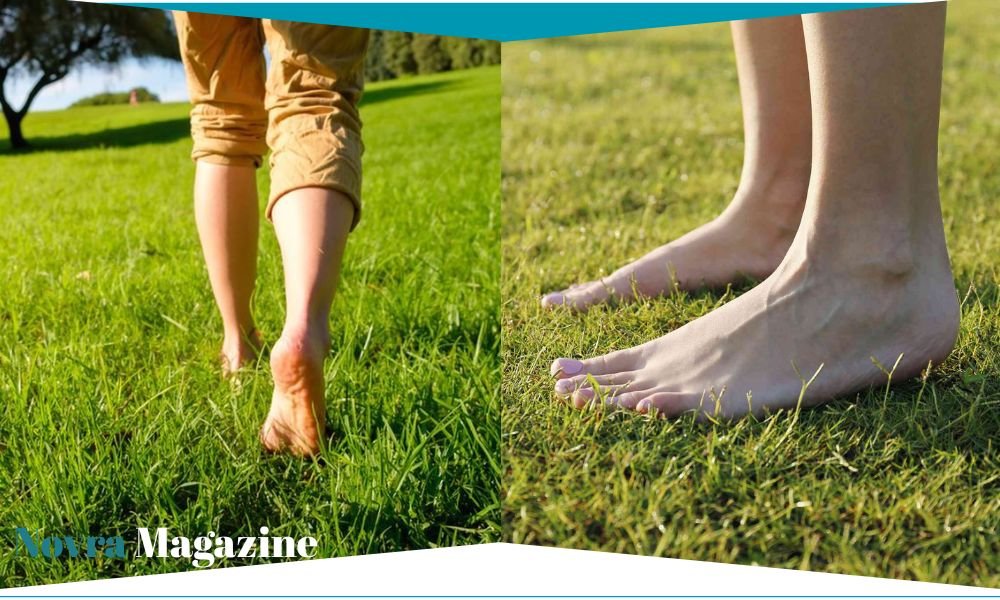
Grounding for Health & Wellness sounds almost too simple: take off your shoes, step onto grass or sand, and let your skin touch the Earth. Some people say this practice, also called earthing, helps them sleep better, feel calmer, or deal with pain. However, the science is still developing. Cleveland Clinic’s guide to earthing says early studies show some interesting results, but the research is not strong enough to prove that grounding can prevent or cure disease. So, the real story sits somewhere between a relaxing wellness habit and a medical claim that still needs much better evidence.
Quick Guide to Grounding for Health & Wellness
| Grounding Question | Simple Answer |
|---|---|
| What is grounding? | Direct skin contact with the Earth, often called earthing |
| Easy outdoor methods | Bare feet on grass, soil or sand; gardening; sitting on the ground |
| Indoor options | Grounding mats, sheets, bands and other conductive products |
| Best-supported idea | Spending time outdoors can support general well-being |
| Sleep evidence | Early and promising, but still limited |
| Stress evidence | Some small studies suggest possible benefits |
| Pain evidence | Early studies report improvement, but proof remains weak |
| Inflammation claims | Studied, but not proven as a treatment |
| Disease treatment | Grounding has not been proven to cure disease |
| Is it generally safe? | Usually low-risk outdoors when done carefully |
| Main outdoor risks | Cuts, falls, burns, insects, allergies and infection |
| Main indoor risk | Faulty electrical grounding equipment or wiring |
| Should it replace medicine? | No |
| Cost to try outdoors | Usually free |
The main point is simple: grounding may feel relaxing, and early studies deserve more attention. However, it should stay in the wellness category for now rather than being treated like proven medical care.
What Is Grounding for Health & Wellness?
Grounding means making direct physical contact with the Earth.
For example, you might stand barefoot on grass, walk on sand, touch soil with your hands, or sit outside with bare feet on the ground.
People also call this practice earthing.
The idea behind earthing says that direct contact with the Earth may affect the body through the Earth’s natural electrical charge. However, researchers have not yet proven many of the health claims that supporters make about this idea.
There is also another meaning of “grounding.”
Mental health professionals use grounding exercises to help people focus on the present moment. Those exercises may involve breathing, noticing sounds, touching objects, or focusing on what you can see around you. They do not require contact with soil or grass.
So, let’s keep the two ideas separate.
Earthing grounding means physical contact with the Earth.
Mental grounding means bringing your attention back to the present moment.
Why Has Grounding Become So Popular?
Part of the appeal is how easy it sounds.
You do not need a gym membership.
You do not need a complicated routine.
And if you practice outside, you may not need to buy anything.
At the same time, many people spend much of their day indoors. They work at desks, use screens, wear shoes outside, and may have little direct contact with natural spaces.
Therefore, the idea of stepping outside and reconnecting with nature can feel refreshing.
Cleveland Clinic notes that modern earthing has become especially popular through wellness culture and social media. However, similar ideas about barefoot contact with nature have existed in different cultures for much longer.
How Is Grounding Supposed to Work?
Supporters of earthing believe the Earth has a natural electrical charge.
They suggest that touching the Earth allows electrical effects or electrons to influence the body.
Some researchers have proposed that this process could affect stress, inflammation, sleep, circulation, pain, or the nervous system.
However, this proposed explanation remains debated.
More importantly, a theory is not the same thing as proven medical treatment.
Scientists need large, well-designed studies that other researchers can repeat before they can say a health effect is real and clinically useful.
Grounding research has not yet reached that level for most claimed benefits. Cleveland Clinic says much of the available research has small study groups, design problems, or other limits.
Does Grounding Really Work?
The most accurate answer is:
Maybe for some outcomes, but we do not know enough yet.
Some small human studies have reported changes in sleep, stress, pain, mood, blood measures, or other health markers.
In addition, a newer 2025 randomized, double-blind, placebo-controlled study looked at 60 people using either an active earthing mat or a control mat.
After 31 days, the researchers reported improvements in several sleep and stress measures in the grounding group. They also found an increase in total sleep time compared with the control group.
That is interesting.
Still, one study with 60 people does not prove that grounding mats work for everyone.
The study itself was described as a pilot investigation, which means larger studies are still needed.
What Does the Science Say About Grounding and Sleep?
Sleep may be one of the more interesting areas of grounding research.
An older 2004 pilot study reported changes in nighttime cortisol patterns along with self-reported improvements in sleep, stress, and pain.
However, that study was small.
More recently, the 2025 trial followed 60 participants for about a month.
Researchers reported better scores for sleep quality, insomnia severity, daytime sleepiness, and stress. Total sleep time also improved in the active-mat group compared with the control group.
So, should everyone buy a grounding mat for insomnia?
Not yet.
The results are promising, but medical guidelines do not currently treat grounding mats as a standard insomnia treatment.
If sleep problems continue for weeks or affect your daily life, talk with a healthcare professional instead of depending only on earthing.
Can Grounding Reduce Stress?
Possibly, but the evidence remains early.
Some small studies have reported changes in mood or stress after grounding. Cleveland Clinic includes reduced stress and improved mood among the benefits that supporters and early studies have explored.
Still, there is another simple explanation that researchers must consider.
Grounding outside often means you are also:
Walking.
Taking a break from screens.
Getting fresh air.
Sitting quietly.
Moving your body.
Spending time in nature.
Slowing down.
Each of those activities may help you feel calmer.
Therefore, it can be difficult to know whether the Earth-contact part itself creates the benefit.
Cleveland Clinic makes this same important point: being outside has known wellness value, which also makes it harder to separate those effects from earthing itself.
Can Grounding Help With Anxiety?
We need to separate two different ideas again.
Psychological grounding techniques can help some people manage moments of anxiety by directing attention toward the present. For example, a person may focus on what they can see, hear, feel, smell, or touch.
Earthing is different.
Walking barefoot outdoors may feel calming. However, there is not enough strong evidence to say that electrical contact with the Earth treats an anxiety disorder.
So, use outdoor grounding as a relaxing wellness habit if you enjoy it.
However, do not replace therapy, prescribed medicine, or professional mental health support with earthing.
Can Grounding Reduce Pain?
Some early research says it might.
A randomized trial involving massage therapists reported improvements in pain, physical function, and mood among grounded participants.
Other small studies and reviews have also looked at muscle soreness and pain.
However, the research base remains small.
Pain can also change because of sleep, stress, exercise, expectations, natural recovery, medication, or many other factors.
Therefore, scientists need larger studies before grounding can become a proven pain treatment.
If you have ongoing or severe pain, do not delay medical care while testing earthing.
Does Grounding Reduce Inflammation?
This is one of the biggest claims in the earthing world.
Researchers have proposed that grounding may affect inflammatory processes in the body. Several papers have explored changes in inflammation, immune responses, and recovery after injury.
However, these studies have major limits.
Many are small.
Some are reviews of a limited body of earlier research.
And some strong claims go much further than the available evidence can support.
Cleveland Clinic says current research is too preliminary to conclude that earthing prevents or cures inflammatory disease.
So, it is safer to say:
Grounding and inflammation are being studied, but grounding is not a proven anti-inflammatory medical treatment.
Can Grounding Improve Blood Flow?
Some small studies have looked at blood-related effects.
One study reported changes in red blood cell behavior and blood viscosity after grounding.
However, claims that grounding prevents heart attacks, strokes, or major cardiovascular disease go far beyond what current research can prove.
That difference is very important.
A small laboratory finding is not the same thing as showing that a practice prevents serious illness.
Therefore, people with high blood pressure, heart disease, blood-clotting problems, or other medical conditions should continue following their healthcare plan.
Can Grounding Lower Blood Pressure?
Some early reports have suggested possible changes in blood pressure.
However, strong clinical evidence is still missing.
Health.com’s medically reviewed 2026 summary notes that small studies have looked at blood pressure and other heart-related measures, while also stressing that grounding research remains limited.
So, someone with hypertension should not stop medication because a grounding website says barefoot walking can lower blood pressure.
Instead, keep taking prescribed treatment unless your doctor changes it.
You can still enjoy safe outdoor time as an extra wellness habit.
Can Grounding Boost Your Immune System?
You may see this claim often online.
Some grounding papers have studied immune markers and inflammatory responses.
However, there is not enough strong evidence to say grounding “boosts” your immune system in a way that prevents infections or disease.
The immune system is also very complex.
Stronger is not always better.
For example, allergies and autoimmune diseases happen when parts of the immune response become overactive or misdirected.
Therefore, simple phrases such as “grounding boosts immunity” can be misleading.
Can Grounding Cure Disease?
No reliable evidence shows that grounding cures serious diseases.
Cleveland Clinic warns specifically against claims that earthing can prevent or treat conditions such as diabetes, Parkinson’s disease, Alzheimer’s disease, or COVID-19.
This is one of the most important points in the article.
Grounding may be a wellness practice.
It is not a replacement for medicine.
If you enjoy sitting barefoot in the garden while continuing proper medical care, that is one thing.
Stopping treatment because someone claims the Earth can cure a disease is very different and may be dangerous.
What Is the Best Evidence-Based Benefit of Grounding Outdoors?
One benefit is much easier to support:
It gets you outside.
Outdoor time can include movement, light exposure, fresh air, nature, and a break from screens.
Cleveland Clinic says there is a much stronger body of research supporting time outdoors than there is supporting earthing’s special electrical claims.
That means you can enjoy an outdoor grounding routine without needing to believe every claim about electrons.
Maybe you feel calmer because you are barefoot.
Maybe it is the quiet.
Perhaps the warm sun helps.
Maybe the gentle walk matters.
Or perhaps several effects work together.
You can enjoy the experience without turning it into a miracle treatment.
How Can You Practice Grounding Outdoors?
Outdoor grounding can be very simple.
You could:
- Stand barefoot on clean grass.
- Walk slowly on safe sand.
- Sit outside with bare feet touching the ground.
- Put your hands in clean soil while gardening.
- Sit or lie on dry grass.
- Spend time near nature while paying attention to your senses.
Cleveland Clinic lists barefoot walking, sitting on grass or soil, gardening, and contact with natural water among common earthing activities.
Still, safety comes first.
Do not walk barefoot in places where you may step on glass, metal, thorns, hot pavement, sharp rocks, animal waste, or other hazards.
How Long Should You Ground Each Day?
There is no proven medical dose.
You may see websites saying exactly 10 minutes, 20 minutes, 30 minutes, or several hours.
However, medical research has not established a standard grounding schedule.
Different studies have used very different amounts of time.
For example, the 2025 sleep study asked participants to use mats for six hours per day for 31 days.
Meanwhile, Henry Ford Health suggests that people interested in the wellness practice can try short periods outdoors, such as 10 to 30 minutes, while also acknowledging that strong scientific evidence remains limited.
For a beginner, a simple outdoor break may make more sense than worrying about an exact number.
What Is a Simple Grounding Routine for Beginners?
Start with five or ten quiet minutes outside.
Choose a clean, safe place.
Then sit or stand comfortably.
If it feels safe, let your bare feet touch grass or soil.
Next, take slow breaths.
Notice the temperature.
Feel the ground under your feet.
Listen to the sounds around you.
Look at trees, clouds, plants, or the sky.
This routine combines earthing with mindfulness.
Even if future research finds that the electrical theory has little effect, you still spent a few peaceful minutes outside.
That can make the practice worthwhile for many people.
Do You Have to Walk Barefoot?
No.
People often connect earthing with barefoot walking because skin contact with the ground is central to the practice.
However, you do not need to walk.
You can sit in a chair with your feet on safe ground.
You can also garden with your hands.
This may be a better choice if you have balance problems or do not feel safe walking barefoot.
Cleveland Clinic recommends sitting or standing still rather than walking over uneven ground if balance is a concern.
What Are Grounding Mats?
Grounding mats are conductive products designed to create an electrical connection to ground while you are indoors.
Companies sell mats, sheets, mattress pads, patches, bands, shoes, and similar products.
Most grounding mats connect through the ground port of an electrical outlet or another grounding system.
Supporters say this creates an effect similar to touching the Earth directly.
However, indoor grounding is more complicated than walking barefoot outside.
The quality of building wiring, outlet grounding, local electrical conditions, and product design can all affect how a device works.
Do Grounding Mats Really Work?
The answer is still uncertain.
The 2025 randomized trial provides some newer evidence.
In that study, 60 participants received either an active grounding mat or a control mat. Researchers reported better sleep and stress outcomes in the active group.
Still, much more research is necessary.
One pilot study cannot prove that every grounding mat sold online improves sleep.
Products may also differ.
Homes have different wiring.
And research conditions may not match normal daily use.
Therefore, buyers should stay cautious about big marketing promises.
Should You Buy Expensive Grounding Products?
You do not need to buy a product just to try grounding.
Outdoor contact with safe grass, soil, or sand is usually free.
That makes it a sensible starting point.
If you later want an indoor product, remember that price does not prove medical benefit.
A £200 mat is not automatically more effective than a £30 mat.
Also, avoid products that promise to cure illness.
Big health promises are a warning sign when the evidence remains limited.
Are Grounding Mats Safe?
They need more care than simple outdoor grounding.
Cleveland Clinic warns that indoor earthing products connect to grounded electrical outlets. Therefore, faulty wiring can create an electrical hazard. It also advises against using grounding devices during thunderstorms because of the risk from lightning.
If you use one, follow the maker’s safety directions carefully.
Also, make sure the outlet and home wiring are safe.
Do not modify plugs or create homemade electrical setups.
If you are unsure about your wiring, ask a qualified electrician.
Is Walking Barefoot Safe for Everyone?
No.
Barefoot walking has risks.
Shoes protect feet from sharp objects, hot ground, insects, infections, allergens, and other hazards.
Extra care is especially important if you have:
- Reduced feeling in your feet.
- Nerve damage.
- Foot wounds.
- Serious foot problems.
- Balance problems.
- Severe insect allergies.
- A weakened immune system.
Cleveland Clinic also advises extra caution during pregnancy because soil can contain harmful organisms and contaminants.
If you are unsure whether barefoot walking is safe for you, ask your healthcare provider.
What About Grounding for People With Diabetes?
People with diabetes can sometimes develop nerve damage in their feet.
This can reduce feeling.
As a result, a person may step on something sharp or hot without noticing the injury.
That can make barefoot walking risky.
Cleveland Clinic specifically warns that people with reduced foot sensation may fail to notice small injuries.
Therefore, if diabetes affects your feet or nerves, talk with your doctor or foot specialist before trying barefoot grounding.
You can still spend relaxing time outdoors while wearing safe footwear.
Can Pregnant Women Practice Grounding?
Simple outdoor relaxation may be fine for many pregnant people.
However, direct contact with soil deserves extra care.
Soil can contain organisms or contaminants that may create health risks during pregnancy. Cleveland Clinic advises pregnant people to be cautious with earthing activities.
Therefore, pregnancy is not the time to follow random online health advice.
If you want to try grounding, ask your maternity healthcare professional about the safest option for you.
Can Children Try Grounding?
Children naturally spend time touching grass, sand, dirt, and water.
Still, adults should think about normal outdoor safety.
Check the area for sharp objects.
Protect children from very hot surfaces.
Watch for insects.
Use sun protection when needed.
And supervise them near water.
There is no strong evidence that children need grounding for health.
So, think of safe barefoot play as outdoor play rather than a medical therapy.
Is Grounding the Same as Walking in Nature?
Not exactly.
A person can walk through a forest wearing shoes and never make direct skin contact with the ground.
That would still count as time in nature, but strict earthing supporters might not call it grounding.
Meanwhile, research on nature exposure has its own benefits that do not depend on direct electrical contact with soil.
Cleveland Clinic notes that the known benefits of spending time outdoors make it difficult to separate nature effects from any special earthing effect.
So, do not worry too much about labels.
If spending safe time outdoors helps you slow down and move more, that is already valuable.
Can Grounding Help You Sleep Without a Mat?
Possibly through your routine, but we cannot say the Earth-contact part itself will improve sleep.
For example, imagine this routine:
You take a slow evening walk.
You leave your phone indoors.
You breathe fresh air.
You sit quietly in the garden.
You watch the sky get darker.
Naturally, you may feel more relaxed afterward.
The grounding practice may become part of a healthy bedtime routine.
However, if you regularly cannot sleep, wake often, snore heavily, stop breathing during sleep, or feel exhausted every day, seek medical advice.
Grounding should not hide a sleep problem that needs treatment.
Can Grounding Improve Mental Wellness?
It may support a feeling of calm, especially when you combine it with nature and mindfulness.
However, scientists have not proven that earthing treats depression, anxiety disorders, trauma, or other mental health conditions.
Mental grounding techniques have a clearer psychological purpose because they help focus your attention on the present moment.
You could even combine the two safely.
Sit outside.
Feel the ground.
Then name:
Five things you can see.
Four things you can touch.
Three things you can hear.
Two things you can smell.
One thing you can taste.
That turns outdoor time into a simple mindfulness exercise without making unproven medical promises.
What Grounding Claims Should You Be Careful About?
Be cautious when someone says grounding:
“Cures diabetes.”
“Prevents cancer.”
“Treats Alzheimer’s.”
“Stops Parkinson’s.”
“Replaces blood pressure medicine.”
“Prevents heart attacks.”
“Treats infections.”
“Detoxes everything.”
These claims are not supported by strong clinical evidence.
Cleveland Clinic warns that some online earthing information crosses into medical misinformation and may encourage people to delay proven treatment.
A wellness practice should add to healthy care.
It should not take safe care away.
What Does the 2025 Grounding Study Change?
The 2025 sleep study matters because it used a randomized, double-blind, placebo-controlled design.
That is stronger than a simple testimonial or uncontrolled experiment.
The researchers studied 60 participants for 31 days and reported improvements in sleep measures and stress in the active grounding group.
However, the study does not suddenly prove every grounding claim.
It focused mainly on sleep and stress.
It did not prove that grounding cures disease.
Also, researchers need to repeat the findings in larger and different groups.
So, the new study makes the subject more interesting.
It does not close the scientific debate.
Why Is More Research Needed?
A strong health claim needs more than a few small studies.
Researchers need larger groups of people.
They also need good control groups.
Studies should run long enough to show whether an effect lasts.
Independent research teams should be able to repeat the same result.
In addition, researchers need to separate grounding itself from other helpful factors such as exercise, outdoor time, relaxation, sunlight, and expectations.
Cleveland Clinic says the existing research remains too limited and uneven to support strong conclusions.
That is why careful wording matters.
“May help” is very different from “will cure.”
What Is the Safest Way to Think About Grounding?
Think of it as a wellness experiment, not medicine.
For example:
“I enjoy sitting barefoot in my garden because it helps me relax.”
That is reasonable.
“I stopped my heart medication because grounding heals my cardiovascular system.”
That is unsafe.
You can enjoy a practice while still respecting the limits of the science.
In fact, that balanced approach gives you the best of both worlds.
You get time outdoors.
You get a quiet break.
And you do not risk your health by believing promises that science has not confirmed.
Final Thoughts
Grounding for Health & Wellness has become popular because it is simple, natural, and easy to understand.
Take off your shoes.
Touch the grass.
Sit on the beach.
Put your hands in the garden.
Slow down for a few minutes.
For many people, that sounds wonderful.
Early research also gives us some reasons to keep studying the idea. Small studies have reported possible effects involving sleep, stress, mood, pain, inflammation, and other health measures.
In addition, a 2025 randomized, double-blind study of 60 participants found promising changes in sleep quality, insomnia severity, stress, daytime sleepiness, and total sleep time after grounding-mat use.
Still, we should not turn “promising” into “proven.”
Cleveland Clinic says current earthing research is limited and often weak. More importantly, grounding has not been proven to prevent or cure serious diseases.
Therefore, the smartest approach is also the simplest.
Enjoy grounding if it feels good.
Choose a safe outdoor space.
Use it as time to relax.
Keep taking prescribed medicines.
See healthcare professionals when you need them.
And be careful with electrical grounding products.
You do not need to believe every claim on social media to enjoy ten peaceful minutes with your feet in the grass.
Sometimes, the simplest benefit may be the most real one:
You stopped, went outside, put your phone away, and gave your mind a quiet moment.
FAQs About Grounding for Health & Wellness
What is Grounding for Health & Wellness?
Grounding, or earthing, means making direct skin contact with the Earth, such as standing barefoot on grass, sand, or soil. Some people also use indoor grounding products.
Is grounding scientifically proven?
Not fully. Some small studies show promising results, but Cleveland Clinic says the overall evidence remains limited and too weak for strong medical conclusions.
Does grounding really work?
It may help some people feel relaxed, and early studies have reported possible effects on sleep, stress, pain, and other measures. However, larger studies are still needed.
Can grounding improve sleep?
A 2025 randomized study of 60 participants reported improvements in several sleep measures after grounding-mat use. Still, one pilot trial is not enough to make grounding a standard sleep treatment.
Can grounding reduce stress?
Some early research suggests possible benefits for stress and mood. However, outdoor grounding also includes relaxing nature exposure, which may explain part of the effect.
Can grounding reduce inflammation?
Grounding has been studied for its possible effects on inflammation. However, it is not a proven treatment for inflammatory disease.
Can grounding help with pain?
Small studies have reported possible improvements in pain. Still, the evidence is too limited to replace proven pain treatment.
Does grounding lower blood pressure?
A few small reports have examined blood pressure, but there is not enough strong evidence to use grounding as a treatment for hypertension.
Can grounding cure disease?
No strong evidence shows that grounding cures serious diseases. It should never replace medical care.
What is the easiest way to try grounding?
Stand or sit barefoot on clean, safe grass or soil for a few quiet minutes.
How long should I ground each day?
There is no scientifically proven daily amount. Some wellness guidance suggests short sessions, while research studies have used very different schedules.
Do I need a grounding mat?
No. You can try outdoor grounding for free.
Do grounding mats work?
A 2025 controlled trial reported promising sleep results, but more research is needed before we can say how well grounding mats work for the general public.
Are grounding mats safe?
They may carry electrical risks if outlets or wiring are faulty. Cleveland Clinic also advises against using them during thunderstorms.
Is barefoot grounding safe?
It can be low-risk in a safe area. However, bare feet can suffer cuts, burns, insect stings, allergic reactions, or infections.
Can people with diabetes walk barefoot for grounding?
People with diabetes who have nerve damage or reduced foot feeling should be especially careful because they may not notice an injury. Ask a healthcare professional first.
Can pregnant women try grounding?
Pregnant people should use extra care around soil because it may contain harmful organisms or contaminants. Ask your healthcare professional if you have concerns.
Is grounding good for anxiety?
Outdoor grounding may feel calming. However, psychological grounding exercises have a different purpose and can help bring attention back to the present moment during anxiety.
Is grounding the same as mindfulness?
No. Earthing involves contact with the Earth. Mindfulness focuses on present-moment awareness. However, you can practice both at the same time.
Is grounding worth trying?
For many healthy people, safe outdoor grounding is a low-cost wellness activity. Just keep expectations realistic and do not use it instead of proven medical treatment.
For more info, visit novra magazine