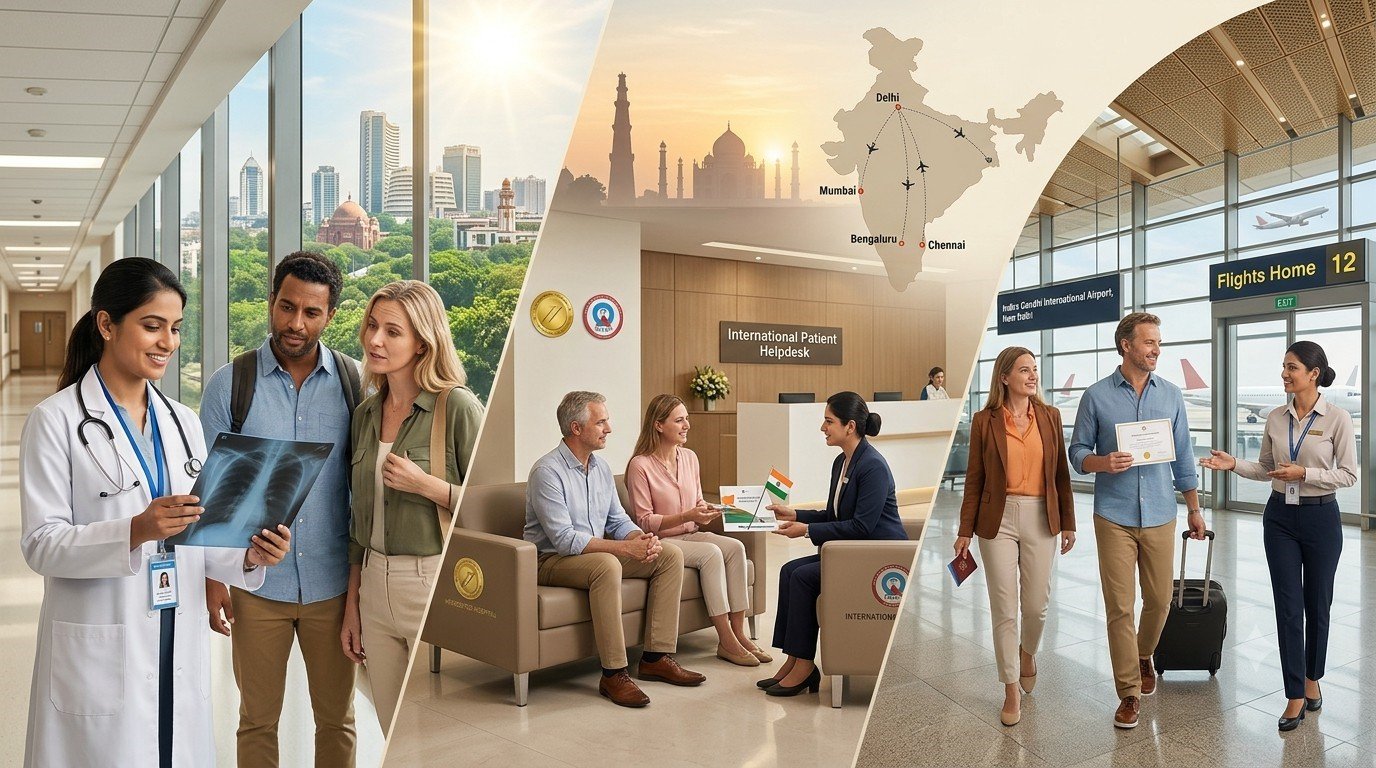
India has become the world’s most sought-after destination for medical treatment, and the numbers explain why. The country’s medical tourism market is projected to cross $13-14 billion in 2026, with over 700,000 international patients arriving each year for care that can cost 60-90% less than in the US, UK, or Europe. Add JCI- and NABH-accredited hospitals, world-class surgeons, and a government actively rolling out the red carpet for medical visitors, and it’s easy to see the appeal.
But planning treatment abroad can feel overwhelming. This step-by-step guide walks you through everything, from your first consultation to your flight home, so the process is smooth, safe, and transparent.
Step 1: Confirm your diagnosis and compare options
Start with a confirmed diagnosis and treatment plan from your home doctor. Share your reports, scans, and medical history with the Indian hospital or a facilitator to get a realistic opinion, cost estimate, and treatment timeline. Many hospitals offer free second opinions and video consultations with specialists before you commit, use these to compare hospitals, surgeons, and packages.
Step 2: Choose the right hospital and a trusted facilitator
Look for hospitals accredited by JCI (the international gold standard) or NABH (India’s national accreditation), the strongest quality signals for international patients. Leading names include Apollo, Medanta, Max, Fortis, Artemis, and Narayana Health. A reputable medical tourism company can simplify this step by matching you with accredited hospitals and vetted specialists, handling price negotiation, and providing a clear, itemized cost breakdown.
When you’re comparing options, choosing the Best Medical Tourism Company in India matters, one that prioritizes transparency over commission-based referrals and supports you from the first call to post-treatment follow-up.
Step 3: Apply for your e-Medical Visa
India now offers the e-Medical Visa to nationals of 167 countries, and you can apply entirely online at the official portal (indianvisaonline.gov.in). Here’s what you’ll need:
- A passport valid for at least six months with two blank pages, a recent photo, and a scan of your bio page.
- A letter from the Indian hospital on its letterhead confirming your tentative admission date, treatment, and your name and passport details.
- The visa is typically valid for 60 days from first entry with triple entry, and can be extended up to a year through the FRRO if your treatment requires it.
Apply well in advance (up to 120 days before travel) and allow a few days for processing. Companions can apply for the e-Medical Attendant Visa in the same way.
Step 4: Plan travel, stay, and budget
Book flights into one of India’s 31 designated international airports, and plan your stay near the hospital; many facilities offer on-campus or nearby accommodation for patients and attendants. Budget beyond the medical bill for flights, lodging, local transport, food, and a buffer for unexpected needs. A good facilitator can bundle these into value-for-money packages and help with airport pickup, language interpretation, and local coordination.
Step 5: Arrive, get treated, and recover
On arrival, immigration may capture your biometrics, so carry printouts of your e-visa approval and the same passport used in the application. Your hospital’s international patient desk will coordinate admission, tests, and the procedure, and most provide a dedicated coordinator who speaks your language. Plan for a recovery period in India before flying home, and arrange follow-up consultations, many hospitals now offer post-discharge video follow-ups with your surgeon.
Step 6: Manage follow-up care after you return
Before you leave, get a clear discharge summary, medication list, and a follow-up schedule. Ask whether your surgeon offers remote consultations once you’re home. This continuity of care is one of the most important, and most overlooked parts of medical travel.
Why a facilitator makes it easier
Coordinating visas, hospitals, flights, and follow-up care across time zones is a lot to manage alone. A dedicated medical tourism partner handles the logistics end-to-end, so you can focus on recovery. Companies like Yapita Health connect international patients with accredited hospitals and certified doctors across India and beyond, providing support from the first consultation and visa application through to post-treatment follow-up with transparent, patient-first pricing rather than commission-based referrals.
Final thoughts
India offers world-class, affordable care, and with the right preparation the journey is straightforward. Start by verifying your diagnosis, choose an accredited hospital, sort your e-Medical Visa early, and don’t hesitate to lean on a trusted facilitator for the details. With a
clear plan in place, you can focus on what matters most, getting the treatment you need and returning home healthy.