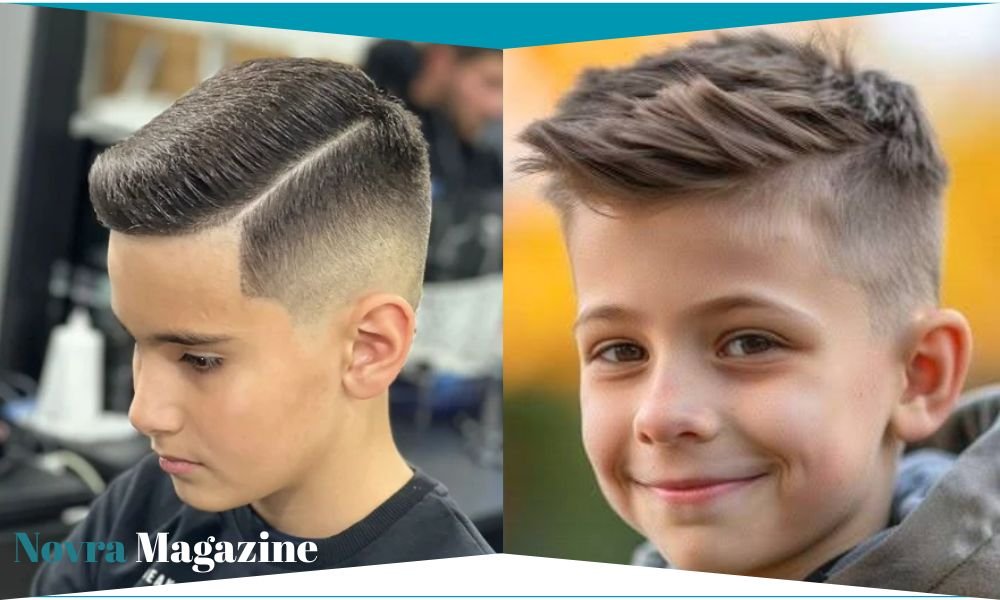
A fresh haircut can make a little boy walk out of the barber shop feeling ten feet tall. That is why short fade little boy haircuts are such a popular choice for parents who want something neat, modern, and easy to manage. A fade haircut simply blends the hair from very short around the sides and back into longer hair higher on the head. The best part is that the top can stay simple, curly, messy, brushed forward, or neatly combed depending on the child’s hair and personality.
What Is a Short Fade Haircut for Little Boys?
Let’s understand this simply.
A fade does not mean all the hair has to be very short.
The barber cuts the sides and back at different lengths. The hair slowly changes from shorter near the bottom to longer near the top.
This creates a smooth, clean look.
Current boys’ haircut guides often pair fades with textured crops, crew cuts, short curls, side parts, and other easy styles.
For parents, that gives plenty of choice.
A child can have a very simple school haircut or something a little more playful without growing his hair long.
Why Are Short Fade Little Boy Haircuts So Popular?
Parents usually want three things from a child’s haircut.
It should look good.
It should feel comfortable.
And it should not take 20 minutes to fix every morning.
Short fades can do all three.
The shorter sides stay out of the ears and face. Meanwhile, keeping some hair on top gives the barber room to create different looks.
Short boys’ cuts are also often described by hairstylists as practical for active children because there is less hair to manage.
What Is the Difference Between a Low, Mid, and High Fade?
This sounds complicated until you see what the names mean.
The main difference is where the fade begins.
A low fade starts close to the ears.
A mid fade begins higher up the side of the head.
A high fade starts much higher and creates a stronger difference between the short sides and longer top.
Wahl’s haircut guide describes the low fade as the less dramatic option, with the mid fade sitting between low and high.
For younger boys, a low or soft mid fade can be a good starting point when parents want a neat look without making the haircut feel too bold.
1. Short Low Fade With Textured Top
This is one of the easiest styles to show a barber.
Keep the sides short with a low fade.
Leave a little extra hair on top.
The barber can add light texture so the top does not look completely flat.
A textured crop with a low or clean fade is regularly recommended for boys because it combines short sides with a manageable top.
It can work well for school and everyday play.
2. Short Crew Cut With Fade
The crew cut is a classic.
Hair stays short on top and becomes even shorter around the sides.
Add a fade, and the result feels a little more modern.
This is a useful choice for a child who does not like sitting while a parent styles his hair every morning.
A quick brush may be all that is needed.
3. Buzz Cut With Fade
Want something even simpler?
Try a buzz cut with a fade.
A traditional buzz cut keeps the hair very short, while adding a fade creates a smoother change in length around the sides and back.
This style can be especially practical during warm weather or for very active children.
However, remember that a very short cut exposes more scalp to the sun.
A hat can help during long periods outside.
4. Short Fade With Curly Top
Curly hair does not need to be cut flat.
One beautiful option is to leave the natural curls visible on top while keeping the sides neat with a fade.
The difference between the clean sides and soft curls can make the natural texture stand out.
Current children’s haircut galleries often show curly fades that keep volume on top while cleaning up the sides.
The important thing is not to fight the curl.
Let it be part of the haircut.
5. Short Afro Fade
For boys with Afro-textured hair, a short fade can keep the outline neat while allowing natural texture to remain on top.
The barber can choose how much height to leave.
Parents who want a softer look can ask for a low taper or low fade.
A more noticeable fade creates stronger contrast.
The final choice should depend on the child’s natural hair pattern and what feels comfortable for him.
6. Low Taper Fade
A taper fade is a softer choice.
Instead of making the whole side extremely short, the barber focuses the shortest blending around areas such as the temples, sideburns, and neckline.
A low taper begins near the lower part of the hairline and gives a gentle finish.
This can be perfect for parents who want a clean haircut without a dramatic skin fade.
7. Short Textured Crop Fade
This is a popular modern look.
The top is kept short but has small layers and texture.
The sides fade down neatly.
It can look slightly messy without actually looking untidy.
Hairstyle guides often recommend textured crops for boys because they can be simple to style while still looking modern.
For many children, the style can work with little or no product.
8. French Crop With Low Fade
A French crop keeps a short fringe toward the front.
The top stays fairly short.
The sides can have a low fade or taper.
This style can be useful for straight or slightly wavy hair.
It is also a good option when a child does not want to brush his hair upward every morning.
The front naturally sits forward.
9. Caesar Cut With Fade
The Caesar cut is another short style with hair brushed or cut forward.
The fringe is usually kept short.
Pair it with faded sides and the haircut can look very clean.
It is a simple choice for parents who want less morning styling.
10. Short Side-Part Fade
Not every fade needs to look sporty.
A side part can make it feel more classic.
Leave enough length on top to move the hair gently to one side.
Then keep the sides clean with a low fade.
This can work beautifully for school pictures, family events, weddings, or any time parents want something a little more polished.
11. Short Comb-Over Fade
A short comb-over is similar to a side part.
The hair on top moves gently to one side.
The fade keeps the rest of the haircut neat.
For younger children, keep the top fairly short so it does not need lots of gel or styling every morning.
Simple is usually better.
12. Mini Quiff With Fade
A quiff lifts the front hair slightly upward.
For little boys, there is no need to make it very tall.
A small amount of length at the front is enough.
The short fade around the sides keeps the haircut balanced.
This is a fun choice when a child enjoys having his hair styled for parties or pictures.
13. Short Spiky Fade
Some boys love spiky hair.
Leave a little length on top and ask for short faded sides.
The top can then be lightly pushed upward.
Current haircut guides often pair short spikes with fades, especially for straight or medium-density hair.
Just remember that a hairstyle requiring product may take a little more work each morning.
14. Messy Top With Low Fade
Children run.
They jump.
They play.
Their hair does not stay perfectly combed all day.
That makes a lightly messy top a practical choice.
Keep the sides clean with a low fade and leave enough top length to fall naturally.
The result can still look good even after playground time.
15. Short Fade With Straight Fringe
This style keeps the front hair cut into a short, simple fringe.
The sides gradually fade.
It creates a strong, neat shape without requiring the top to be pushed upward.
A cropped fringe can work particularly well with straight hair.
16. Short Fade With Soft Fringe
A straight fringe is not for every child.
For a softer look, ask the barber to texture the front instead of creating one hard straight line.
The hair can sit naturally across the forehead.
This often looks relaxed and age-appropriate.
17. High Fade With Short Top
A high fade creates more contrast.
The barber begins the short blend higher on the sides.
Only a small area of longer hair remains on top.
This style can look very sharp, but it is more noticeable than a low fade. Wahl explains that high fades begin higher on the head and put more attention on the top hair.
Parents who want something subtle may prefer a low fade instead.
18. Mid Fade With Short Crop
The mid fade sits between low and high.
It gives a clean finish without going as high as a high fade.
Pair it with a short textured top and you get a haircut that can work for school, sports, and weekends.
This is a good middle-ground choice when parents are unsure which fade level to choose.
19. Skin Fade With Short Top
A skin fade goes extremely short near the bottom.
The fade gradually blends from bare or almost bare skin into longer hair.
It creates a very crisp look.
However, it also tends to show regrowth quickly because there is such a strong difference between the shortest and longer areas.
Parents who do not want frequent barber visits may prefer a softer fade.
20. Short Fade With Natural Waves
Wavy hair can create its own texture.
Instead of trying to make it perfectly straight, let the waves stay visible on top.
Keep the sides short and smoothly faded.
This creates a haircut that looks styled even when very little has been done to it.
21. Short Faux Hawk Fade
A faux hawk gives children a playful look without creating a full mohawk.
The center of the top stays a little longer.
The sides fade shorter.
The top can be pushed slightly toward the middle when the child wants a bold style.
On normal school days, it can also lie naturally.
That makes the cut more flexible.
22. Short Fade With Hair Design
Some children want something special.
A barber can add one or two shaved lines into the faded area.
This creates a simple hair design.
Current boys’ haircut galleries show low and high fades paired with line designs for a more playful finish.
Before choosing one, parents may want to check school rules.
Some schools allow hair designs.
Others may not.
23. Short Line-Up With Fade
A line-up, sometimes called an edge-up or shape-up, gives the hairline a clean outline.
It can be combined with many fade styles.
The technique has long been linked with faded and Afro-textured hairstyles.
For children, the barber can keep the result natural rather than making the front line too severe.
24. Short Fade for Thick Hair
Thick hair can sometimes feel heavy around the sides.
A fade removes some of that bulk.
The barber can then add texture to the top so the hair sits more easily.
Hairstyle professionals often suggest layered or textured cuts for thicker boys’ hair because removing extra bulk can make the style easier to control.
25. Simple School Fade
Not every haircut needs a trendy name.
Sometimes the best choice is simply:
Short top.
Clean sides.
Soft fade.
Natural hairline.
No shaved designs.
No heavy styling product.
This can be one of the easiest short fade little boy haircuts for busy mornings.
Which Fade Is Best for a Little Boy?
There is no single best fade for every child.
A low fade is usually softer.
A mid fade looks a little stronger.
A high or skin fade creates more contrast.
Think about your child’s hair first.
Is it straight?
Curly?
Wavy?
Fine?
Very thick?
Then think about his daily routine.
A child who swims, plays football, and hates hair products may enjoy a very simple short cut.
A child who loves choosing his hairstyle may enjoy more length on top.
The haircut should fit the child, not just the picture on your phone.
Which Short Fade Is Easiest to Maintain?
A crew cut with a soft fade is one of the easiest options.
A short crop is another good choice.
Buzz cuts can also require very little daily styling.
However, there is one thing to remember.
A sharp fade can lose its fresh look as the hair grows.
The shorter the fade begins, the easier it may be to notice new growth.
So “low maintenance” does not always mean “no barber visits.”
How Often Does a Boy’s Fade Need Cutting?
There is no fixed rule.
Hair grows at different speeds.
Very sharp skin fades usually show growth sooner.
Soft low fades and tapers can often grow out more naturally.
Instead of following one exact number of weeks, watch the haircut.
If the sides begin to feel bulky or the shape is disappearing, it may be time for another trim.
Parents who do not want very frequent barber visits can ask for a softer fade from the beginning.
What Should You Tell the Barber?
Pictures are extremely helpful.
A parent might say:
“I’d like a low fade with a short textured top.”
Or:
“Please keep the curls on top and make the sides shorter with a soft fade.”
You can also tell the barber what you do not want.
For example:
“Please don’t take the sides down to skin.”
“Keep enough length on top so we can brush it sideways.”
“Please keep the hairline natural.”
A clear picture plus a few simple words can prevent confusion.
Should a Little Boy Get a Skin Fade?
He can, but it depends on the look the family wants.
A skin fade is very short at the bottom.
That makes the haircut look sharp and clean.
A low taper or regular low fade looks softer.
For a first fade haircut, many parents may feel more comfortable starting with the softer option.
You can always go shorter later.
As Wahl’s haircut guidance wisely notes for clipper cutting, starting longer gives you room to go shorter if needed.
Which Fade Works Best With Curly Hair?
Curly hair often looks great when some natural shape stays on top.
Try:
A curly top with low fade.
A short Afro with taper fade.
A curly crop with faded sides.
The goal does not need to be making the hair perfectly smooth.
Natural curls can be the main feature of the haircut.
What About Fine or Straight Hair?
Fine or straight hair often works well with:
A textured crop.
A short side part.
A crew cut.
A French crop.
A small quiff.
Texture can help the top look fuller.
Avoid using too much heavy styling product because it may make fine hair look flat.
How Should Parents Care for Short Boys’ Hair?
Short hair still needs basic care.
The American Academy of Dermatology says children’s shampoo needs can depend on age, hair type, oiliness, activity level, and whether the hair is dry or curly.
That means every child does not need exactly the same washing routine.
The AAD also recommends gently massaging shampoo into the scalp, rinsing it well, and avoiding rough towel rubbing that can damage hair. Children with dry or curly hair may benefit from conditioner.
Keep things simple.
A child usually does not need a shelf full of styling products.
Should Kids Use Hair Gel or Pomade?
A small amount may help some styles.
For example, a little styling product can add texture to a crop, hold a small quiff, or keep short spikes in place.
But it is not required for every fade.
If the goal is an easy school haircut, ask the barber for something that still looks good without daily product.
That can save parents time every morning.
What Makes a Good First Fade Haircut?
The first barber experience matters.
A nervous child may not enjoy a long, detailed haircut.
A simple low fade with a short top can be a good place to begin.
Talk to the child before the appointment.
Show him a few pictures.
Let him choose between two or three parent-approved styles.
Giving a child a small choice can make the haircut feel exciting instead of scary.
FAQs About Short Fade Little Boy Haircuts
What are short fade little boy haircuts?
They are short children’s hairstyles in which the hair on the sides and back gradually changes from very short to longer hair toward the top.
What is the best fade haircut for a little boy?
A low fade with a short textured top is a simple and popular choice. However, the best option depends on the child’s hair type, routine, and personal preference.
Is a low fade good for little boys?
Yes. A low fade gives a softer look because the shortest section begins lower near the ears.
What is the difference between a low fade and high fade?
A low fade begins near the lower sides of the head. A high fade starts much higher and creates more contrast between the sides and top.
Are fade haircuts good for curly-haired boys?
Yes. A barber can keep curls on top while fading the sides shorter. This lets the natural texture remain visible.
Which boys’ fade haircut needs the least styling?
A crew cut fade, buzz fade, or very short textured crop usually needs little daily styling.
Can a little boy have a skin fade?
Yes, but a skin fade is very short and creates a sharper look. Parents wanting something softer can choose a regular low fade or taper.
What haircut works for thick-haired boys?
A textured top with faded sides can help remove some bulk while keeping movement on top.
What haircut works for straight-haired boys?
Straight hair can work well with crew cuts, textured crops, side parts, French crops, and short quiffs.
Can boys have designs with a fade?
Yes. Barbers can add simple shaved lines or designs. Parents should check school rules first if the child will wear the style to class.
How often should a child’s fade be trimmed?
It depends on hair growth and how sharp you want the fade to stay. Skin fades usually show new growth faster than softer tapers.
What should I ask a barber for?
Tell the barber whether you want a low, mid, or high fade and explain how much hair should stay on top. Taking a reference picture is also useful.
Is a fade easy to look after?
Many fade styles are easy to manage each morning. However, very sharp fades may need more regular barber visits to keep their clean shape.
Final Thoughts
Choosing between short fade little boy haircuts does not need to feel difficult.
Start with your child’s natural hair.
Then think about his normal day.
Does he want something he can wake up and forget about?
Try a crew cut, buzz fade, or short crop.
Does he have beautiful curls?
Leave some curl on top and clean up the sides.
Does he enjoy a little style?
Try a mini quiff, short spikes, side part, or simple shaved line.
A good children’s haircut should not only look nice in a photo.
It should feel comfortable while he runs, plays, goes to school, and enjoys being a kid.
The simplest way to choose is to find two or three pictures you like, show them to an experienced barber, and ask which one fits your child’s natural hair best.
A clean fade can look great.
But the best haircut is always the one that makes your little boy feel comfortable and happy.
For more info, visit Novra Magazine.