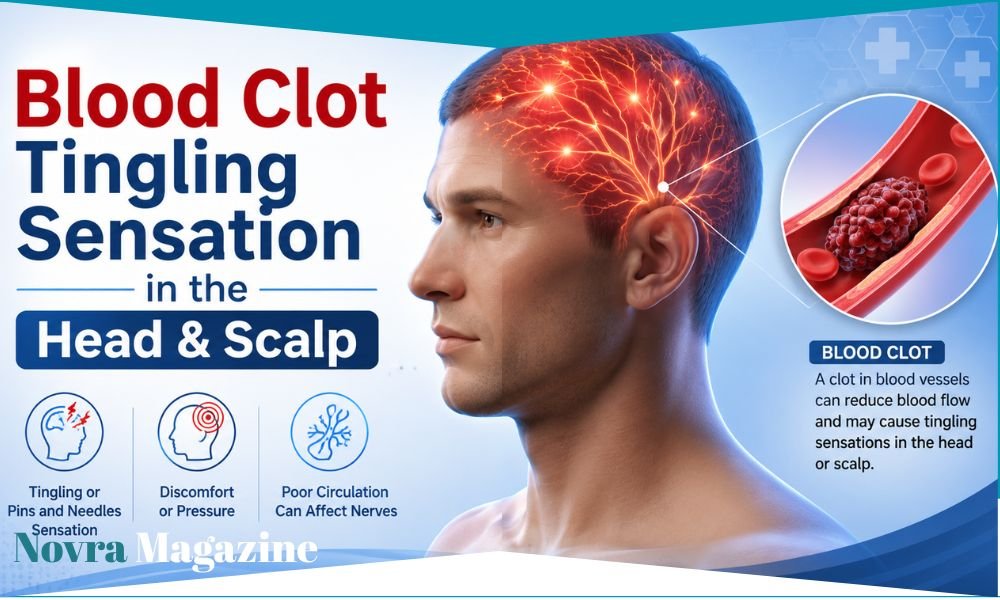
Feeling pins and needles, crawling, buzzing, or numbness across your scalp can be frightening, especially when you start wondering about a blood clot tingling sensation in head scalp. The important fact is that scalp tingling by itself is not one of the classic warning signs of a brain blood clot or stroke. The Centers for Disease Control and Prevention says the major stroke warnings include sudden numbness or weakness, especially on one side, trouble speaking, vision problems, trouble walking, and a sudden severe headache. However, a new tingling sensation should never be ignored if it begins suddenly with these other neurological symptoms.
Can a Blood Clot Cause Tingling in the Head or Scalp?
It is possible for problems with blood flow in the brain to cause abnormal sensations.
However, scalp tingling alone is not a typical way doctors identify a blood clot in the brain.
Official information about blood clots affecting the brain focuses much more on sudden weakness, speech problems, vision changes, seizures, and severe headache.
Tingling can happen with many conditions that are much more common.
These include nerve irritation, migraine, shingles, vitamin problems, and other causes of abnormal nerve sensation.
That is why one symptom should not be used to diagnose yourself.
What Does a Tingling Scalp Feel Like?
People describe scalp tingling in many ways.
It may feel like:
Pins and needles.
Tiny electric shocks.
Buzzing.
Crawling.
Burning.
Numbness.
A cold feeling.
A strange sensitive patch.
The medical word for an unusual pins-and-needles sensation is often paresthesia.
MedlinePlus explains that numbness and tingling are abnormal sensations that can happen in different areas of the body and can have many possible causes.
The feeling itself does not tell you the cause.
The pattern matters.
How suddenly did it begin?
Is it on one side?
Is there weakness?
Is there a headache?
Are you having trouble seeing or speaking?
Those details are much more useful.
What Happens When a Blood Clot Affects the Brain?
There are several ways a clot can cause a brain emergency.
The most familiar is an ischemic stroke.
This happens when blood flow to part of the brain becomes blocked.
Without enough blood and oxygen, brain cells can quickly become damaged.
Another less common condition is cerebral venous thrombosis, often shortened to CVT or CVST.
In CVT, a clot develops in veins that normally drain blood away from the brain.
These are serious medical conditions.
But their symptoms usually involve more than a small isolated patch of scalp tingling.
What Are the Main Signs of a Stroke?
The CDC lists several major warning signs.
They usually appear suddenly.
Watch for:
- Sudden numbness or weakness of the face, arm, or leg, especially on one side.
- Sudden trouble speaking or understanding speech.
- Sudden confusion.
- Sudden trouble seeing.
- Sudden dizziness, trouble walking, or loss of balance.
- A sudden severe headache with no known cause.
These symptoms require emergency attention.
Time matters because some stroke treatments work best when given quickly.
When Is Tingling an Emergency?
Tingling becomes much more concerning when it comes with another neurological problem.
For example, seek emergency medical help if a new tingling or numb feeling happens with:
One-sided weakness.
A drooping face.
Slurred speech.
Trouble understanding words.
Sudden vision loss.
Double vision.
Loss of balance.
Difficulty walking.
Confusion.
Loss of consciousness.
Or a sudden severe headache unlike your normal headaches.
MedlinePlus specifically recommends emergency care when numbness or tingling occurs with weakness, loss of movement, confusion, vision changes, slurred speech, or difficulty walking.
Do not wait to see whether these symptoms disappear.
What Does B.E. F.A.S.T. Mean?
B.E. F.A.S.T. is an easy way to remember stroke signs.
B — Balance: Has balance suddenly changed?
E — Eyes: Is there sudden trouble seeing?
F — Face: Does one side of the face droop?
A — Arms: Is one arm weak or drifting down?
S — Speech: Is speech strange or slurred?
T — Time: Get emergency medical help immediately.
The CDC emphasizes that every minute matters during a stroke.
If symptoms suddenly appear and then disappear, they still need urgent attention.
Can a Mini-Stroke Cause Tingling?
A transient ischemic attack, or TIA, can produce stroke-like symptoms that later disappear.
This is sometimes called a mini-stroke.
The symptoms may last only a few minutes or hours.
However, that does not make a TIA harmless.
The CDC warns that temporary stroke symptoms can signal a serious underlying problem and need medical evaluation.
Sudden numbness can occur during a TIA.
So if an unusual sensation is accompanied by face, arm, or leg numbness, speech trouble, weakness, dizziness, or visual changes, do not dismiss it because it improved.
What Is Cerebral Venous Sinus Thrombosis?
Cerebral venous sinus thrombosis is a rare kind of stroke.
A blood clot forms in veins that normally carry blood away from the brain.
This can stop normal drainage and increase pressure inside the skull.
CVT is much less common than ordinary ischemic stroke.
The American Heart Association says it accounts for less than 3% of all strokes.
It can affect younger people and may occur in people who otherwise do not look like typical stroke patients.
That can sometimes delay diagnosis.
What Does a Brain Venous Clot Usually Feel Like?
A persistent or unusual headache is one of the most common CVT symptoms.
Seizures are another important warning sign.
The American Heart Association says these symptoms may sometimes be mistaken for migraine or epilepsy, which can make CVT harder to recognize.
More severe neurological symptoms can also develop depending on the location and effect of the clot.
MedlinePlus lists brain-clot symptoms including trouble speaking, vision problems, seizures, weakness on one side, and sudden severe headache.
Scalp tingling is therefore not the symptom doctors usually place at the top of the CVT warning list.
Can a Brain Blood Clot Cause Only Tingling?
It would be unsafe to say it never could.
The nervous system is complicated.
Problems affecting blood flow can sometimes create numbness or abnormal sensations.
But isolated scalp tingling without other symptoms is not a classic blood-clot presentation based on major public-health symptom lists.
There are many other possible explanations.
That is why doctors look at the complete picture rather than one sensation.
What Are More Common Causes of Scalp Tingling?
Nerve-related causes are important.
MedlinePlus lists many causes of tingling, including nerve injury, pressure on nerves, shingles, migraine, vitamin deficiencies, abnormal mineral levels, certain medicines, diabetes, multiple sclerosis, stroke, and TIA.
For scalp symptoms specifically, doctors may think about problems involving nerves around the head and neck.
Migraine can sometimes create strange sensory symptoms.
Shingles can start with tingling before a rash appears.
Neck problems may irritate nerves.
The cause cannot be determined from the sensation alone.
Can Migraine Cause Tingling?
Yes.
Migraine can cause sensory symptoms in some people.
MedlinePlus includes migraine among conditions that can cause numbness and tingling.
Some people experience migraine aura before or during a headache.
Aura does not always mean flashing lights.
It can sometimes include abnormal sensations such as pins and needles or numbness.
The difficult part is that migraine symptoms can sometimes look similar to stroke symptoms.
A sudden first-ever neurological symptom should therefore not simply be assumed to be migraine.
What Is Occipital Neuralgia?
Occipital neuralgia involves nerves running through the back of the head and scalp.
The National Institute of Neurological Disorders and Stroke describes it as a rare neurological condition that can cause shooting, shocking, burning, throbbing, or aching pain around the head.
Nerve irritation around this area can make the scalp feel unusually sensitive.
Some people describe nerve-related sensations as electric or burning.
Others notice tenderness when touching the scalp.
A clinician can help decide whether the symptoms fit a nerve problem or need investigation for something more serious.
Can Shingles Start With Tingling on the Scalp?
Yes.
Shingles can begin before the rash appears.
MedlinePlus says early shingles symptoms may include burning, shooting pain, tingling, or itching, usually on one side of the body or face.
A rash with small blisters usually follows.
If shingles affects the forehead, scalp, or area around an eye, prompt medical assessment is important because eye involvement can be serious.
So if a tingling patch becomes painful and a one-sided rash appears, shingles is one possible explanation.
Can a Neck Problem Cause Head Tingling?
Nerves connect the neck and scalp.
Irritation or pressure affecting nerves can cause abnormal sensations.
MedlinePlus lists nerve injury and pressure on spinal or peripheral nerves among common causes of numbness and tingling.
For example, long periods in one position, muscle tension, or a neck injury can sometimes be connected with nerve symptoms.
However, persistent or unexplained symptoms still deserve medical assessment.
Do not automatically blame your posture if symptoms are sudden or neurological warning signs are present.
Can Vitamin Problems Cause Tingling?
Yes.
MedlinePlus lists deficiencies in vitamins such as B1, B6, B12, and folate among possible causes of numbness and tingling.
This does not mean everyone with tingling should start taking large vitamin doses.
Too much of certain vitamins can also cause problems.
MedlinePlus advises people not to start large supplement doses without discussing them with a healthcare professional.
A blood test can sometimes help when a deficiency is suspected.
Can Electrolyte Problems Cause Tingling?
Yes.
Abnormal levels of minerals such as calcium, potassium, or sodium can sometimes cause abnormal sensations.
These minerals help nerves and muscles work normally.
A significant imbalance can produce other symptoms too.
Because many different conditions can cause tingling, doctors may order blood tests if the sensation continues without an obvious explanation.
Can Poor Blood Flow Cause Tingling?
Yes, reduced blood supply can sometimes cause numbness or tingling.
MedlinePlus lists lack of blood supply as one possible cause of abnormal sensations.
But that statement is much broader than saying:
“Scalp tingling means there is a blood clot.”
It does not.
Poor circulation has many possible causes, and neurological symptoms require proper evaluation.
Doctors need the timing, location, medical history, examination, and sometimes imaging to understand what is happening.
What Blood Clot Risk Factors Matter?
Risk can rise with certain medical or life factors.
MedlinePlus lists risks such as cancer, certain surgeries, genetic clotting disorders, pregnancy and childbirth, smoking, obesity, serious injury, some birth-control pills, prolonged immobility, and a family history of blood clots.
The American Heart Association also notes that CVT risk can be higher during pregnancy, after childbirth, with oral contraceptive use, and in people with a tendency to develop clots.
Having a risk factor does not mean you have a clot.
But symptoms may deserve more urgent investigation when significant clotting risks are present.
Can Pregnancy Raise the Risk of a Brain Blood Clot?
Yes.
Pregnancy and the period after childbirth can increase the risk of blood clots.
The American Heart Association specifically includes pregnancy and the postpartum period among situations associated with CVT.
This is important because headaches and unusual sensations are also common during pregnancy.
New neurological symptoms should therefore not automatically be blamed on pregnancy.
If sudden weakness, numbness, vision trouble, speech problems, or a severe unusual headache occurs, urgent medical evaluation is important.
Can Birth-Control Pills Increase Clot Risk?
Some hormonal birth-control medicines can increase the risk of blood clots.
MedlinePlus lists birth-control pills among medicines that can raise clot risk, while the American Heart Association identifies oral contraceptive use as a CVT risk factor.
The absolute risk for an individual person can vary greatly.
Do not stop prescribed birth control only because you read about a possible risk online.
Discuss personal risks with a doctor.
However, severe new neurological symptoms should always be treated separately as a possible emergency.
Can Smoking Increase Blood Clot Risk?
Smoking is included among recognized blood-clot risk factors.
Smoking also harms blood vessels and increases cardiovascular risk.
Again, smoking does not mean every tingling sensation is a clot.
It simply changes the overall risk picture a healthcare professional may consider.
The same is true for many other factors.
Risk factors help guide assessment.
They do not provide a diagnosis.
How Do Doctors Check for a Blood Clot in the Brain?
Doctors begin by asking about symptoms and medical history.
They also perform a neurological examination.
When a brain clot is suspected, imaging is important.
The American Heart Association says CT and MRI-based brain imaging are commonly used when investigating cerebral venous thrombosis, with special vascular imaging helping doctors examine the brain’s venous system.
MedlinePlus also lists CT scans and other blood-vessel imaging among tests used to diagnose blood clots.
You cannot confirm or rule out a brain clot by touching the scalp.
Can a Blood Test Diagnose a Brain Clot?
Blood tests can help doctors understand clotting risk and other possible problems.
For general clot investigation, MedlinePlus notes that a clinician may order tests including a D-dimer.
However, brain-clot diagnosis often requires imaging.
A single home symptom checklist or blood result should not replace medical assessment.
This is especially true when neurological symptoms are present.
What Should You Do if Scalp Tingling Keeps Coming Back?
If the feeling is new, unexplained, or repeatedly returning, arrange medical evaluation.
MedlinePlus recommends contacting a healthcare professional when tingling has no obvious cause or occurs with other unusual symptoms.
Useful details to remember include:
When it started.
How long it lasts.
Which side is affected.
Whether touching the scalp changes it.
Whether neck movement changes it.
Whether you have headache or migraine.
Whether there is a rash.
Whether you have vision, speech, balance, or strength changes.
Those details can help a clinician narrow down the cause.
Should You Take Aspirin if You Think You Have a Brain Clot?
Do not start treating yourself for a suspected stroke or brain clot unless an emergency healthcare professional tells you to.
Not every stroke is caused by a clot.
Some strokes happen because a blood vessel bleeds.
Taking medication without knowing the cause can create problems.
The safest response to possible stroke symptoms is emergency assessment.
Let healthcare professionals determine what type of problem is happening and which treatment is appropriate.
Can Stress Make the Scalp Feel Strange?
People can experience many unusual body sensations during stress.
However, unexplained tingling should not automatically be labelled as stress or anxiety, especially when it is sudden or accompanied by neurological symptoms.
Many medical conditions can create similar sensations.
The safer approach is to consider the full pattern.
A recurring mild sensation with no neurological problems is very different from sudden numbness plus slurred speech.
The second situation requires emergency attention.
Can Scalp Tingling Come Before a Stroke?
Stroke can cause numbness and other abnormal sensations, but there is no reliable rule saying scalp tingling is a normal early warning that a stroke will happen later.
The CDC focuses instead on sudden neurological changes such as one-sided numbness or weakness, speech difficulty, visual problems, balance trouble, and severe unexplained headache.
Do not wait for a symptom to become “more typical” if several stroke warning signs are already present.
Seek emergency care immediately.
What if the Tingling Lasts Only a Few Seconds?
A very brief sensation can have many explanations.
Duration alone cannot tell you whether something is dangerous.
What matters especially is whether other neurological signs occur.
If you have only a momentary tingling sensation and otherwise feel completely normal, the cause may be much less urgent.
But if even a short episode includes facial drooping, arm weakness, speech difficulty, vision change, or trouble walking, it could represent a TIA or stroke-related event and needs urgent assessment.
What if the Tingling Is Only on One Side of the Scalp?
One-sided symptoms deserve attention, but they still do not prove a clot.
Shingles, migraine, and local nerve problems can also affect one side.
Stroke is more concerning when the numbness extends to the face, arm, or leg on one side, particularly when it begins suddenly.
A one-sided painful or burning sensation followed by a rash can fit shingles.
The surrounding symptoms are therefore crucial.
What if Scalp Tingling Comes With a Headache?
This combination has many possible causes.
Migraine is one possibility.
Nerve-related headaches are another.
CVT can cause a persistent or unusual headache, and stroke can cause a sudden severe headache.
The pattern matters.
A familiar mild headache that behaves exactly like previous migraines is very different from the worst headache of your life that appeared suddenly.
A new severe headache with weakness, confusion, seizures, vision changes, or speech difficulty needs urgent medical care.
Is a Thunderclap Headache Dangerous?
A thunderclap headache reaches extreme intensity very quickly.
A sudden severe headache with no known cause is included among CDC stroke warning signs.
Do not simply lie down and wait for a first-ever severe sudden headache to disappear, especially when other neurological symptoms are present.
Emergency assessment is appropriate because several serious brain conditions can cause sudden severe headache.
What if Tingling Happens With a Seizure?
Seek emergency medical attention.
Seizures are among the recognized symptoms associated with cerebral venous thrombosis.
They can also occur for many other reasons.
Either way, a first seizure or a seizure associated with new neurological symptoms needs medical assessment.
Do not try to diagnose the cause based on a web article.
Can a Blood Clot Be Treated Successfully?
Yes, many blood clots can be treated.
Treatment depends on where the clot is and how severe the condition is.
For CVT, the American Heart Association says standard treatment commonly involves anticoagulation, or blood-thinning medication, to stop the clot from growing and help restore normal blood flow.
More serious cases may require additional procedures or surgery.
The important point is early recognition.
A potentially treatable problem becomes more dangerous when emergency symptoms are ignored.
FAQs About Blood Clot Tingling Sensation in Head Scalp
Is scalp tingling a sign of a blood clot?
Scalp tingling alone is not a classic brain-clot warning sign. Brain clots more commonly cause symptoms such as severe headache, one-sided weakness, speech problems, vision changes, or seizures.
Can a stroke make your scalp tingle?
A stroke can cause numbness and abnormal sensations, but the classic warning pattern is sudden numbness or weakness of the face, arm, or leg, especially on one side.
Can a brain clot cause numbness in the head?
Problems with brain blood flow can cause neurological sensory changes. However, isolated head or scalp numbness has many other possible causes and cannot diagnose a clot.
What does a blood clot in the brain feel like?
Symptoms can include sudden severe headache, weakness on one side, trouble speaking, vision problems, or seizures. CVT commonly presents with persistent headache and may cause seizures.
Does CVST cause scalp tingling?
Scalp tingling is not listed among the main classic CVT symptoms in major American Heart Association guidance. Persistent headache and seizures are more typical warning features.
What commonly causes scalp tingling?
Possible causes include nerve irritation, migraine, shingles, vitamin deficiencies, abnormal mineral levels, medicines, and several neurological conditions.
Can migraine cause pins and needles?
Yes. Migraine is among the conditions known to cause numbness or tingling in some people.
Can shingles cause scalp tingling?
Yes. Shingles can begin with tingling, itching, burning, or shooting pain before a blistering rash appears.
When should scalp tingling worry me?
Seek emergency care if tingling or numbness begins suddenly with weakness, facial drooping, speech trouble, vision changes, confusion, difficulty walking, loss of consciousness, or a severe unusual headache.
Can a TIA cause tingling?
A TIA can cause sudden stroke-like numbness or other neurological symptoms that later disappear. Temporary symptoms still require urgent medical assessment.
Does a severe headache mean I have a blood clot?
No. Headaches have many causes. However, a sudden severe unexplained headache is a stroke warning sign, while persistent headache is common in cerebral venous thrombosis.
How is a brain blood clot diagnosed?
Doctors may use neurological examination and imaging such as CT or MRI. Special vascular imaging can help identify cerebral venous thrombosis.
Should I take aspirin for scalp tingling?
Do not self-treat a suspected brain clot or stroke with aspirin unless a healthcare professional tells you to. Different types of stroke need different treatment.
Are brain blood clots common?
Cerebral venous thrombosis is rare. The American Heart Association says it accounts for less than 3% of strokes.
Who is at higher risk of CVT?
Risk can be higher during pregnancy, after childbirth, with oral contraceptive use, obesity, certain clotting conditions, and some other medical situations.
Can blood clots happen after long travel?
Long periods of immobility can increase general blood-clot risk, particularly clots in the legs. MedlinePlus recommends moving regularly during long periods of sitting.
Final Thoughts
The most important thing to understand about a blood clot tingling sensation in head scalp is that tingling by itself does not automatically point to a brain blood clot.
Scalp tingling has many possible causes.
Nerves can cause it.
Migraine can cause abnormal sensations.
Shingles can begin with tingling.
Vitamin or mineral problems can sometimes cause pins and needles.
Different medicines and neurological conditions can also produce unusual sensations.
A blood clot becomes much more concerning when the symptom pattern looks neurological.
Sudden weakness.
A drooping face.
Trouble speaking.
Sudden vision problems.
Loss of balance.
Confusion.
A seizure.
Or a sudden severe headache.
Those are symptoms that should not be watched at home while hoping they disappear.
Cerebral venous thrombosis deserves special attention because it can occur differently from a typical stroke.
It is a rare clot affecting veins that drain the brain.
Persistent headache and seizures are among its most common warning features, and brain imaging is normally needed to diagnose it.
The main lesson is simple.
Do not diagnose a blood clot from scalp tingling alone. But do not ignore sudden tingling or numbness when it appears with stroke warning signs.
If those emergency symptoms are happening now, seek emergency medical care immediately.
For tingling that keeps returning without an obvious cause, arrange a medical evaluation so a clinician can look for nerve, migraine, skin, vitamin, circulation, or other possible causes. MedlinePlus specifically recommends medical review when numbness or tingling is unexplained or occurs with additional unusual symptoms.
For more info, visit novra magazine