Are you a wellness coach, health practitioner, or someone who cares deeply about women’s health and wants to grow your skills and reach? Learning what a cycle coach school offers can be a strong next step. These programs teach you how the menstrual cycle works, how hormones affect health, and how to coach clients using clear, modern methods.
As people talk more openly about periods and push back on old shame and misinformation, certified menstrual cycle coaches are becoming more needed. This training helps you support clients so they can understand their cycles, feel more confident in their bodies, and make better health choices.
Cycle coach school programs offer accredited certifications that mix strong science with whole-person, client-focused support. You learn how hormones work together, how different life stages can affect the cycle, and how to coach people through real health concerns. If you want to add a new specialty or build on work you already do, training through a cycle coach school can support both personal growth and career progress.
Cycle Coach School Programs for Wellness and Women’s Health Professionals: Overview
Who Should Enroll in Cycle Coach School Programs?
Menstrual cycle coaching can fit into many types of work, which is why people from many backgrounds join these programs. They are built for professionals already working in health and wellness, and also for people who want to start a new career that feels meaningful. Many students are life coaches, wellness coaches, and health coaches who want to focus on women’s health and the menstrual cycle.
Programs also welcome naturopaths, nutritionists, dietitians, therapists, social workers, yoga and Pilates teachers, and other holistic health professionals. Midwives, doulas, pelvic floor specialists, IVF nurses, and allied health workers often find the training useful too. Anyone who cares about menstrual health or natural fertility education, or anyone moving into a coaching role, can find a supportive learning space here. You do not always need past cycle training.
What matters most is a real commitment to helping women and people with periods understand their bodies and work with them, instead of fighting them.
Why Is Menstrual Cycle Coaching Important in Wellness and Women’s Health?
Menstrual cycle coaching is more than a passing idea. It fills a big gap left by standard health education. For a long time, periods were treated as something to hide, and many people were never taught what a healthy cycle looks like. This can leave them confused, worried, or cut off from their bodies.
Cycle coaches help clients with many concerns, like irregular cycles, mood changes, pain, and body confidence. They can also support people who carry difficult past experiences linked to their cycles. By helping clients learn what is happening in their bodies, coaches can support self-acceptance, emotional healing, and informed choices.
This kind of coaching is not just about reducing symptoms. It can also support energy, creativity, intuition, and day-to-day well-being so clients can live in a way that matches their natural rhythms.
Key Benefits of Cycle Coach Certification for Wellness and Women’s Health Professionals
Expanded Client Impact and Practice Growth
Getting certified as a cycle coach through a program like Cyclical School supports personal learning, but it can also help you grow your career. Women’s health services are growing quickly, and more clients want whole-person support that they often do not get in regular healthcare. As a certified menstrual cycle coach, you can meet that need and build a practice that feels meaningful and can also provide strong income.
Graduates often work in different ways, such as one-on-one coaching, group workshops, online education, or workplace wellness sessions. This certification can help you offer new services, reach more clients, and build work around a core part of women’s health. Coaching session prices often range from $80-$120 in the United States and $80-$200 in Australia, showing the clear earning potential of this specialty.
Personal and Professional Empowerment
Cycle coach certification can also be a powerful personal experience. Many people strengthen their own relationship with their cycle during training, which helps them coach others in a more real and grounded way. You build confidence in your knowledge and in your ability to hold supportive conversations.
You also learn how to handle challenging client situations, build trust, and help clients speak up for themselves in medical systems that can feel confusing. Many programs also support you in finding your voice in the menstrual health space, growing leadership skills, and building a business that matches your values. Working through self-doubt can be part of the process too, helping you show up as a confident coach and group facilitator.
Improves Knowledge of Hormonal Health across the Life Cycle
A key part of strong cycle coach training is learning hormonal health across the full life span. This includes the first period (menarche), the reproductive years, perimenopause, and post-menopause. You learn what hormone changes happen at each stage and what is usually normal versus what can be a sign of imbalance. You also learn how to track cycles and read cycle data in a clear way.
Many programs teach the endocrine system, female anatomy, and the roles of major hormones. This prepares coaches to support teenagers, clients in their 20s-40s, and those going through midlife changes. With this full view, graduates are ready to support a wide range of client concerns with care and clear reasoning.
Comprehensive Support for Menstrual Health Challenges
One of the biggest benefits of certification is learning how to support many menstrual health concerns. Many people live with issues like period pain, PMS, PMDD, endometriosis, PCOS, adenomyosis, dysmenorrhea, amenorrhea, and uterine fibroids, and they may feel ignored or brushed off in regular care.
These programs teach evidence-based ways to look for root causes instead of only chasing symptoms. You learn how gut health, liver function, blood sugar balance, and stress can affect hormones. Programs often include condition-focused support plans, such as guidance for high estrogen, low progesterone, and high androgens. Combined with trauma-informed and mind-body coaching, this helps you support clients as they build a kinder relationship with their bodies, cycles, and lived experiences.
Program Structure and Curriculum Highlights
Cycle coach school programs are usually set up to give you both solid knowledge and hands-on practice. Program length can differ, but many accredited options, including those from Cyclical School and Menstrual Coach Academy, run for about six months. This gives students time to learn, practice, and absorb the material. The curriculum is often split into clear sections so skills build step by step.
Core Modules: Menstruality, Hormones, and Female Anatomy
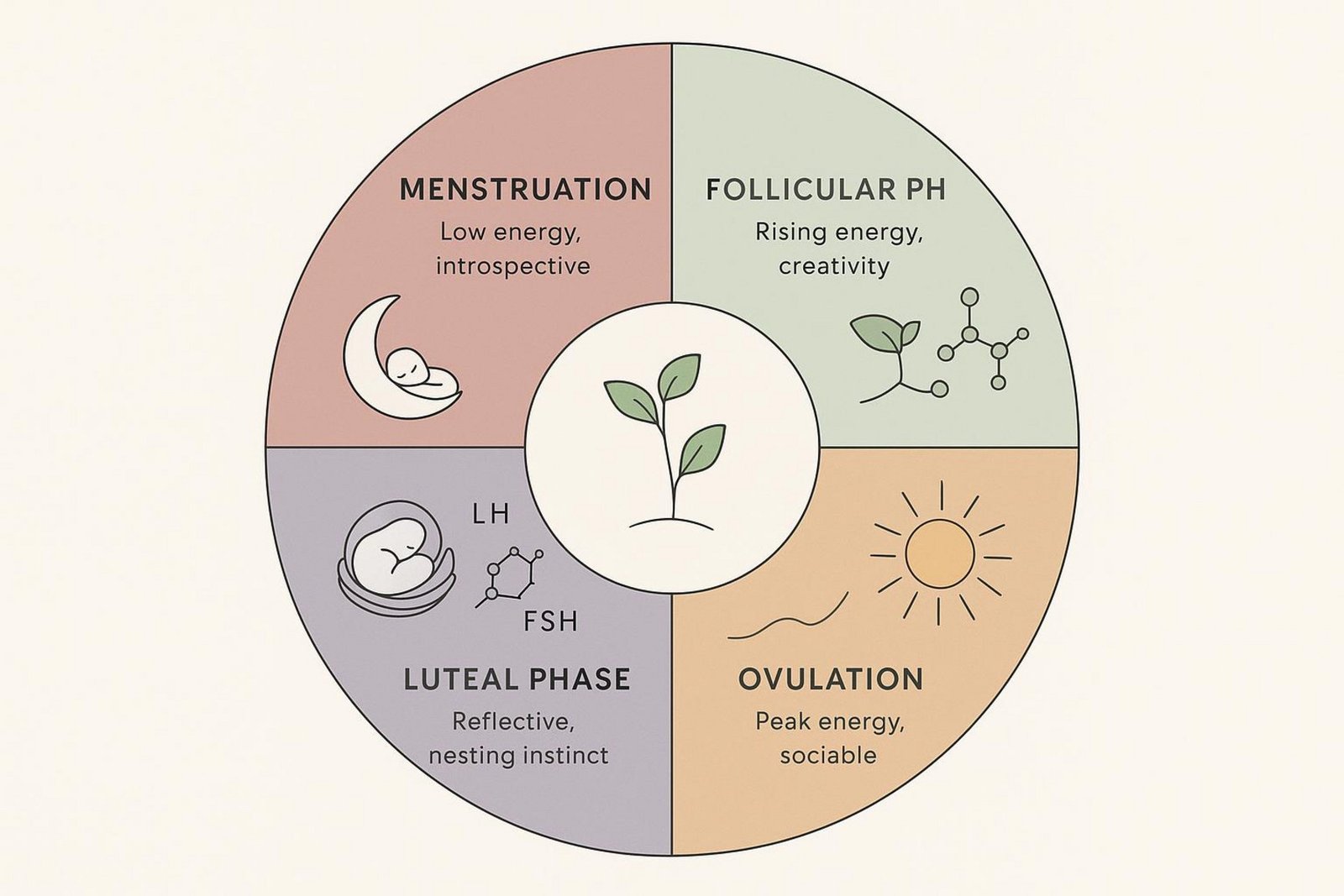
Training often starts with the basics of menstrual health and what the cycle is meant to do. This includes why ovulation matters and how to spot patterns that may be normal or not. Students learn cycle charting and how to read client charts using signs like basal body temperature and cervical fluid. You also study the endocrine system through a clear “Hormones 101” style overview, including common imbalances and symptoms. Female anatomy is covered in detail, looking at both external and internal organs and how they connect with hormones. Many programs also teach guiding frameworks, such as the “four pillars of Cyclical Health” and ideas like “Cycle Shadows and Light,” to support whole-person coaching.
Advanced Topics: Fertility, Menopause, and Cycle-Related Conditions
After the foundations, programs move into more focused areas. This often includes cycle health across life stages, from puberty and teen cycles to changes in the 20s through 40s, and then perimenopause and post-menopause. Courses also cover common cycle-related conditions such as PCOS, endometriosis, adenomyosis, PMS, and PMDD, including likely drivers and holistic support options. Many programs also put strong focus on fertility and preconception wellness so coaches can support people and couples as they plan for pregnancy and work through fertility concerns.
Integrative Approaches: Nutrition, Lifestyle, and Mental Wellness
Whole-person coaching looks at more than hormones alone. These programs teach how food choices can affect hormone balance, including macronutrients, micronutrients, and simple ways to plan eating habits for better health. You also learn about the links between blood sugar, insulin, and hormones, plus how gut health and liver function can affect hormone processing. Lifestyle topics often include sleep and circadian rhythms, stress support, and how the HPA axis and adrenal function connect with hormones. Mental wellness is also included, with lessons on polyvagal theory and trauma-informed work that can support the nervous system and help clients work through emotional blocks and build a more compassionate relationship with their bodies.
Practical Skills: Coaching Methods and Client Facilitation
Knowing the facts is helpful, but coaching skill is what makes the work effective. Cycle coach school programs spend real time on how to coach: session structure, client management, and how to guide conversations. Students learn how to build trust, ask useful questions, and create clear coaching plans. Trauma-informed coaching is often a key focus, including how to work safely with consent, power dynamics, and sensitive topics, especially in group settings. Many programs use case studies and sample sessions so students can see how the process works in real client support.
Live Group Sessions and Self-Study Options
Many programs offer flexible learning so students can fit training around work and family life. Schools often mix live group calls with self-study lessons. For example, Cyclical School offers weekly live Zoom sessions with replays. Menstrual Coach Academy includes monthly live group lectures and smaller process group calls. The Institute for Menstrual Health offers a self-study option with monthly live Q&A calls. Sessions are usually recorded, helping students in different time zones. Some programs ask for a minimum level of live attendance for certification, but the goal is usually flexible access and steady support.
Client Case Studies and Real-World Applications
To help students move from theory to real practice, case studies are a major part of many programs. These exercises let students apply what they learned to different client situations and build problem-solving skills. For example, the Institute for Menstrual Health includes six case study review call recordings that walk through real client stories, including symptoms, support steps used, and outcomes. Many programs also run practitioner workshops that show the full client path, from intake to follow-up. This hands-on practice helps students build clinical thinking, increase confidence, and learn how to support clients in a steady, realistic way.
Meet the Instructors and Guest Faculty
The quality of a cycle coach school is often shaped by the teachers leading it. Many programs bring together respected voices in women’s health so students can learn from different angles and backgrounds.
Core Teaching Team
These programs are often led by founders and head teachers with years of practical work and strong training. Claire Baker, the founder of Cycle Coach School, is a highly trained expert in Menstruality and is well known for her early work in this field. Jema Lee, Head Teacher and founder of Cyclical School, is known as a trusted menstrual cycle educator and coach, respected for her integrity, warmth, and clear way of speaking about health.
Nicole Jardim, founder of the Institute for Menstrual Health, is a Certified Women’s Health Coach and the author of Fix Your Period, and she brings over a decade of training in functional medicine and nutrition. Lisa de Jong, Programme Founder of Menstrual Coach Academy, also teaches from a holistic and trauma-informed approach. These teachers are not only educators; they actively work in the field and care deeply about training new coaches.
Leading Guest Educators in Menstrual and Women’s Health
Many cycle coach schools also bring in guest educators who teach focused masterclasses. These sessions add extra depth and help students learn from specialists. For example, Cyclical School includes guest teachers like Rosie Rees (Sex & Relationship Coach), Holliea Fairleigh (Ayurvedic Practitioner), Amber Hawken (Cognitive Behavioural Therapist), and Meah Robertson (Naturopath Physician), covering topics from Yoni care to nutrition for a healthy cycle.
The Institute for Menstrual Health offers a large “Health & Wellness Library” with talks from experts such as Dr. Carrie Jones (DUTCH Hormone Test and Perimenopause), Dr. Lara Briden (Perimenopause Troubleshooting), Dr. Jolene Brighten (Effects of Hormonal Birth Control), Lisa Hendrickson-Jack (Menstrual Cycle as a Fifth Vital Sign), Dr. Natalie Underberg (PCOS and Social Media Marketing), and others covering SIBO, fibroids, genetic approaches to endometriosis, physiological HRT, and business building. This mix of teachers gives students a broad, current education from many parts of women’s health.
Program Resources and Support for Student Success
Strong cycle coach schools support students beyond video lessons and reading. Helpful resources and support systems make it easier for students to finish the program feeling ready to work with clients.
Interactive Community and Peer Networking
Community is often one of the most helpful parts of training. Students usually get access to private online spaces, such as Facebook groups, where they can ask questions, share ideas, and get peer support. Many programs also encourage study buddies or small groups to help students practice and understand the material. After graduation, these groups often become alumni networks that support ongoing connections, referrals, and long-term community around cycle health work.
Downloadable Coaching Templates and Business Resources
To help students start working with clients faster, many schools offer practical resources you can use right away. This can include downloadable templates like health history forms, session plans, and client messages. Many programs also include business resources, such as how to run sales calls, how to structure first sessions, basic legal guidance for contracts and agreements, and suggested tools like scheduling software and email platforms. The goal is to help graduates start a professional practice without building everything from zero.
Ongoing Access to Recordings and Support Materials
Learning takes time, so programs often give extended access to course materials. Students usually use an online portal with video lessons, audio, workbooks, notes, and handouts. A big benefit is access to recorded calls, including live lectures, Q&A sessions, and process groups, so students can rewatch lessons and review harder topics. Some schools offer lifetime access. Some also use tools like AI-based search so students can quickly find key details across the full course library.