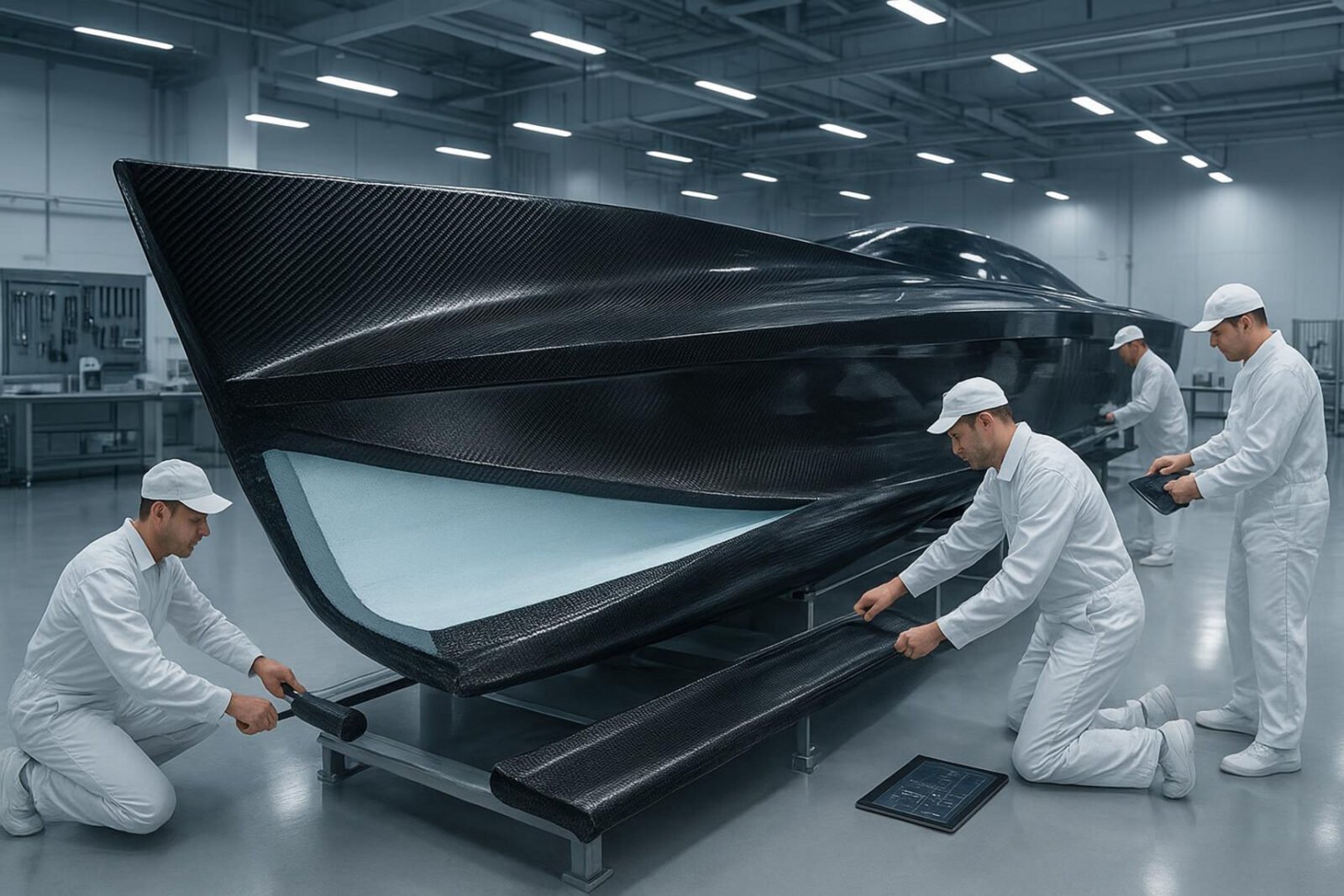
Boat builders and marine engineers keep looking for materials that help ships go faster, use less fuel, and last longer. This often leads to modern composite materials, and one strong option is Rohacell S Foam.
So how does this high-performance polymethacrylimide (PMI) foam fit into lightweight hull building, and what makes it useful? In simple terms, Rohacell S foam combines low weight with high strength, plus strong resistance to heat, water, and harsh conditions. This makes it a great core material for strong but lightweight marine structures that can handle tough ocean use.
It helps cut weight without weakening the hull, which supports safety and performance and can lead to better fuel use, higher speed, and longer-lasting boats.
Rohacell S Foam: Composition and Unique Advantages for Marine Hulls
What Is Rohacell S Foam and How Is It Produced?
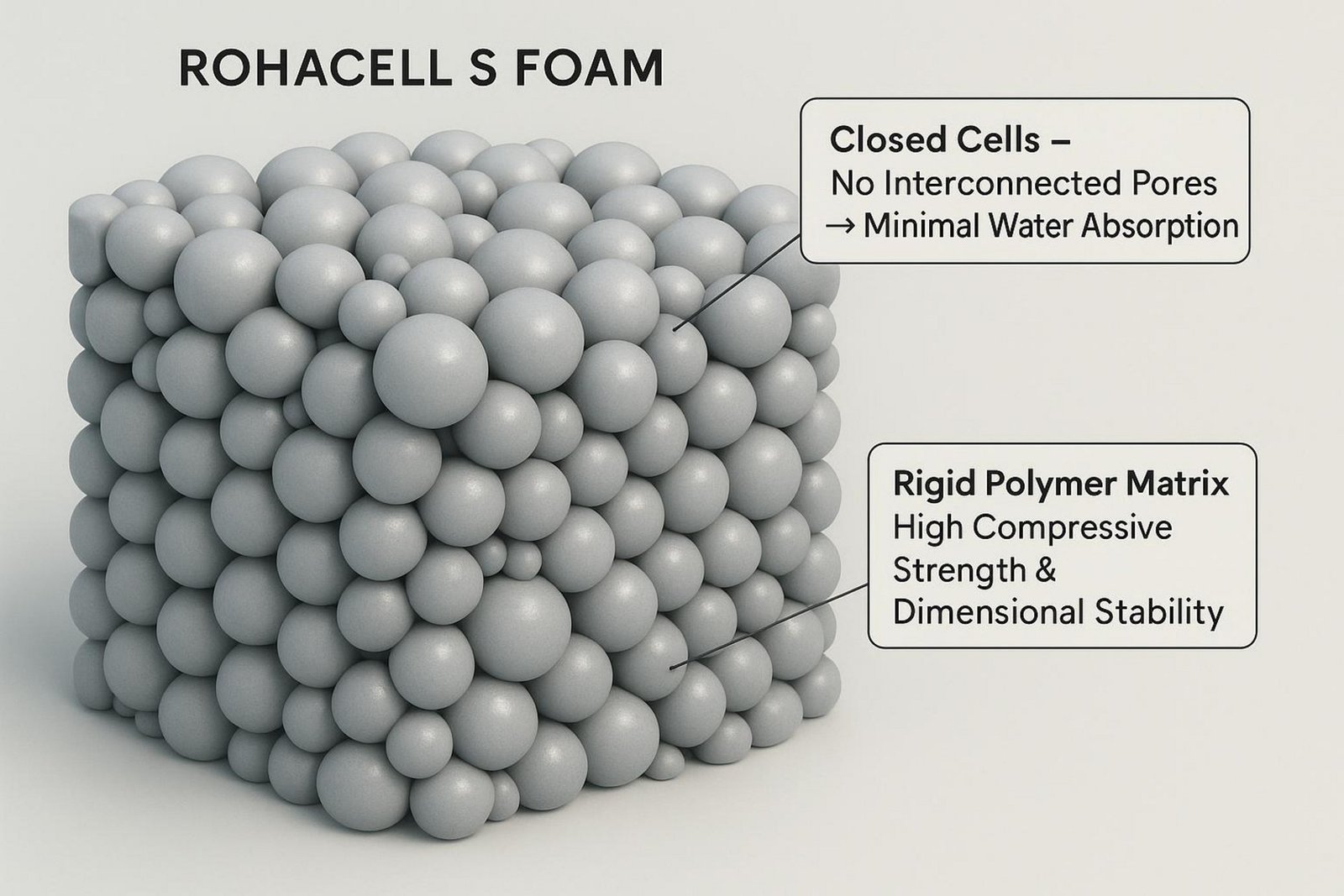
Rohacell S foam is a rigid, closed-cell polymethacrylimide (PMI) foam known for high strength compared to its weight. It is based on polymethacrylimide, a type of polymer that can form stiff closed-cell foams with strong mechanical properties, even at very low densities. It is made using a two-step heat process. It starts with free-radical copolymerization of methacrylic acid and methacrylonitrile to create a crosslinked prepolymer sheet.
After that, the sheets go through controlled foaming and imidization at higher temperatures, usually about 150°C to 250°C. During this step, a blowing agent breaks down and creates gas bubbles that expand the polymer, while chemical groups form a stable imide structure. This careful process creates a foam with a fully closed-cell structure and cell contents between 80% and 100%. That closed-cell structure is a key reason it performs well in demanding jobs like shipbuilding. Rohacell S is made for uses in shipbuilding, rail, and aircraft, showing it is built for strong, dependable performance.
Thermal Stability and Long-Term Performance
A major benefit of Rohacell S foam (and PMI foams in general) is its very high heat resistance and strong creep compression behavior. It stays dimensionally stable when heated, with a glass transition temperature (Tg) often around 180°C to 240°C and a heat deflection temperature (HDT) over 230°C. This heat resistance means the foam core keeps its shape and strength during composite curing cycles. Rohacell S can handle curing up to about 130°C, while some other grades (like XT-HT) can go up to 180-190°C.
After manufacturing, this heat stability also helps during real use. Boats see big temperature changes, from hot sun on deck to cooler water temperatures. Rohacell S resists heat-related damage and keeps supporting the structure for many years, helping the hull stay stiff and strong and lowering the chance of delamination or breakdown from heat stress.
Outstanding Creep Compression Strength
Core materials must resist slow deformation under constant load, which is called creep compression. Rohacell S foam has creep compression strength that is higher than other rigid foams on the market. This matters in marine use because hulls deal with ongoing and changing loads from waves, engine vibration, and how weight is carried on board.
A core with strong creep resistance helps a sandwich structure keep its shape and load capacity over the boat’s lifetime. This lowers fatigue problems, helps the structure stay stable, and can extend hull service life, which helps avoid expensive repairs or early replacement.
Water Resistance and Moisture Uptake Behavior
For marine use, water resistance is a must. Rohacell S foam has a fully closed-cell structure that strongly limits water entering the core, which is a common problem for some other core materials. This closed-cell design helps fight marine issues like osmotic blistering and freeze damage that can harm hull strength and life.
Rohacell S can still take in small amounts of moisture from the air through diffusion, and for most grades this is low and reversible. How much it absorbs depends on temperature and humidity. This can cause small (usually minor) size changes and can affect creep behavior. The foam can be dried again to bring back its original mechanical properties. For higher-temperature processing, drying is recommended to avoid steam forming, which can hurt bonding. Dried or heat-treated versions are available from the factory and come in diffusion-proof bags to help keep them in good condition.
Flame Resistance and Toxicity Considerations
Safety matters in shipbuilding, and Rohacell S foam offers improved fire behavior. Rohacell S has better flame resistance than the IG-F grade and passes the 60-second vertical burn test standard to FAR 25.853 (an aviation fire standard), which says a lot about how it behaves in a fire. This can be helpful for boats that carry passengers or have enclosed spaces.
For health and the environment, Rohacell S foam is mostly physiologically inert and is seen as non-hazardous under normal handling. It has no known harmful effects on humans, animals, plants, or microorganisms in normal conditions, and it does not pollute water. Dust from machining can irritate the lungs or eyes, but ventilation and proper protective gear reduce this risk. When processed correctly, Rohacell S does not create dangerous byproducts, which supports its use in marine building.
Role of Rohacell S Foam in Lightweight Hull Construction
Reducing Weight Without Sacrificing Structural Integrity
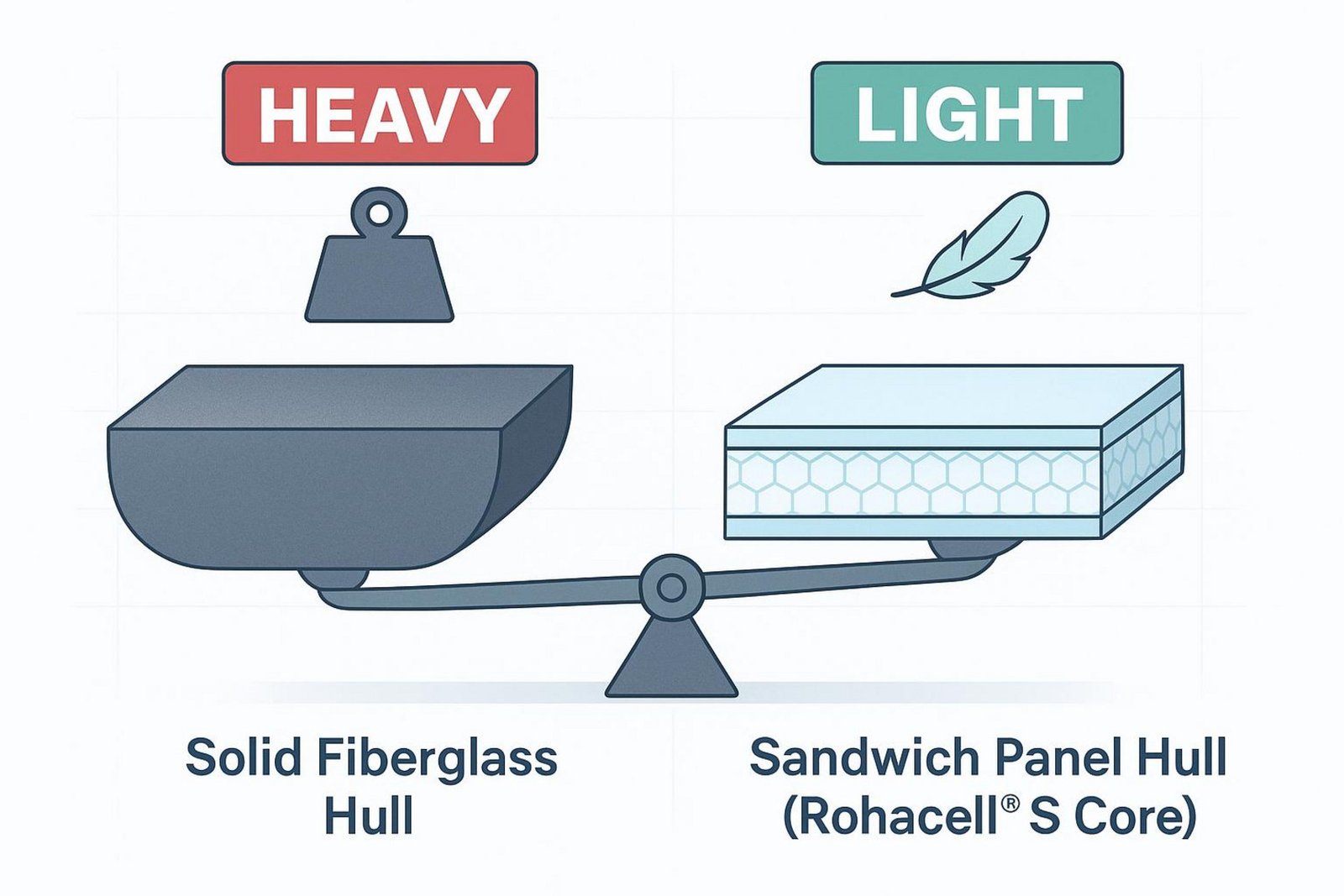
The main reason Rohacell S foam is used in hull construction is that it helps reduce weight while keeping strength. Rohacell S has nominal densities from about 51 to 110 kg/m³, giving it a strong strength-to-weight ratio. When used as the core in sandwich composites, designers can build hulls that weigh much less than solid fiberglass hulls, and often less than hulls made with other foam cores.
Less weight leads to clear performance gains. A lighter hull needs less power to reach the same speed, which improves fuel efficiency and can extend range for commercial and leisure boats. Weight reduction can also increase payload, improve acceleration, and make handling better, especially for high-performance yachts and racing boats. The stiffness from the foam core also supports a steadier and more comfortable ride.
Mechanical Properties Relevant to Marine Environments
Marine conditions put materials under constant forces: wave loads, local impacts, and steady vibration. Rohacell S foam has mechanical properties that match these needs. Its strong compressive and shear properties help sandwich panels spread loads and resist deformation.
Rohacell S also has strong fatigue resistance. This means it can handle many cycles of loading without losing much stiffness or strength. For hulls that flex and vibrate all the time, this is very important. Combined with its resistance to water entry and skin debonding, this supports long-term durability and structural reliability in key hull parts.
Thermal and Environmental Benefits in Seawater Applications
Rohacell S foam also provides heat and environmental benefits in seawater use. Because it stays stable over a wide temperature range-from cold arctic waters to hot tropical regions-it helps avoid softening or brittleness that could weaken a hull. This heat stability also supports good bonding during curing, helping the skins and core join strongly.
Its closed-cell structure also helps reduce freeze damage, because there is little space for water to gather and expand when frozen. It can also help reduce galvanic corrosion at foam-metal interfaces, which can be a problem in mixed-material marine builds. These resistances help the structure last longer and can reduce maintenance needs.
Selecting the Right Rohacell S Foam Grade for Marine Hulls
Available Grades and Marine Suitability
The Rohacell family includes many grades for different industries, but Rohacell S is made specifically for shipbuilding, along with rail and aircraft uses. This makes it a natural fit for marine hulls. Rohacell S comes in nominal densities of 51, 71, and 110 kg/m³, so designers can choose between maximum weight savings or higher strength. Each density level has a different set of mechanical properties, making it possible to match the foam to specific hull zones or vessel types.
Rohacell S has a maximum curing temperature of about 130°C. This works with many common marine resin systems such as epoxy, vinyl ester, and polyester. This gives manufacturers flexibility. Other grades like Rohacell HE also appear in marine use, but Rohacell S stands out with improved fire behavior and passing safety tests, which can matter for marine certification work. Sheets in the relevant SL and SL-HT densities are stocked by Chem-Craft, an official Evonik distributor that also advises on infusion, RTM and autoclave processing.
Factors to Consider: Density, Thickness, and Application
Picking the best Rohacell S grade means looking at a few connected factors:
- Density: Higher density generally means higher compressive and shear strength, but also more weight. High-load areas may need 110 kg/m³, while lower-load areas may work well with 51 or 71 kg/m³.
- Thickness: Core thickness strongly affects bending stiffness. A thicker core usually makes a stiffer panel, even with lower density foam, but it adds volume and some weight.
- Where it is used: Hull bottom, deck panels, bulkheads, and internal structures can all need different stiffness and impact resistance.
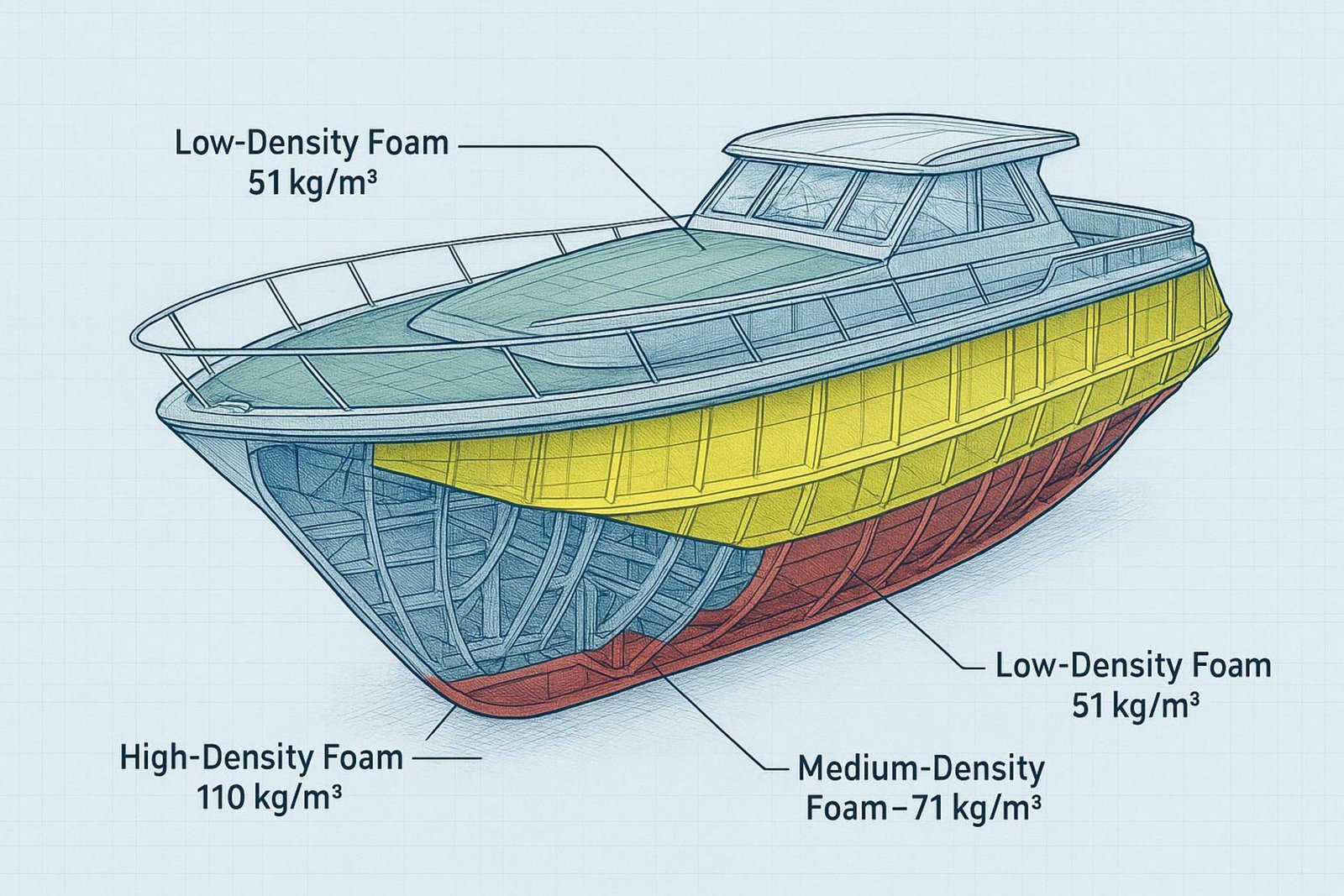
Marine designers usually run structural calculations to pick the right mix of density and thickness to meet strength, stiffness, and impact targets while staying within weight goals.
Supplier Quality and Approval Processes
Material consistency matters a lot for marine structures. Working with trusted suppliers and distributors, such as Chem-Craft (which offers Rohacell S foam), helps improve reliability. Suppliers often provide technical help for selecting grades and improving designs.
It also helps to check if marine class approvals or customer requirements apply. Major producers like Evonik use integrated quality management systems such as EN 9100:2018 / AS9100:2016 certification. While built for aerospace, this level of control supports consistent quality, traceability, and predictable performance, lowering the risk of failures in important marine structures.
Applications of Rohacell S Foam in Marine Construction
Foam Core Sandwich Panels for Hulls and Decks
Rohacell S foam is mainly used as the core in high-performance sandwich panels, which are common in lightweight marine construction. These panels usually have two thin, strong composite skins (often carbon fiber or glass fiber) bonded to a thicker, lightweight Rohacell S core. This design creates a structure that is very stiff and strong for its weight, and it can outperform a solid laminate at the same weight.
In hulls, Rohacell S cores support buoyancy, impact resistance, and thermal insulation. In decks, sandwich panels provide a strong but lightweight walking surface that can handle foot traffic and equipment loads without adding too much weight high up, which can hurt stability. Because the foam is closed-cell, it also limits resin uptake, helping avoid extra “dead weight” from resin-rich areas.
Use in Catamarans, Yachts, and Racing Boats
Rohacell S foam is especially useful for high-performance boats like catamarans, luxury yachts, and racing boats. For catamarans, low weight supports larger structures with less drag, which can improve speed and fuel use. High stiffness helps maintain the exact shapes needed for good hydrodynamics.
In luxury yachts, being able to build larger, more spacious boats without a huge weight increase is valuable. Rohacell S supports advanced designs, helps reduce vibration, and offers thermal insulation that supports interior comfort. For racing boats, where every gram matters, Rohacell S helps designers build hulls that are very light, stiff, and able to handle extreme forces in rough water. PMI foams are also replacing older core materials like balsa and PVC foams in many builds because they handle moisture and fatigue better.

Integration With Advanced Composite Layups
Rohacell S foam works well with many composite manufacturing methods, including hand lay-up, vacuum infusion, resin transfer molding (RTM), and prepreg systems. Its closed-cell structure is especially helpful in infusion because it stops resin from soaking deep into the core, which would add weight and cost. It can also be vacuum-fixed during machining, helping with accurate processing.
Rohacell S can serve as a load-bearing core and also as a production tool (such as a flyaway mandrel) in advanced methods like automated fiber placement and filament winding. This flexibility helps marine manufacturers use modern production methods to build sandwich composites with good accuracy and repeatability, even for complex hull shapes.
Processing Rohacell S Foam for Marine Hull Projects
Cutting, Shaping, and Thermoforming Best Practices
Rohacell S foam is fairly easy to work with and can be machined using common tools used for wood or plastic. This includes milling, drilling, turning, punching, and sanding, and fast-running machines usually do not need lubricants. For hull projects with curved shapes, Rohacell S can be formed into complex 3D parts using CNC wood or plastic machines, allowing good precision and repeatability.
Rohacell S can also be thermoformed to make complex shapes. Two common methods are cold forming and hot forming. Cold forming means fixing the sheet cold onto a die with vacuum, heating it in an oven to the forming temperature, then cooling it slowly. This can produce fairly accurate 3D shapes, but the panel must be held in shape during later steps due to spring-back forces. The smallest bend radius in cold forming is about twice the panel thickness.
Compatibility With Resin Infusion and Prepreg Systems
The closed-cell structure of Rohacell S helps a lot with resin systems and composite processes, especially infusion and prepregs. Unlike open-cell foams, Rohacell S mainly absorbs resin only in the cut cells at the surface. This limits excess resin inside the core, keeping the part lighter and reducing resin cost.
This also supports vacuum fixation during machining, which can make handling easier and placement more accurate. Rohacell S works with many curing methods, including hand lay-up with vacuum support, RTM, and autoclave processing. Its strong heat resistance helps it tolerate curing temperatures used with polyester, vinyl ester, and epoxy resins without major damage or shape change.
Cold and Warm Curing Methods: Benefits and Cautions
Both cold and warm curing can be used with Rohacell S:
- Cold curing: Often done at room temperature. It is simpler and needs less equipment, making it useful for smaller builds or repairs.
- Warm curing: Used in autoclaves, RTM, and similar production methods. Rohacell S can be processed well this way, but moisture control matters.
A key warning: Rohacell S can absorb moisture from the air. If it is cured above 100°C while moisture is present, steam can form and weaken the bond between skins and core, which can cause delamination or lower strength. Drying Rohacell S before high-temperature processing is strongly recommended. Heat-treated (-HT) versions are available from the factory in diffusion-proof aluminum bags and should be stored dry. Forming steps should ideally happen after heat treatment to avoid size changes.
Surface Quality and Secondary Bonding Considerations
Good surface quality and strong secondary bonding matter for both strength and appearance. Before bonding, the Rohacell S surface should be cleaned of dust using oil-free compressed air so the adhesive can bond well. Once cut, the exposed cells provide mechanical anchoring points, which helps bonding with most common adhesives.
Rohacell S has a larger cell size, which helps mechanical locking. Some microporous PMI foams (like RIMA) have much finer cells (around 0.05-0.3 mm) and can keep resin absorption under 100 g/m² and support Class-A surfaces for visible parts without extra surface steps. Rohacell S is not mainly made for that type of finish, but with good surface prep and the right resin choices it can still deliver strong bonding and good surfaces for most marine structural uses. It also resists many solvents, which helps with compatibility with cleaning agents and primers.
Environmental and Regulatory Aspects of Rohacell S Foam
Compliance With Marine and Environmental Standards
As environmental rules get stricter, marine materials must meet stronger standards. Rohacell S foam generally performs well here. Under normal handling and ambient conditions, it is considered non-hazardous, mostly physiologically inert, and not water-polluting. That means it is not expected to harm marine ecosystems or human health during normal use, from manufacturing through service life.
Rohacell S also meets key environmental requirements such as EC Directive 2000/53/EC, and it is not classified as a hazardous substance under EU REACH (EC 1907/2006) or the U.S. TSCA. This makes it easier to use in projects that must follow international environmental rules and reduces special labeling or transport needs.
Recycling, Waste Management, and End-of-Life Strategies
End-of-life handling needs planning. At present, Rohacell S foam cannot be recycled in a closed loop to make new foam with the same properties, which is a common issue for advanced composite materials. Research into chemical and mechanical recycling for PMI foams is ongoing. Mechanical recycling by grinding and adding it back into new foam mixes (up to about 10 wt%) has been shown without major loss of mechanical performance, which may help future high-volume use.
For disposal today, Rohacell S foam is recommended for incineration in a standard combustion plant when possible instead of landfill. This is preferred because it has a high energy content (about 25-30 MJ/kg), so energy can be recovered during incineration. Disposal must follow local rules and regulations.
Handling, Safety, and Health Practices During Processing
Even though Rohacell S is generally safe, proper shop practices still matter. If it is processed correctly, it does not create dangerous byproducts. But like other inert dusts, Rohacell S dust from machining (milling, drilling, sanding) can irritate the upper respiratory tract and eye membranes. Dust can also dry out skin and cause irritation. Good ventilation, dust extraction, and protective gear (safety glasses, gloves, and masks/respirators) are recommended.
One special warning: cutting Rohacell S with a heating wire is generally not recommended because heat can break it down and create gases that may be harmful. If this method is used anyway, strong controls are needed, such as very effective ventilation to remove fumes. Following these steps helps keep a safe work area and prevents health problems.
Key Takeaways and Future Outlook for Rohacell S Foam in Marine Hull Construction
Rohacell S foam use in lightweight hull building continues to grow. Its main benefits-high strength for its weight, strong heat stability, high creep resistance, and natural water resistance-make it a key material for modern shipbuilding. As the marine industry pushes for better efficiency, lower emissions, and higher performance, demand for lightweight core materials like Rohacell S is expected to increase.
In the future, Rohacell S technology will likely keep improving through work between material suppliers like Evonik and marine engineers. This may include new grades aimed at faster, higher-volume production, finer cell structures for lower resin uptake in visible parts, or versions made for high-stress areas. The move toward electric and hybrid boats will also increase the need for lightweight structures that extend range and reduce energy use. With a strong track record and ongoing development, Rohacell S foam is set to remain an important material for the next generation of marine vessels-supporting boats that are faster, more efficient, more durable, and more environmentally responsible.