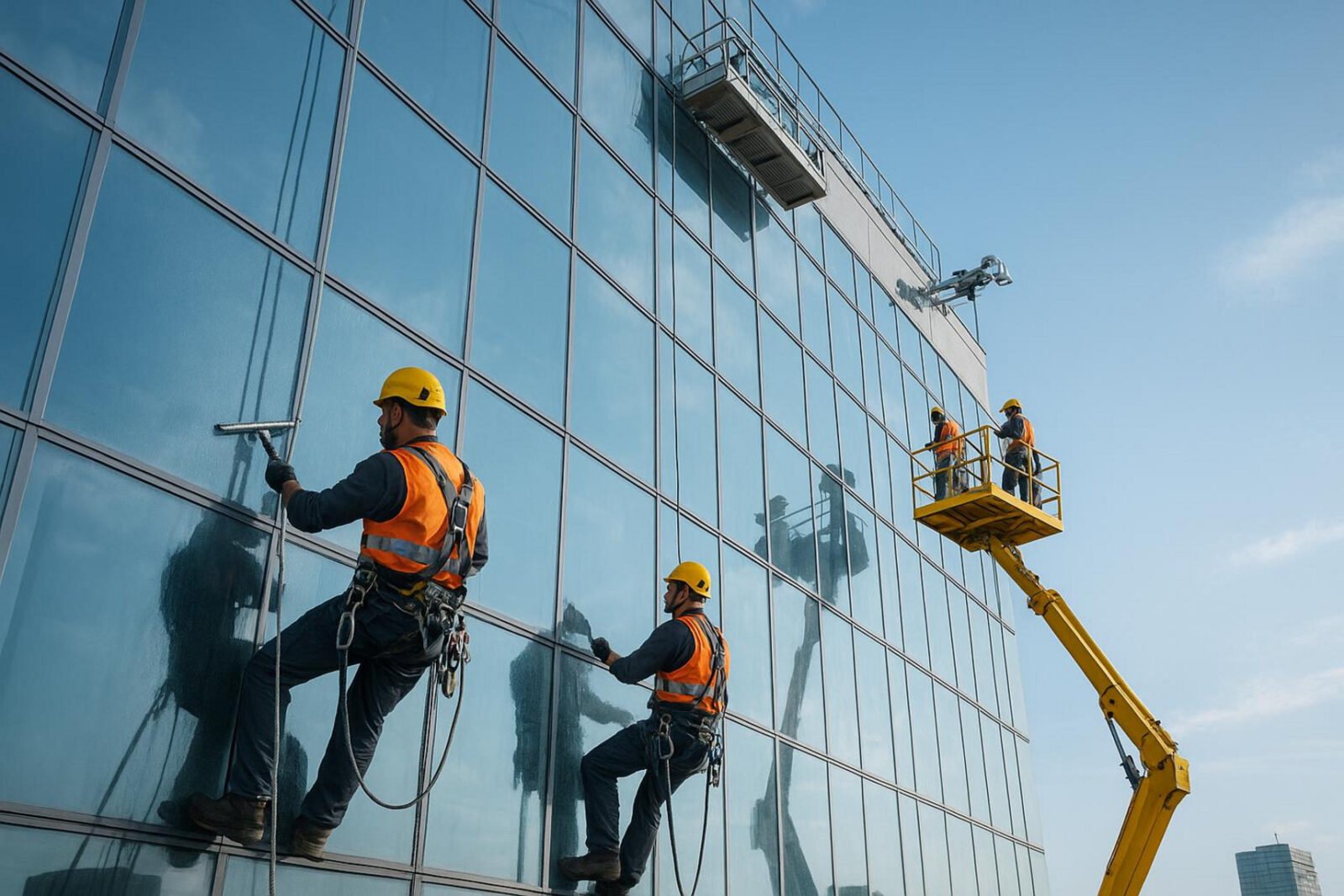
You’re looking up at a tall building with a glass front that should shine (but maybe doesn’t), and asking: “Which high-rise window cleaning method is actually best?” The honest answer is that there isn’t one single method that works best for every tower. The right choice depends on the building’s design, the space around it, and how often the glass needs cleaning. Clean windows matter for looks, for letting in daylight, and for keeping the building in good condition and looking professional. Cleaning windows at height is a specialist job that needs trained people and the right equipment. If you want more background on professional high rise window cleaning, learning the main methods is a good place to start.
Reaching the outside glass on tall buildings has always pushed people to create new tools and systems. Around a century ago, a simple bosun’s chair (a board on a vertical cable from the roof) was widely used. It was hard physical work and very risky, and it has been banned in many places, including the Netherlands. Today there are many safer and more dependable options, and each one fits certain buildings better than others.
What Are the Main High-Rise Window Cleaning Methods?
As buildings have grown taller and more complex, window cleaning methods have also changed. What used to be a risky basic job is now a specialist service with several proven ways to reach and clean different types of buildings.
Rope Access (Abseiling)
Rope access (often called industrial climbing) uses trained workers who go down the outside of the building using approved ropes, anchor points, and harnesses. It is a modern version of older methods, but with much stronger safety rules and equipment. It is a practical option when other access systems are not possible. When done by IRATA (Industrial Rope Access Trade Association) certified workers, it is considered a very safe method.
Aerial Work Platforms and Lifts
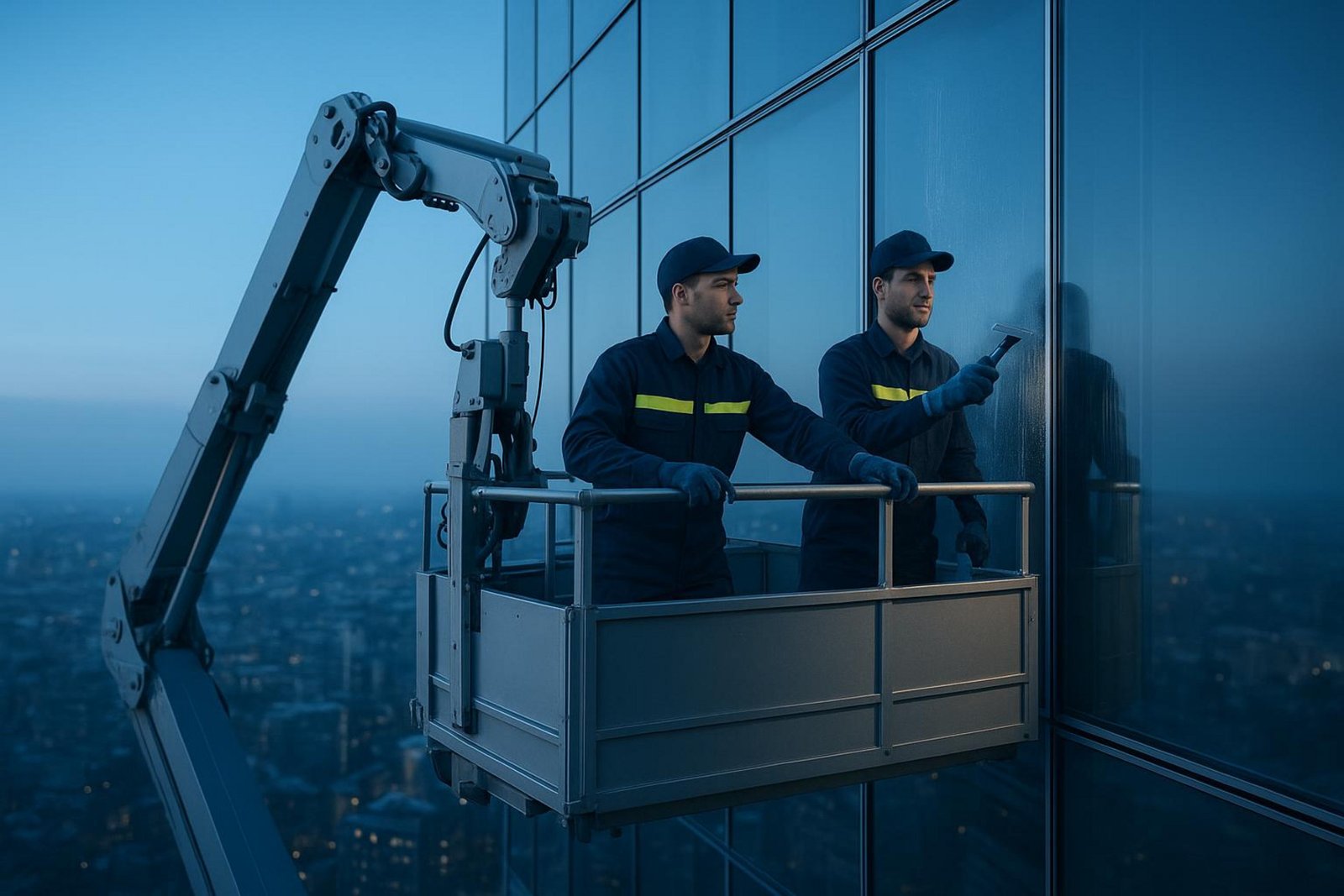
Mobile Elevated Work Platforms (MEWPs) include cherry pickers, boom lifts, and scissor lifts. They give cleaners a steady platform to work from. They are usually a trolley with a telescopic or folding arm and can reach up to about 100 meters in some cases. MEWPs are common for mid-to-high-rise buildings and can be fast and controlled, as long as there is enough space on the ground to set them up and move them.
Building Maintenance Units (BMUs)
For very tall or well-known buildings, Building Maintenance Units are often built into the design. These are permanent cradles that move along tracks on the roof, or extend from a central point using a telescopic arm. BMUs are a fixed access system that becomes part of the building. They are built to handle the loads and forces involved in regular cleaning work.
Water-Fed Pole Systems
For lower to mid-level high-rise work, water-fed poles let staff clean from the ground. The poles can extend to around 60-80 feet (about 6-8 storeys). Purified water is pumped through the pole to a brush head, which helps remove dirt without needing ladders or lifts for those heights. This lowers risk because workers stay on the ground, and it often reduces chemical use because purified water is used.
Window Cleaning Robots
Robots are one of the newest options. These systems can clean windows and parts of facades with little direct human work at height. They are built to grip onto different surfaces and work across different shapes, changing how some tall buildings handle regular cleaning.
Drone-Powered Cleaning
Drone cleaning uses drones fitted with water-fed or soft wash systems. They can reach difficult or risky areas while the operator stays in a safe location. This method is still new, but it can work well for certain building shapes and problem areas.
How Does Each High-Rise Window Cleaning Method Work?
Knowing how each method works makes it easier to see where it fits best. Every approach needs specific equipment and trained workers so the job is effective and safe.
Key Tools and Techniques for Rope Access
Rope access technicians use a twin-rope setup: one rope for working and a second rope as a backup safety line. They go down from roof anchor points and control their position so they can reach different parts of the facade. Tools often include squeegees, glass cleaning solutions made to remove dirt without streaks, and sometimes water-fed poles that can be used while suspended. Daily checks of ropes, harnesses, carabiners, and other gear are a core part of this system, following rules set by groups such as IRATA.
Aerial Lifts: Boom Lifts, Scissor Lifts, and MEWPs
Aerial platforms act like a moving work area in the air. A trained operator (often IPAF certified) positions the platform so cleaners can work on a section of windows. Cleaners stand in a basket/cage with their tools. The ground surface must be strong and level enough to handle the machine’s weight, and the area around the building must allow access. MEWPs can be fast for wide, flat window areas, but at full reach the platform can flex slightly, which can make exact positioning harder. In many cities, permits are also needed for temporary use.
Features of Building Maintenance Units (BMUs)
BMUs are custom-built cradles that are fixed to the building and used again and again. They move on roof tracks or from a mast with a telescopic arm that places the cradle where it needs to be. Because the system is already on the building, there is no need to bring in large temporary access equipment each time. BMUs are very safe and consistent, but they cost a lot to install and maintain, so they are usually used on the tallest or most important buildings. Cleaners still do the actual window cleaning by hand from the cradle.
Water-Fed Pole Technologies for High Windows
A filtration unit on the ground produces purified water and pumps it up through extendable carbon fiber poles. Because the water has minerals removed, it dries without leaving spots, so squeegeeing is often not needed. A brush head scrubs the glass while the flow of purified water rinses dirt away. Workers stay on the ground, and the method is often more environmentally friendly because it usually avoids detergents. Some systems can also deliver hot water or steam for harder dirt.
Robot and Drone-Assisted Window Cleaning Innovations
Robotic systems are set up to move across a facade in a planned pattern. Many use suction or magnets to stick to the surface, then apply cleaning fluid and wipe or squeegee as they go. For good results, the robot needs to stay close to the glass (often less than 0.5m) without scratching or damaging it. More advanced robots, such as those made by Kite Robotics, can handle tricky shapes, recesses, and different facade materials, and can work on buildings around 200-300 meters high. Drone cleaning is controlled by a pilot on the ground. The drone sprays water or a soft wash solution and then rinses. Drones can be useful for awkward areas that are hard or unsafe for people to reach.
What Are the Benefits and Drawbacks of Each Method?
Picking a window cleaning method is about matching your building’s needs with what each approach can and can’t do.
Rope Access: Advantages and Disadvantages
Advantages: Rope access is very flexible and can reach most parts of a building, even with unusual shapes or tight city locations where ground space is limited. It causes less disruption because it uses smaller equipment and is often quieter than large machines. With IRATA-certified workers, such as the technicians at Rope Access in London, safety performance is strong because training and equipment rules are strict.
Disadvantages: Rope access depends heavily on weather; strong winds can stop work or make it unsafe. It also needs suitable roof anchor points, which older buildings may not have. The work is physically demanding, and it has been banned in some countries (such as the Netherlands) due to worker health concerns.
Aerial Work Platforms: Safety and Efficiency Factors
Advantages: MEWPs offer a steady platform, helping cleaners work quickly across large window areas with tools close by. With IPAF-trained workers, they give a controlled way to work at height. They are often a good fit for wider buildings with large glass sections.
Disadvantages: They need enough space at ground level to set up and move around, which can be difficult in crowded city centres. They also have height limits, so they cannot reach the highest towers. At maximum extension the platform can flex, and permits may be needed, which adds planning time.
BMUs: When Are They the Best Choice?
Advantages: BMUs provide built-in safety because they are purpose-built and permanently installed to meet strict safety standards. They make regular cleaning simpler because access equipment is already on-site. For very tall or landmark buildings, BMUs can be the safest and most practical long-term setup because access is always available.
Disadvantages: The main downside is cost: installation is expensive and ongoing maintenance is needed. They also take up roof space for tracks and equipment. And even with a BMU, cleaning is still mostly manual work from the cradle.
Water-Fed Poles: Limitations and Ideal Applications
Advantages: Water-fed poles lower risk because staff work from the ground, avoiding work at height. They are often cost-effective, use purified water (often without chemicals), and can leave a streak-free finish. They work well for mid-rise buildings (up to about 6-8 storeys / 60-80 feet), places with clear ground access, and glass that needs a gentle clean.
Disadvantages: They cannot reach true skyscraper heights. They may also struggle with very heavy dirt or facade materials that need close scrubbing. While results are usually good, they may not match the close-up detail possible with a rope access worker on complex features.
Are Robotic and Drone Cleaning Solutions Reliable Yet?
Robots: Advantages: Robots improve safety by keeping people away from dangerous edges and heights. They can clean large areas quickly (around 300-800 m² per hour) with consistent results. Over time, they can cut costs (often quoted up to 80% lower maintenance costs and 85% lower energy use). Many use purified water and avoid chemicals, which supports greener cleaning. Some systems can work up to around 300 meters.
Reliability: This technology is still developing, but it is already proving dependable on newer buildings, especially where shapes and materials are complex. Providers such as Kite Robotics are pushing this area forward.
Drones: Advantages: Drones can clean while operators stay safely on the ground, avoiding ropes above busy streets. They can reduce disruption and reach corners, ledges, and awkward areas that other methods may struggle with.
Reliability: Drone cleaning is still a specialised service with fewer providers. It can work well for specific hard or risky sections, but full-building skyscraper cleaning by drone is still developing.
What Safety Measures Are Essential for High-Rise Window Cleaning?
Whatever method you choose, safety must come first. This is a strict requirement backed by laws, rules, and standard working practices that protect workers, tenants, and the public below.
OSHA Standards and Regulations for Window Cleaning Crews
In the United States, OSHA (Occupational Safety and Health Administration) sets strict rules for work at height. In the UK, the Work at Height Regulations 2005 place clear duties on employers and contractors. These rules require safer methods and careful control of risk. Professional companies carry out site-specific risk assessments and create method statements (RAMS) before work starts, listing hazards and how they will be controlled. You should also hire a team with full insurance for worker safety and possible property damage, so you are not left with unexpected costs.
Personal Protective Equipment and Harness Systems
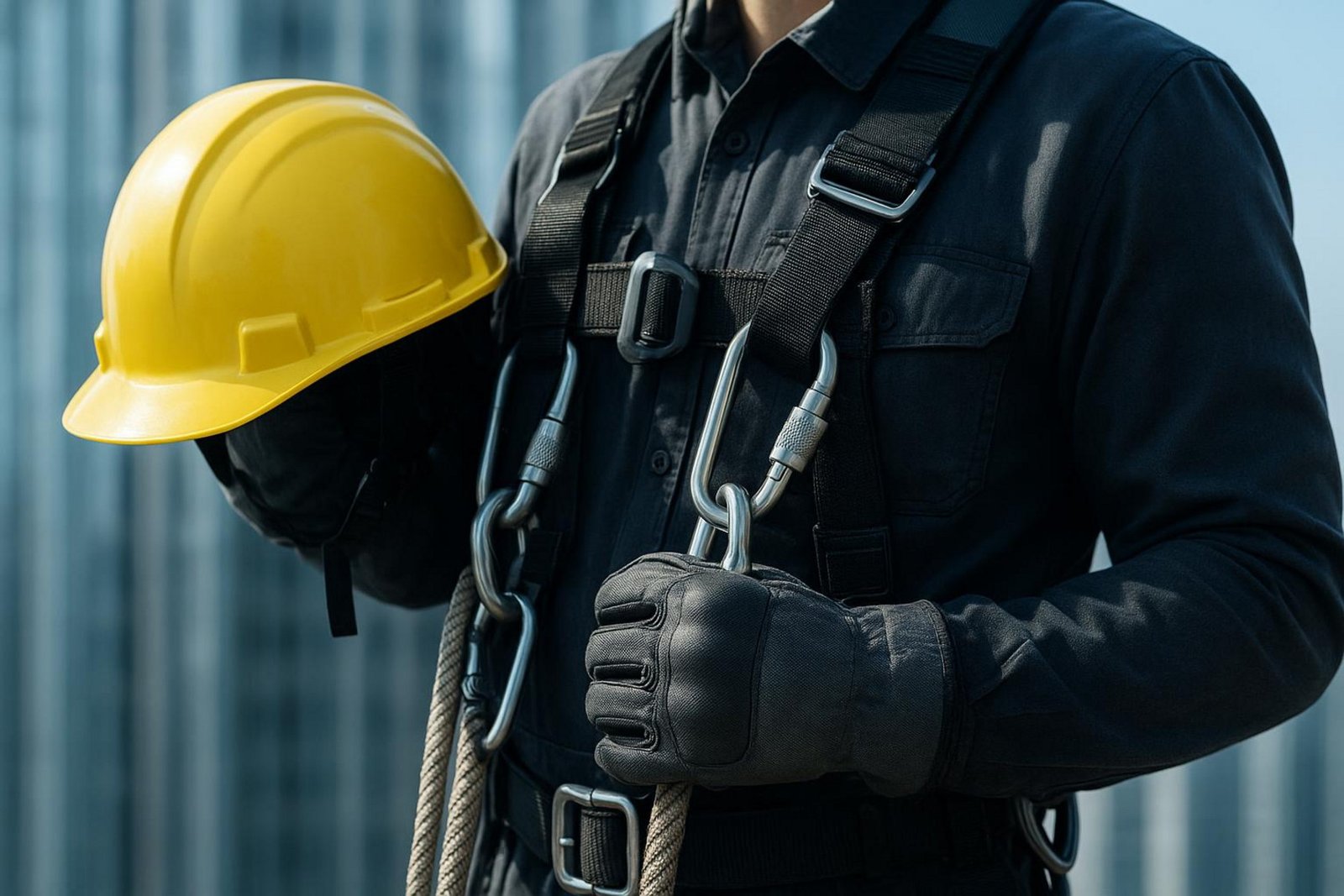
For work at height, PPE is required. This includes strong harnesses, safety helmets, lanyards, and carabiners made for this type of work. Every part of the safety setup, down to the smallest clip, must be inspected regularly and recorded. These checks are a daily routine before use and help prevent accidents.
Training Requirements and Crew Competence
People doing high-rise window cleaning need strong skills and the right qualifications. Teams should have current training and certifications from recognised groups such as IRATA (rope access) and IPAF (MEWPs). Training also covers emergency actions and first aid. Untrained teams raise the risk of accidents, fines, and property damage. Workers also need to be calm and confident at height, because fear can lead to errors.
How Should You Choose the Best Cleaning Method for Your Building?
Choosing the right method is more than picking the newest equipment. You need to review your building’s design, what access is possible, and what you want over the long term.
Building Design and Access Constraints
Your building’s design usually decides what will work. Think about height, facade shape (flat glass, ledges, deep recesses), and materials (glass, composite panels, stone). Are roof anchors already in place for rope access? Is there enough ground space for a lift? Are there windows that do not open, or areas that are hard to reach from inside? Many newer buildings are taller and more complex, which can make older access methods less suitable and push the choice toward rope access, BMUs, or robots. Each site should be checked so the method matches the real problems on that building.
Budget, Timeframe, and Long-Term Value
Cost matters, but it’s not only about the price today. BMUs can be expensive to install and maintain, but they offer steady access over many years. Water-fed poles can be cheaper for medium-height buildings. You should also look at long-term running costs like labour, water, and energy (robots can bring big savings in some cases). Cleaning frequency matters too: many commercial buildings are cleaned twice a year (spring and autumn), but buildings near busy roads or the coast may need cleaning every 2-3 months because of pollution or salt. Cutting costs by using untrained workers can end up costing more, through damaged glass, seals, or facades, plus the risk of claims if something goes wrong.
Environmental Impact Considerations
Sustainability is now a major part of building management. Compare the environmental impact of each method. Water-fed poles and robots often rely on purified water and avoid strong chemicals, which can support greener building goals. Think about water use and energy use too. Rope access often has a smaller equipment footprint than heavy machines like MEWPs. Picking a provider that uses responsible products and sensible working practices can also improve your building’s environmental reputation.
Conclusion
A clean high-rise facade is not just about appearance. It shows good planning, the right equipment, and strong safety standards. Keeping windows clean also helps protect the building by reducing mineral build-up, hard water marks, and city dirt that can shorten the life of glass and seals. Regular professional cleaning also improves natural light inside, which can make the space better for the people who use it.
The best method for your building comes from making a clear decision based on your site and your needs, not on trends. This work is best handled by experienced professionals who can choose the safest and most cost-effective option for your building, complete proper risk paperwork, use trained and accredited staff, and follow all health and safety rules. Paying for professional high-rise window cleaning helps protect your building’s look, its lifespan, and its value, while giving you clear windows that last.