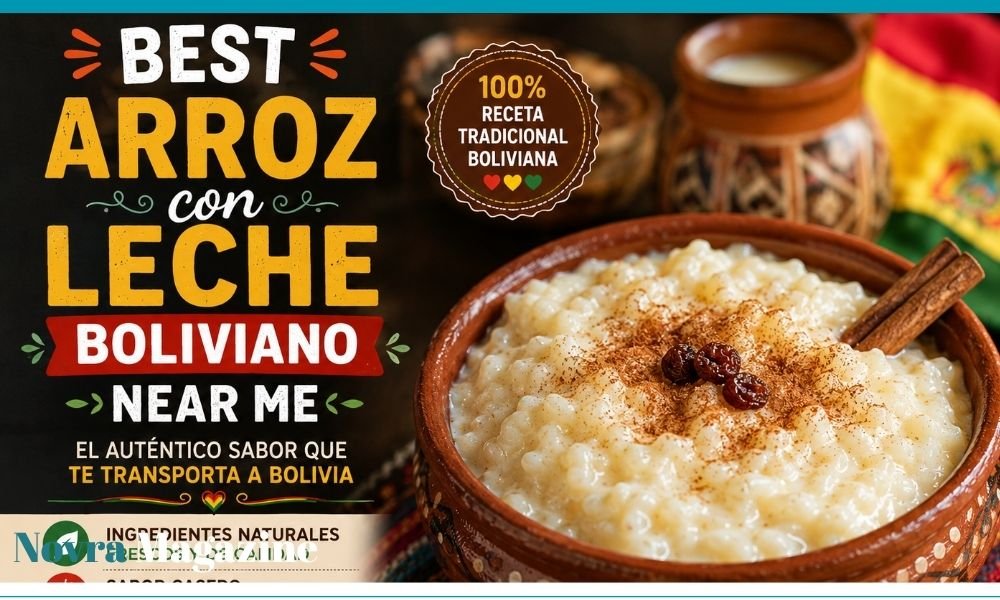
Searching for the best arroz con leche boliviano near me usually means you want more than ordinary rice pudding. You want a creamy Bolivian-style dessert with soft rice, warm cinnamon, milk and a gentle touch of cloves. Traditional arroz con leche appears in many countries, but Bolivian recipes often have their own homestyle balance of milk, spices and sweetness.
A great local version should taste comforting rather than overly sugary. The rice should feel tender, while the milk should remain thick and creamy without turning dry or sticky. Depending on the cook, it may arrive warm, chilled or at room temperature.
Quick Guide to Finding the Best Bolivian Rice Pudding
| What to check | Best sign |
|---|---|
| Texture | Creamy with soft, separate rice grains |
| Main flavours | Milk, cinnamon and cloves |
| Sweetness | Rich but not painfully sweet |
| Colour | Creamy white or lightly golden |
| Aroma | Warm cinnamon with a mild clove scent |
| Serving temperature | Warm or cold |
| Freshness | Made that day or recently prepared |
| Best places to search | Bolivian restaurants, Latin bakeries and home caterers |
| Useful menu names | Arroz con leche, postre de arroz or rice pudding |
| Best review type | Recent review mentioning the exact dessert |
What Is Arroz con Leche Boliviano?
Arroz con leche boliviano is Bolivia’s version of sweet rice pudding.
At its simplest, the dessert combines rice, milk, sugar and cinnamon. However, Bolivian recipes commonly add cloves, and some versions include evaporated milk to make the pudding richer.
One Bolivian recipe uses rice, water, sugar, regular milk, evaporated milk, cloves and cinnamon. The rice first cooks with water and spices before milk and sugar create the final creamy texture.
Another Bolivian-style recipe uses short-grain rice, whole milk, cinnamon and cloves. It can be served either hot or cold.
Recipes vary between regions and families. Therefore, there is no single bowl that represents every Bolivian household.
Why Is Arroz con Leche Important in Bolivia?
Arroz con leche is more than an everyday dessert in many Bolivian families.
It is also connected with religious and family traditions. In La Paz, it has been listed among dishes prepared during Semana Santa, or Holy Week, alongside several traditional meat-free meals.
That connection helps explain why many people associate the dish with:
- Family gatherings
- Religious holidays
- Childhood memories
- Cold evenings
- Homemade meals
- Food shared between generations
A restaurant version may taste delicious. However, the best bowls often try to recreate the simple flavour of rice pudding slowly prepared at home.
How Is Bolivian Arroz con Leche Different?
Arroz con leche exists across Latin America, Spain and many other parts of the world.
The basic idea remains similar, but the details change.
A Bolivian version commonly stands out through:
- Cinnamon sticks
- Cloves
- Milk
- Rice cooked until very soft
- Moderate sweetness
- Optional evaporated milk
- Ground cinnamon on top
Some recipes cook the rice partly in water before adding milk. Others cook it slowly in milk from the beginning.
Bolivian versions may also feel less decorated than restaurant-style rice puddings from other places. The focus is usually on the creamy base and warm spices rather than sauces, fruit or expensive toppings.
What Should Authentic Bolivian Arroz con Leche Taste Like?
The first flavour should be creamy milk.
Next, you should notice cinnamon. Cloves may appear in the background, but they should not make the dessert taste sharp or medicinal.
The rice should be fully cooked. Hard rice grains are a clear sign that the pudding needed more time.
A good bowl should also have a balanced sweetness. Too little sugar can make it taste like plain rice and milk. Too much can hide the spices and become uncomfortable after only a few spoonfuls.
The best version feels simple, warm and familiar.
Where Can I Find Bolivian Arroz con Leche Near Me?
Start with Bolivian restaurants.
However, this dessert may also appear in places that do not use “Bolivian” in their business name.
Check:
- South American restaurants
- Latin American bakeries
- Bolivian grocery shops
- International food markets
- Latin cafés
- Home-based Bolivian caterers
- Community food festivals
- Cultural events
- Delivery-only dessert businesses
Some restaurants serve arroz con leche every day. Others prepare it only on weekends, holidays or as a rotating dessert.
Calling before travelling can prevent disappointment.
Best Search Phrases to Use
Searching only best arroz con leche boliviano near me may not show every available option.
Try several variations:
- Bolivian restaurant near me
- Bolivian dessert near me
- Arroz con leche near me
- Authentic Bolivian food near me
- Latin American rice pudding near me
- South American dessert near me
- Arroz con leche delivery
- Homemade Bolivian desserts
- Bolivian catering near me
- Postres bolivianos near me
You can also add your city, neighbourhood or postcode.
For example:
- Bolivian arroz con leche in London
- Arroz con leche boliviano Miami
- Bolivian desserts in Madrid
- South American rice pudding Karachi
- Bolivian restaurant Manchester
Adding a location can produce more useful results than using “near me” alone.
How to Use Google Maps Effectively
Google says local results mainly depend on relevance, distance and prominence. This means the first result may not necessarily make the best version of the exact dessert you want.
Begin with arroz con leche.
Next, try Bolivian restaurant or Bolivian bakery. Open each business profile and check:
- Menu photographs
- Customer food pictures
- Opening hours
- Recent reviews
- Delivery details
- Telephone number
- Website or social pages
Google Maps can also group photographs and reviews around individual dishes when enough customers have mentioned them.
This makes the exact dessert easier to judge than relying only on the restaurant’s overall rating.
Read Reviews About the Dessert, Not Just the Restaurant
A restaurant may have thousands of excellent reviews because customers love its meat dishes, soups or service.
That does not automatically mean its arroz con leche is outstanding.
Search within the reviews for:
- Arroz con leche
- Rice pudding
- Dessert
- Cinnamon
- Creamy
- Homemade
- Fresh
- Sweet
- Watery
- Dry
- Cold
- Warm
Google Maps reviews come from users and display their publishing dates, so recent comments can help you understand the restaurant’s current quality.
Look for detailed reviews rather than comments that simply say “good food.”
A useful review may explain that the pudding was creamy, freshly made, lightly sweetened and strongly flavoured with cinnamon.
Check Real Customer Photos
Food photographs can show details that menu descriptions leave out.
Look closely at:
- Thickness
- Rice-to-milk balance
- Portion size
- Cinnamon topping
- Serving bowl
- Signs of dryness
- Signs of separation
- Whether raisins or other toppings appear
High-quality reviews should describe a real customer’s experience and explain what future visitors can expect. Google’s own review guidance encourages specific, accurate and authentic comments.
Recent customer photos are usually more helpful than highly edited promotional images.
Call the Restaurant Before Visiting
Arroz con leche may sell out early.
A quick call can confirm whether it is available and whether the style matches what you want.
Ask:
- Do you have Bolivian arroz con leche today?
- Is it made in-house?
- Does it contain cloves?
- Do you use evaporated or condensed milk?
- Is it served warm or cold?
- Does it contain raisins?
- Can I order a large family portion?
- Is advance ordering required?
- Do you offer delivery?
- When was it prepared?
A business that confidently explains its recipe usually understands the dish well.
However, do not expect every restaurant to reveal its complete family recipe.
What Makes the Best Arroz con Leche Boliviano?
Creamy but Not Watery
The milk should coat the rice.
It should not look like rice floating inside a bowl of thin liquid.
At the same time, it should not be so thick that the pudding becomes a solid block.
A good bowl slowly settles after the spoon moves through it.
Soft Rice
The grains should feel soft and fully cooked.
Some may begin breaking down slightly, which helps thicken the milk naturally.
However, the entire dessert should not become a smooth paste. You should still recognise the rice.
Balanced Cinnamon
Cinnamon should provide warmth and aroma.
Too little makes the pudding taste plain. Too much ground cinnamon can feel dusty or bitter.
Many good recipes cook a cinnamon stick with the rice and add a small amount of ground cinnamon before serving.
Gentle Clove Flavour
Cloves are one feature that may help distinguish a Bolivian-style preparation.
Still, cloves have a strong taste.
The best version uses enough to add depth without covering the milk and cinnamon. Bolivian recipes commonly combine cloves with cinnamon during cooking.
Comfortable Sweetness
Arroz con leche is a dessert, so it should taste sweet.
However, the sugar should not remove every other flavour.
A balanced version allows you to taste milk, rice and spices in each spoonful.
Should It Contain Evaporated Milk?
Some Bolivian recipes include evaporated milk, while others use regular whole milk.
Evaporated milk can create:
- A richer taste
- A creamier body
- A slightly deeper colour
- More concentrated milk flavour
A Bolivian cookbook recipe combines regular milk with evaporated milk, while another Bolivian-style preparation relies mainly on whole milk.
Therefore, evaporated milk can be authentic, but it is not required in every family recipe.
Should It Have Raisins?
Raisins are optional.
Some customers enjoy their chewy texture and extra sweetness. Others prefer a smooth bowl containing only rice and spices.
Do not reject a restaurant automatically because its version does or does not include raisins.
Instead, ask before ordering when you have a strong preference.
Is It Better Warm or Cold?
Both styles can be traditional.
Bolivian rice pudding may be eaten hot or cold.
Warm arroz con leche feels comforting and often has a softer texture. The cinnamon aroma may also seem stronger.
Cold pudding becomes thicker because the rice continues absorbing moisture while resting.
Neither temperature is automatically better.
Choose warm when you want a fresh, soft dessert. Choose cold when you prefer a firmer and more refreshing texture.
How Can You Tell Whether It Is Fresh?
Fresh arroz con leche usually has:
- A clean milk smell
- Soft rice
- An even creamy colour
- No dry skin mixed through the bowl
- No sour flavour
- No separated liquid
- Clear cinnamon aroma
A thin skin can form naturally while the pudding cools. That does not always mean it is old.
However, a hard, dry surface and very stiff rice may show that it has been stored too long or reheated several times.
Is Homemade Better Than Restaurant-Made?
Not always, but home cooks often make excellent versions.
Arroz con leche is strongly connected with family cooking. Therefore, a Bolivian home caterer may use a recipe passed down through generations.
A restaurant may offer:
- Easier ordering
- Regular opening hours
- Professional packaging
- Seating
- Reliable portion sizes
A home cook may offer:
- Small fresh batches
- Traditional family recipes
- Custom sweetness
- Larger family containers
- Holiday orders
Check hygiene, customer feedback and collection arrangements before ordering from an informal seller.
How to Find It When Your City Has No Bolivian Restaurant
Bolivian restaurants are uncommon in some cities.
Expand the search to:
- Latin American restaurants
- South American grocery shops
- International food festivals
- Spanish-speaking community groups
- Home-catering pages
- Social-media food markets
- Peruvian or Argentine cafés
A non-Bolivian restaurant may sell arroz con leche, but the flavour may follow another national style.
Ask whether it contains cinnamon and cloves and whether the recipe is specifically Bolivian.
How to Compare Two Nearby Options
Imagine two businesses appear in your search.
| Option A | Option B |
|---|---|
| Bolivian-owned restaurant | General Latin café |
| Dessert prepared daily | Dessert supplied frozen |
| Recent dish photos | No recent photos |
| Cinnamon and cloves | Vanilla only |
| Customers mention creamy texture | Reviews do not mention dessert |
| Slightly farther away | Very close |
Option A may be the better choice even when it requires a longer journey.
Distance matters, but authenticity, freshness and dish-specific reviews matter too.
Warning Signs Before Ordering
Be careful when:
- The menu photograph looks copied
- Staff cannot explain the ingredients
- Reviews repeatedly mention sour milk
- The rice appears hard
- The pudding looks extremely watery
- The surface looks cracked and dry
- There are no recent reviews
- The dessert is always unavailable
- Delivery photos show leaking containers
- The menu claims “Bolivian” but uses no typical spices
One negative review does not prove the restaurant is bad.
Look for repeated complaints from several recent customers.
Is Bolivian Arroz con Leche Vegetarian?
Most traditional versions are vegetarian because they use rice, milk, sugar and spices.
However, they are normally not vegan because milk is a central ingredient.
Some modern sellers may offer versions made with:
- Coconut milk
- Almond milk
- Oat milk
- Soy milk
These can taste good, but they will differ from a traditional dairy-based recipe.
Allergy and Dietary Questions
Standard arroz con leche contains dairy.
Some recipes may also contain:
- Egg
- Condensed milk
- Evaporated milk
- Butter
- Nuts
- Coconut
- Raisins
Ask the business directly when you have allergies or dietary restrictions.
Do not rely only on a photograph because ingredients such as milk, butter or egg may not be visible.
Can You Order a Large Tray?
Many caterers can prepare family-sized containers.
This can work well for:
- Birthdays
- Religious gatherings
- Family dinners
- Cultural events
- Office meals
- Community celebrations
Ask how many people the container serves and whether the dessert needs refrigeration.
Also confirm whether cinnamon comes already added or in a separate packet.
How to Reheat Arroz con Leche
Cold rice pudding becomes thicker.
To warm it, place a portion in a small pan and add a little milk. Heat it gently while stirring.
You can also use a microwave in short periods. Stir between each period so that the centre warms evenly.
Avoid high heat because milk can stick to the pan or develop a cooked taste.
Can You Make It at Home When No Restaurant Sells It?
Yes.
A simple Bolivian-style version can include:
- White rice
- Water
- Whole milk
- Evaporated milk
- Sugar
- Cinnamon sticks
- Cloves
- Ground cinnamon
Traditional-style recipes cook the spices with the liquid and add the milk gradually as the rice softens.
Homemade cooking also lets you control the sweetness and thickness.
Final Thoughts
Finding the best arroz con leche boliviano near me requires more than choosing the first restaurant on the map.
Start by searching for Bolivian restaurants, bakeries, Latin cafés and home caterers. Then check recent photographs and reviews that mention the exact dessert.
The best bowl should be creamy, soft and gently spiced.
Cinnamon should bring warmth, while cloves should add depth without taking over the flavour. The milk should feel rich, but the dessert should not become painfully sweet.
Remember that family recipes differ. Some use evaporated milk, while others depend on whole milk. Some include raisins, and others stay completely plain.
Authenticity does not mean every bowl must look identical.
It means the dessert should respect the comforting balance of rice, milk, sugar and spices that makes Bolivian arroz con leche special.
Frequently Asked Questions
What is arroz con leche boliviano?
It is a Bolivian-style rice pudding made with rice, milk, sugar and spices such as cinnamon and cloves.
Where can I find Bolivian arroz con leche near me?
Search Bolivian restaurants, Latin American bakeries, South American cafés, grocery shops and home-based catering businesses.
What search terms should I use?
Try arroz con leche near me, Bolivian dessert near me, Bolivian restaurant near me and postres bolivianos.
What makes Bolivian arroz con leche different?
Bolivian recipes often use cinnamon and cloves. Some also combine whole milk with evaporated milk.
Is it served hot or cold?
It can be served either hot or cold.
Does it contain condensed milk?
Some versions do, but it is not required in every Bolivian recipe.
Does Bolivian arroz con leche contain evaporated milk?
Many recipes use it for richness, while others use only regular milk.
Does it contain cloves?
Cloves commonly appear in Bolivian-style recipes, usually together with cinnamon.
Does it contain raisins?
Some versions contain raisins, but many do not.
Is arroz con leche vegetarian?
It is normally vegetarian, although it usually contains dairy.
Is it vegan?
Traditional arroz con leche is not vegan because it contains milk. Plant-based alternatives may be available.
How can I tell whether it is fresh?
Look for soft rice, a clean milk aroma, an even creamy texture and no sour flavour.
Can I order it for a party?
Many restaurants and home caterers accept large orders with advance notice.
What should I ask before ordering?
Ask whether it is made in-house, when it was prepared, whether it contains cloves and whether it is served warm or cold.
What is the easiest way to find the best option?
Compare recent dish-specific reviews and customer photographs, then call the business to confirm availability.
For more food and lifestyle guides, visit Novra Magazine.