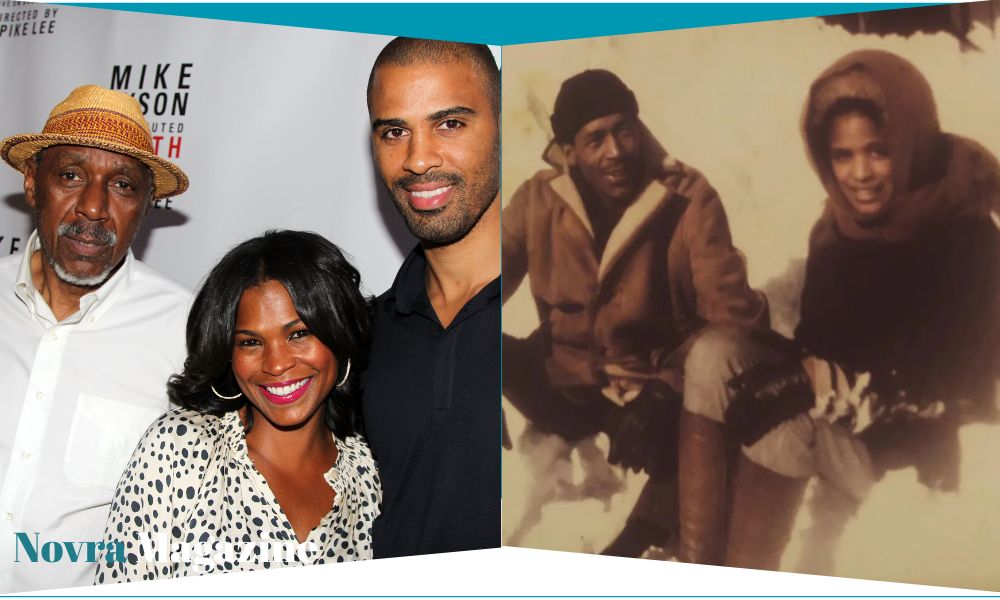
Doughtry Long was an American poet, author, educator, and community mentor who spent more than 30 years teaching literature and creative writing. Many people know him as the father of actress Nia Long and comedian Sommore. However, his own life tells a much bigger story about poetry, education, Black culture, community service, and the students he inspired in Trenton, New Jersey.
Quick Bio of Doughtry Long
| Detail | Information |
|---|---|
| Full name | Doughtry “Doc” Long Jr. |
| Date of birth | March 14, 1942 |
| Birthplace | Atlanta, Georgia, United States |
| Raised in | Trenton, New Jersey |
| Nationality | American |
| Profession | Poet, author, teacher, and community educator |
| Education | West Virginia State College |
| Advanced education | Master’s degree in Urban Studies from the College of New Jersey |
| Teaching career | More than 30 years |
| Main workplace | Trenton Central High School |
| Former wife | Talita Long |
| Daughters | Lori Rambough, Nia Long, and Djamila McRae |
| Famous children | Nia Long and comedian Sommore |
| Notable books | Black Love Black Hope, A Song for Nia, Timbuktu Blues, and Rules for Cool |
| Date of death | January 27, 2020 |
| Age at death | 77 |
| Cause of death | Not publicly confirmed |
Who Was Doughtry Long?
Doughtry “Doc” Long Jr. was a writer and teacher whose influence reached far beyond his famous family.
He spent decades teaching young people how to understand literature, express their ideas, and find power in their own words. His official obituary described him as a lifelong scholar who taught literature and creative writing at Trenton Central High School for more than 30 years.
Writing was not only his profession. It was also one of the main ways he understood life.
His poetry explored race, love, culture, freedom, family, history, social justice, and the Black experience in America. He published several poetry collections, appeared in literary journals, and received awards for both writing and education.
Although celebrity readers often discover him through Nia Long, many people in Trenton knew him first as a teacher, mentor, poet, and community leader.
When Was Doughtry Long Born?
Doughtry Long was born on March 14, 1942, in Atlanta, Georgia.
He was born as a twin to Jessie Wooden and Doughtry Long Sr. His family later raised him in Trenton, New Jersey, which became the centre of his education, teaching career, and community work.
Trenton remained deeply important to him throughout his life.
He attended Trenton Central High School as a student. Years later, he returned to the same school and became a respected teacher there.
This created a meaningful circle in his story. He learned in Trenton, grew as a writer there, and then spent decades helping younger people from the same community.
Where Did Doughtry Long Study?
Doughtry continued his education after leaving high school.
He attended West Virginia State College, now known as West Virginia State University. He later earned a master’s degree in Urban Studies from the College of New Jersey.
His studies helped him understand how cities, communities, social systems, race, and education shape people’s lives.
This knowledge appeared in both his teaching and poetry. He did not treat literature as something separate from the real world. Instead, he used writing to help students think about history, politics, identity, and their own communities.
He remained interested in learning throughout his life, which is why his family described him as a lifelong scholar.
What Did Doughtry Long Do for a Living?
Doughtry worked mainly as a literature and creative-writing teacher.
He taught at Trenton Central High School for more than three decades. The school was also his former high school, making his role especially personal.
Inside the classroom, he did more than explain books or correct grammar.
He encouraged students to write poetry, discuss difficult ideas, and speak honestly about the world around them. He wanted young people to understand that their voices mattered.
His obituary says he led the Phoenix Literary Magazine, an independent school project supported by grant funding. The magazine gave students a place to publish and share their creative work.
He also worked with the Poetry in the Schools program in New York City.
These projects show that teaching was not simply a job for him. It was part of his larger mission to make literature available to people who might otherwise feel ignored.
Did Doughtry Long Teach Outside a Normal School?
Yes. His educational work reached people outside the traditional classroom.
He helped organise an African American Studies Program at Trenton State Prison. The program brought education, history, and cultural learning to people who often had limited access to such opportunities.
This work reflected his belief that education should not be reserved for one group.
He saw learning as a tool that could help people understand themselves, their history, and their place in society.
Doughtry also worked as a Peace Corps community-development specialist in West Africa. In that role, he helped recruit public-minded volunteers from historically Black colleges and universities.
His experience abroad strengthened his interest in African culture and the wider Black experience.
Was Doughtry Long a Poet?
Poetry stood at the heart of Doughtry Long’s life.
He wrote poems about personal feelings, Black identity, love, social struggle, family, politics, spirituality, and everyday life.
His work appeared in literary journals such as The Literary Review, Brilliant Corners, Obsidian, Painted Bride Quarterly, US 1 Worksheets, and Black Renaissance Noire.
Publishers also included his writing in several poetry collections and anthologies. These included The Poetry of Black America, Gathering Ground, Let Loose on the World, A Rock Against the Wind, and Legacies.
His writing often joined deep ideas with clear and powerful language.
He wanted poetry to feel alive. It was not meant only for universities or literary experts. It could speak to students, families, communities, and anyone trying to understand difficult experiences.
What Books Did Doughtry Long Write?
Doughtry published several books and poetry collections during his life.
His known works include:
- Black Love Black Hope
- A Song for Nia
- Timbuktu Blues
- Rules for Cool
- Zoom Sway
- Book of Numbers
- Ginger Bread Mama
He also released a spoken-word compact disc titled Darker Light.
Rules for Cool was published in 2001. Google Books describes it as a 128-page collection of poems that uses metaphor to explore spiritual life, culture, myths, and personal ideas.
His children’s book, Book of Numbers, carried a special personal meaning because he dedicated it to his grandchildren.
These projects show how widely his interests reached. He wrote for adults, young people, poetry lovers, students, and members of his own family.
What Was A Song for Nia About?
A Song for Nia was one of Doughtry Long’s most personal works.
The title refers to his daughter, actress Nia Long. Public records describe the work as a poetic essay connected with her.
After her father died, Nia shared an image of her copy and reflected on the lasting power of his words.
The book holds an emotional place in their family story because their relationship was not always simple.
Doughtry and Nia’s mother separated when Nia was very young. She later grew up mainly with her mother, first in Iowa and then in California, while her father continued living in Trenton.
Distance shaped their relationship. Still, poetry gave him a way to express feelings that may have been difficult to communicate in everyday life.
Who Was Doughtry Long’s Wife?
Doughtry was formerly married to Talita Long, who was also known as Talita Gillman.
Talita worked as a teacher and printmaker. She and Doughtry became the parents of Nia Long, but their relationship ended when Nia was around two years old.
After their separation, Talita moved with Nia to Iowa City so that she could study fine arts. They later moved to Southern California.
Doughtry remained in Trenton, where he continued teaching, writing, and working within the community.
His official obituary listed Talita among his surviving family members and identified her as his former wife.
How Many Children Did Doughtry Long Have?
Doughtry had three daughters:
- Lori Rambough
- Nia Long
- Djamila McRae
His obituary described all three as accomplished women. It also listed four grandsons who survived him.
Lori Rambough became publicly known as Sommore, a successful comedian and actress. She gained recognition through stand-up comedy, BET’s ComicView, The Queens of Comedy, and several film and television appearances.
Nia Long built a major acting career through projects such as Boyz n the Hood, The Fresh Prince of Bel-Air, Friday, Love Jones, Soul Food, and The Best Man.
Djamila McRae has maintained a much quieter public life.
Was Doughtry Long the Father of Both Nia Long and Sommore?
Yes. Doughtry was the biological father of both Nia Long and Sommore.
Sommore’s birth name is Lori Ann Rambough. She and Nia have different mothers, making them half-sisters. Both women entered entertainment, but they built very different careers.
Nia became known mainly for acting in films and television dramas.
Sommore became famous for adult stand-up comedy and earned the nickname “Diva of Contemporary Comedy.”
Their father followed another creative route. His stage was often a classroom or poetry event rather than a film set or comedy club.
Still, all three used words, performance, and storytelling in their work.
What Was Doughtry Long’s Relationship With Nia Long Like?
Nia has spoken honestly about having a complicated relationship with her father.
She loved and respected him, but she also carried disappointment from childhood. Because her parents separated and lived far apart, he was not present for many ordinary father-and-daughter moments she wanted.
After his death, Nia explained that she had once felt angry because he had not done simple things such as reading bedtime stories or being present in the way she expected.
As she grew older, her view became more understanding.
She recognised that her father came from a generation focused heavily on survival. She began to accept that he had given the world certain gifts even when he could not always provide everything she needed personally.
Her story became less about blaming him and more about forgiveness, maturity, and emotional healing.
What Did Nia Long Learn After Her Father Died?
Doughtry died while Nia lived in California and he remained connected to Trenton.
After his death, she spent time in his hometown and learned more about how strongly local people respected him.
Former students and community members shared memories of his teaching, poetry, and mentorship. Trenton Central High School also held a spoken-word tribute in his honour.
Nia said the experience helped her see a side of her father she had not fully understood.
To her, he had been a distant and complicated parent.
To many young people in Trenton, he had been a teacher who listened to them, encouraged them, and helped them find confidence.
Nia expressed pride in his community work and described him as a poet, writer, photographer, jazz lover, and creative thinker.
What Awards Did Doughtry Long Receive?
Doughtry received recognition for both poetry and teaching.
His honours included the Broadside Press Award for Poetry, a fellowship from the New Jersey State Council on the Arts, and the Governor’s Award for Excellence in Teaching.
Passage Theatre in Trenton also honoured his work.
He remained connected with respected literary and educational organisations, including the Geraldine R. Dodge Poetry Foundation, the New Jersey Artist Teacher Institute, and Cave Canem.
Cave Canem supports Black poets and provides a community where their writing can grow and receive wider attention.
These honours matter because they show that Doughtry’s influence went beyond being the father of famous daughters.
Writers, teachers, cultural groups, and former students respected his own achievements.
What Were Doughtry Long’s Interests?
Doughtry had many interests outside teaching.
He enjoyed worldwide travel, fishing, jazz, photography, poetry, and good food.
Jazz and poetry share several qualities. Both can use rhythm, pauses, emotion, freedom, and personal expression.
This may help explain why jazz remained so important to him.
Fishing offered something different. It gave him quiet time away from classrooms, community projects, and writing.
Nia later said one of her regrets was never joining her father on a fishing trip. Her reflection carried a simple message: share the things your loved ones enjoy while there is still time.
When Did Doughtry Long Die?
Doughtry Long died on January 27, 2020.
He was 77 years old. His official obituary did not publicly state a medical cause of death. Therefore, online pages that provide a specific illness without dependable evidence should be treated carefully.
His family held private services at Shiloh Baptist Church in Trenton.
A larger remembrance took place at Trenton Central High School on February 18, 2020. The location was fitting because the school had shaped both his early life and long teaching career.
Students, relatives, educators, writers, and community members remembered him through stories and spoken words.
What Was Doughtry Long’s Net Worth?
No reliable financial source has confirmed Doughtry Long’s net worth.
He worked as a public-school teacher, writer, poet, community educator, and author. However, dependable sources do not reveal his salary history, book royalties, property, savings, or estate value.
Some celebrity biography websites may connect him with Nia Long’s success and then guess that he had a large fortune.
That approach is not trustworthy.
A daughter’s Hollywood income does not automatically become her father’s personal wealth.
His legacy is better measured through his books, students, family, and influence than through an unsupported money estimate.
Why Do People Still Search for Doughtry Long?
Many people discover his name while reading about Nia Long or Sommore.
However, his own achievements keep readers interested.
He was a Black poet who wrote during a period of major social and political change. He taught young people for more than 30 years. He brought African American studies into a prison setting and supported creative programs for students.
His relationship with Nia also carries a powerful human lesson.
Their story was not perfect. It included distance, disappointment, love, pride, anger, and forgiveness.
That honesty makes the story feel real.
Doughtry’s life reminds readers that one person can appear very different depending on who tells the story. To one person, he was a father who missed important moments. To another, he was a teacher who changed a life.
Both experiences can be true.
What Is Doughtry Long’s Legacy?
Doughtry left behind several connected legacies.
His poems remain available through books, journals, anthologies, and recordings. His students carry memories of his lessons. His daughters continue working in entertainment and creative fields.
He also helped give Black writers and young people space to express themselves.
His school magazine, prison education work, poetry programs, and classroom teaching all served the same wider goal: helping people understand the power of language.
Nia has continued speaking about the healing that came from understanding and forgiving him.
Her memories keep his name in the public eye, but the people of Trenton remember something even deeper. They remember the teacher who remained part of their community for decades.
Final Thoughts
Doughtry Long was far more than Nia Long’s father.
He was born in Atlanta on March 14, 1942, and grew up in Trenton, New Jersey. After attending West Virginia State College and completing a master’s degree in Urban Studies, he devoted more than 30 years to teaching literature and creative writing.
He published poetry, supported student writers, worked with prison education, served with the Peace Corps in West Africa, and earned recognition for both his art and teaching.
His daughters included comedian Sommore, actress Nia Long, and Djamila McRae.
His relationship with Nia carried pain as well as love. She wished he had been more present during her childhood, yet she later understood the effect he had on countless students.
After his death in 2020, she saw how deeply Trenton loved him.
That discovery helped her replace some of her anger with forgiveness.
Doughtry’s life shows that people can be imperfect family members while still making a meaningful difference in the wider world.
His greatest legacy lives in his words, his daughters, his students, and the people he encouraged to tell their own stories.
Frequently Asked Questions
Who was Doughtry Long?
Doughtry Long was an American poet, author, literature teacher, and community educator. He was also the father of actress Nia Long and comedian Sommore.
What was Doughtry Long’s full name?
His full name was Doughtry “Doc” Long Jr.
When was Doughtry Long born?
He was born on March 14, 1942, in Atlanta, Georgia.
Where did Doughtry Long grow up?
He grew up in Trenton, New Jersey.
What did Doughtry Long do for work?
He taught literature and creative writing at Trenton Central High School for more than 30 years.
Was Doughtry Long a poet?
Yes. He published several poetry books and appeared in literary journals and anthologies.
What books did Doughtry Long write?
His works included Black Love Black Hope, A Song for Nia, Timbuktu Blues, Rules for Cool, Zoom Sway, and Book of Numbers.
Was A Song for Nia about Nia Long?
Yes. The title referred to his daughter, actress Nia Long.
Who was Doughtry Long’s wife?
He was formerly married to Talita Long, Nia Long’s mother.
How many children did Doughtry Long have?
He had three daughters: Lori Rambough, Nia Long, and Djamila McRae.
Was Sommore Doughtry Long’s daughter?
Yes. Comedian Sommore, whose birth name is Lori Ann Rambough, was his daughter and Nia Long’s half-sister.
Did Doughtry Long and Nia Long have a close relationship?
Their relationship was loving but complicated. Nia spoke about childhood disappointment, distance, forgiveness, and the pride she felt after learning more about his community impact.
When did Doughtry Long die?
He died on January 27, 2020, at the age of 77.
What was Doughtry Long’s cause of death?
His official obituary did not publicly confirm a cause of death.
What was Doughtry Long’s net worth?
No reliable public source has confirmed his personal net worth.
What is Doughtry Long remembered for?
He is remembered for his poetry, teaching career, community service, prison-education work, support for young writers, and his famous daughters.
For more trusted celebrity and family stories, visit Novra Magazine.