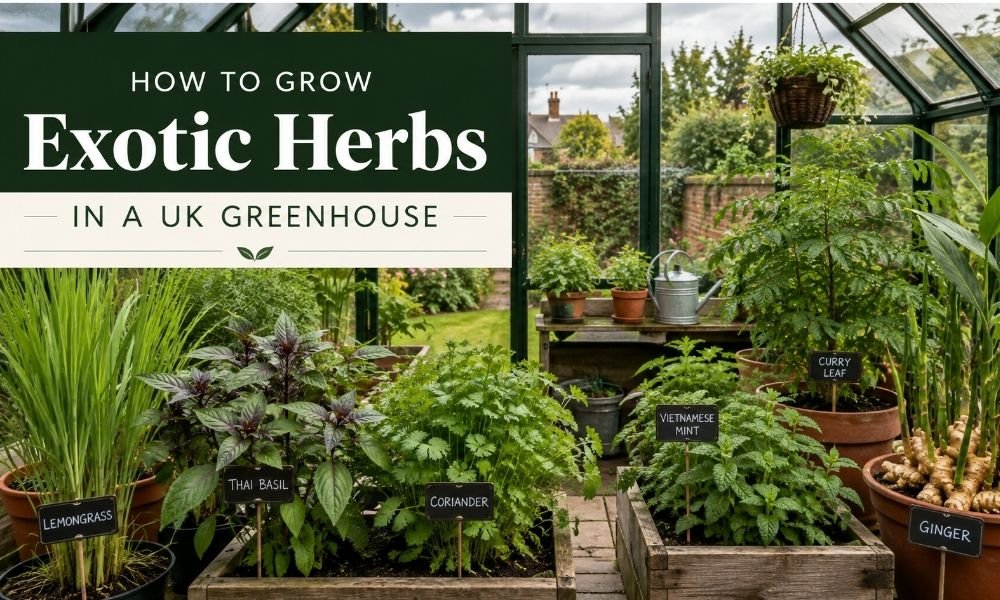
Most UK gardeners stick to growing basil, parsley and coriander in their gardens. However, a greenhouse opens up a massive variety of exciting options. You can easily grow lemongrass, Thai basil, shiso, curry leaf, Vietnamese mint and holy basil under glass in Britain if you provide the right conditions.
Success relies on understanding what these plants need and setting up your space correctly. Carry on reading to find out how to transform your greenhouse into a productive tropical haven.
Exotic Varieties to Try This Season
Many of these vibrant herbs are common in Asian cuisine but hard to find fresh in British supermarkets. Shiso offers a unique flavour that crosses mint with basil, while Vietnamese mint brings a fiery kick to salads. Holy basil and Thai basil thrive in warm spaces and offer sweet, aniseed notes that enhance home cooking. Lemongrass and curry leaf plants are also brilliant choices that can live for years with the right winter care.
Sourcing these plants is easy. You can buy seeds for shiso, Thai basil and holy basil from specialist UK seed merchants online. For lemongrass and curry leaves, it’s often better to buy starter plants from specialist nurseries, as they can be tricky to grow from seed. Once you have your plants, you need to prepare your greenhouse to mimic their natural tropical environments.
Maximise Light and Heat in the Greenhouse
Tropical herbs need a lot of sunlight to develop their strong essential oils and distinct flavours. In the UK, the weather can be unreliable, so your greenhouse must capture every bit of available sunlight. This means the condition of your greenhouse panels is highly important. Dirt, scratches and age can block crucial light from reaching your delicate herbs.
If your current structure has old glass or clouding plastic, it will struggle to let in enough sunlight. Replacing damaged panels with clean, high-quality acrylic panels for greenhouse glazing is an easy way to boost light transmission. Acrylic is highly durable, lightweight and lets in more light than traditional glass, making it an ideal choice for growing sun-loving exotic herbs. Keeping these panels clean throughout the spring and summer ensures your plants get the maximum energy they need to grow.
Set Up the Perfect Climate
Besides light, you must manage temperature and humidity to keep these tropical varieties happy. Most exotic herbs need a minimum temperature of 15°C to grow actively. You can use bubble wrap insulation or small heaters to keep the space warm during chilly spring nights. It’s also worth using automatic vent openers to prevent the greenhouse from overheating on hot summer days.
Humidity is another crucial factor for tropical species like Vietnamese mint and lemongrass. You can increase humidity by regularly splashing water on the greenhouse floor, a technique known as damping down. This creates a moist atmosphere that keeps pests like red spider mites at bay.
Choose the Right Pots and Water Wisely
To get the best results, you need to use the right soil mix and pot sizes. These herbs don’t like sitting in waterlogged soil, which can quickly cause root rot. Water your herbs in the morning so the soil can dry slightly before the temperature drops at night. Lemongrass enjoys constant moisture, while holy basil and shiso prefer the soil to dry out slightly between waterings. Feeding them regularly with an organic liquid fertiliser will encourage lush leaf growth instead of premature flowering.
Before you start planting, you should gather the essential materials to build a healthy root environment:
- Free-draining compost mixed with perlite or horticultural sand.
- Terracotta pots with plenty of drainage holes.
- Liquid seaweed fertiliser to feed the plants every two weeks.
- Gravel or clay pebbles to place at the bottom of your pots.
Enjoy a Fresh Harvest in Your Kitchen
Growing your own exotic herbs is a rewarding way to expand your culinary options. With a bit of planning, a bright greenhouse and the correct care, you can enjoy fresh, aromatic leaves that you won’t find in local shops.
Start with one or two varieties like Thai basil or lemongrass to build your confidence. As you learn how they respond to your greenhouse environment, you can gradually introduce more challenging plants. Your efforts will be rewarded with vibrant, home-grown ingredients that bring genuine excitement to your daily meals.