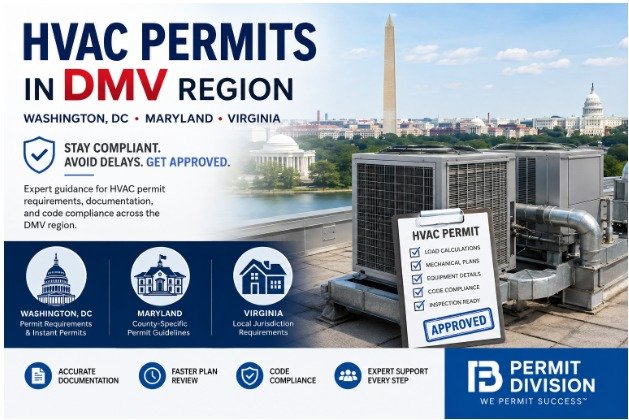
Replacing a furnace, adding central air, or swapping out a rooftop unit sounds like a straightforward mechanical job until the permit office gets involved. In 2026, HVAC permits are still required for most heating, ventilation, and air conditioning work across Washington DC, Maryland, and Virginia, and the exact rules shift depending on where the property sits. Skip this step and a project can stall at inspection, delay a certificate of occupancy, or complicate a future sale. This guide walks through what typically triggers an HVAC permit in each part of the DMV, what the process looks like, and where projects most often get stuck.
Beyond the paperwork, a permitted installation protects more than the inspection sign-off. Insurance carriers, mortgage lenders, and future buyers often look for permit records when a major system has been replaced. Unpermitted HVAC work can surface during a home sale or refinance and turn into a negotiation problem long after the equipment is running fine. Treating the permit as part of the project, not an afterthought, tends to save time and money down the line.
When Do HVAC Permits Apply?
Most jurisdictions in the DMV require a mechanical or HVAC permit whenever equipment is replaced, added, or significantly altered rather than simply repaired. Common triggers include:
- Installing a new furnace, heat pump, or air conditioning condenser
- Replacing equipment with a different fuel type or higher capacity
- Adding or relocating ductwork
- Installing rooftop or commercial HVAC units
- Adding gas piping, refrigerant lines, or new venting
- Work tied to a larger renovation, addition, or tenant build-out
Like-for-like repairs, such as replacing a blower motor or capacitor, usually do not require a separate permit. Anything that changes equipment size, fuel source, or system layout generally does.
HVAC Permit Rules in Washington DC
In DC, mechanical work falls under the DC Construction Codes, which are based on the International Mechanical Code with local amendments. Permits and licensing are handled through the Department of Buildings, and contractors typically need to hold a DC-specific license before pulling a permit, separate from any Maryland or Virginia credential. Condo and cooperative units are usually included in this requirement, so interior HVAC changes in a multi-unit building still need a permit in most cases.
HVAC Permit Rules in Maryland
Maryland regulates HVAC contractor licensing at the state level, while permitting and inspections are typically handled by the county or municipality where the project is located. Montgomery County, Prince George’s County, and other DMV-area jurisdictions each maintain their own submission and inspection process. A permit application usually needs a simple, accurate plan showing the equipment location and how it fits into the existing structure.
HVAC Permit Rules in Virginia
Virginia contractor licensing runs through the state Department of Professional and Occupational Regulation, and permitting is generally managed at the county level in areas like Fairfax County, Arlington, and Alexandria. As in DC and Maryland, the permit itself is usually pulled locally even though the contractor license comes from a separate state authority.
Comparing HVAC Permit Requirements Across the DMV
| Jurisdiction | Licensing Authority | Permit Authority | Typical Review Focus |
| Washington DC | DCRA / BPLA | Department of Buildings | Mechanical code, ventilation, condo/co-op units |
| Maryland | Maryland Department of Labor | County/municipal permit office | Equipment sizing, plan accuracy, local amendments |
| Virginia | Virginia DPOR | County permit office | Local code compliance, inspection sequencing |
What the HVAC Permit Process Usually Looks Like
While details vary by jurisdiction, most HVAC permit applications follow a similar sequence:
- Submit an application with equipment specifications and a site or floor plan
- Pay the applicable permit fee
- Wait for plan review, which may generate correction comments
- Respond to any corrections and resubmit if needed
- Schedule the installation and required inspections
- Receive final sign-off once the inspection passes
Timelines depend on the jurisdiction, project scope, and how complete the initial submission is. A well-prepared application with accurate documentation tends to move through review with fewer correction cycles. For larger commercial jobs, HVAC permits are often filed alongside electrical or plumbing permits for the same space, which means the review timelines for each trade can affect when the overall project is cleared to proceed.
Common Mistakes That Delay HVAC Permit Approval
A few recurring issues tend to slow HVAC permits down across all three jurisdictions:
- Submitting plans that don’t match the actual equipment being installed
- Using a contractor licensed in one state but not registered to work in another
- Missing supporting documents, such as manufacturer specifications
- Overlooking condo, co-op, or homeowners association approval requirements
- Scheduling installation before the permit is actually issued
Each of these can trigger a correction cycle or a failed inspection, which adds weeks to a project that otherwise could have moved quickly.
Commercial HVAC Projects and Permit Expediter Support
Commercial HVAC work, such as rooftop unit replacements for a retail build-out or a restaurant tenant improvement, tends to involve more moving parts than a residential swap. Multiple trades, tighter construction timelines, and landlord requirements often stack on top of the permit itself. This is where commercial permitting services become useful, since a dedicated team can track submissions, respond to corrections, and coordinate with other trade permits at the same time.
A permit expediter handles the administrative side of this process: preparing the application, following up with the reviewing agency, and managing correction responses so the project team can stay focused on construction rather than paperwork. Permit Division supports HVAC and other mechanical, electrical, and plumbing permits across DC, Maryland and Virginia, drawing on more than 11 years of permit expediting and construction consulting experience and support on over 4,000 permits.
Permit requirements, timelines, and local regulations may change. Project requirements can vary by jurisdiction, property type, and scope of work. Contact Permit Division for project-specific guidance.
Frequently Asked Questions
-
Do I need a permit to replace my HVAC system in the DMV area?
In most cases, yes. Replacing a furnace, heat pump, or air conditioning unit typically requires a mechanical permit in DC, Maryland, and Virginia, especially when the fuel type, capacity, or system layout changes. Simple repairs usually fall outside this requirement, but it is worth confirming with the local permit office before work begins.
-
Can my contractor pull an HVAC permit in more than one jurisdiction?
Not automatically. DC, Maryland, and Virginia each issue their own contractor licenses, and a license from one jurisdiction does not transfer to another. A contractor working across the DMV generally needs separate registration or licensing in each area where they plan to pull permits.
-
How long does an HVAC permit take to process?
Processing time depends on the jurisdiction, the completeness of the application, and current review volume. Straightforward residential applications with accurate documentation tend to move faster, while commercial projects or applications needing corrections can take longer. This is one reason many businesses lean on commercial permitting services for multi-trade projects, since coordinating several permits at once often shortens the overall timeline. Checking directly with the local permit office gives the most current estimate.
Managing HVAC permits across three different jurisdictions takes more than knowing the code. It takes tracking deadlines, matching each contractor to the right license, and staying on top of correction cycles before they stall a project.
Request a Permit Consultation with Permit Division to get clarity on what your HVAC project needs before you break ground.