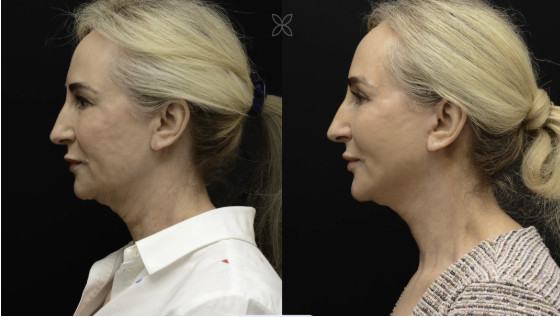
When people search for facelift london options, they often assume SMAS and deep plane are simply two names for the same operation. They aren’t. The depth at which each technique works changes the recovery, the longevity of the results, and how natural the outcome looks which is exactly why the distinction matters before booking any facelift surgery london.
Before comparing the two techniques in detail, it helps to understand what actually separates a best facelift surgery in London experience from an average one: it usually comes down to the surgeon’s familiarity with the specific technique being performed, not just facelifts in general.
It’s also worth stepping back to look at the types of facelift surgery available today, since SMAS and deep plane are only two branches of a wider family that also includes mini facelifts and lower facelifts, each suited to a different stage of facial ageing.
Regardless of which approach suits a particular face, the benefits of facelift surgery generally centre on the same goal: a more rested, refreshed appearance rather than a dramatically different one. SMAS and deep plane techniques simply reach that goal through different routes.
What Is a SMAS Facelift?
The SMAS, or superficial musculoaponeurotic system, is the fibromuscular layer beneath the facial skin and fat. It connects the skin to the deeper facial muscles and supports the youthful structure of the midface and jawline. As this layer weakens and descends with age, it contributes to sagging jowls, deep nasolabial folds, and neck laxity.
There are actually a few SMAS-based techniques operating at different surgical depths. A SMAS plication facelift is the most straightforward: the surgeon tightens the SMAS by placing sutures on top of it, without releasing or dissecting the tissue, so facial ligaments stay untouched and movement is limited. An extended SMAS facelift goes further, releasing the retaining ligaments but only after the skin has been completely detached from the SMAS layer through wide dissection.
What Is a Deep Plane Facelift?
A deep plane facelift takes a different route entirely. Instead of separating the skin from the SMAS, both layers are lifted together as a single composite unit. The retaining ligaments are released, just as in an extended SMAS lift, but the skin and SMAS remain connected throughout, preserving the tiny blood vessels that run between them.
The Real Difference Between the Two Techniques
This is where the real difference shows up. In an extended SMAS facelift, once the skin is isolated from the SMAS, that layer becomes fragile and can tear, particularly along the jowls and lower face where sagging is most pronounced. The wide skin undermining also compromises the blood supply between the SMAS and the skin, raising the risk of skin necrosis, especially in smokers or patients with fragile skin.
A deep plane facelift avoids both problems. Because the SMAS is never isolated, it stays protected, allowing a stronger and more controlled lift without rupture. Because the skin’s blood supply is preserved, the risk of complications drops, and the result tends to be smoother and more stable with less surface tension. Overall complication rates between the two are broadly similar when performed by an experienced surgeon, but the deep plane technique is more technically demanding to execute well.
Where Mini Facelift and Lower Facelift Fit In
Not every patient needs a full SMAS or deep plane procedure. Younger patients noticing only early signs of ageing a softening jawline or the first hint of jowling are often better suited to a mini facelift london approach, which addresses the lower face without the scope of a full lift. Others need correction focused specifically on the jowls and neck rather than the midface or eyes, which is where a lower facelift comes in. Matching the right technique to the right stage of ageing matters as much as choosing between SMAS and deep plane in the first place.
A mini facelift london candidate is typically in their late thirties to mid-forties, with mild skin laxity and no significant volume loss, whereas a full SMAS or deep plane approach tends to suit patients in their late forties through sixties with more advanced sagging. A lower facelift can also be combined with a neck lift when platysma banding is present, giving a more complete result without extending surgery into the upper face.
Recovery and Safety Comparison
When comparing safety between a deep plane facelift and a SMAS facelift, clinical experience generally shows that overall complication rates are similar when both are performed by experienced surgeons, and the risk profile haematoma, infection, nerve injury, delayed healing is broadly comparable between them. The deep plane approach does tend to involve slightly less bruising and swelling, since the skin’s blood supply is left intact, but the more meaningful safety factor in either case is how often the surgeon performs that specific technique.
This is true whether the procedure in question is a mini facelift, a lower facelift, or a full deep plane lift: any facelift surgery london patients undergo should be preceded by a consultation that covers exactly which layer is being lifted, how the incisions are planned, and what recovery will realistically look like for that specific technique.
Finding the Best Facelift Surgeon in London
Because these techniques differ so much in execution, the choice of surgeon matters more here than with most cosmetic procedures. When researching the best facelift surgeon uk has to offer, look for someone who performs both SMAS and deep plane techniques regularly, rather than a single default approach for every patient, and who can explain clearly why one method suits your anatomy over another.
Dr. Dirk Kremer, practising from Harley Street in London, conducts every consultation himself, assessing facial anatomy, goals, and medical history before recommending a mini facelift, lower facelift, or full deep plane facelift. This individual assessment is precisely what separates the best facelift surgeon in london from a surgeon offering a one-size-fits-all technique. Patients comparing the best mini facelift surgeons in uk for a smaller, earlier intervention should ask the same questions as those considering a full facelift: how many of these specific procedures has the surgeon performed, and what does their revision rate look like?
The same principle applies at every stage of the decision. Whether the search is for a best facelift surgeon uk directory listing or a specific recommendation among the best mini facelift surgeons in uk, the surgeon’s experience with the exact technique under discussion not facelifts as a general category is what ultimately determines both safety and the naturalness of the result.
Final Thoughts
SMAS and deep plane facelifts both aim to correct the same structural ageing, but they get there through different depths, risks, and recovery profiles. Understanding that difference rather than assuming all facelifts are interchangeable is what allows patients to choose confidently between a mini facelift, a lower facelift, or a full deep plane procedure. It’s also what separates the best facelift london results from a rushed, one-technique-fits-all approach, and why the surgeon behind the procedure matters just as much as the technique itself.
For anyone still comparing options, the clearest way forward is a proper consultation rather than a quick search. A surgeon offering genuinely best facelift london results will take the time to explain which of these techniques SMAS, deep plane, mini, or lower actually fits your face, rather than defaulting to whichever procedure they perform most often.