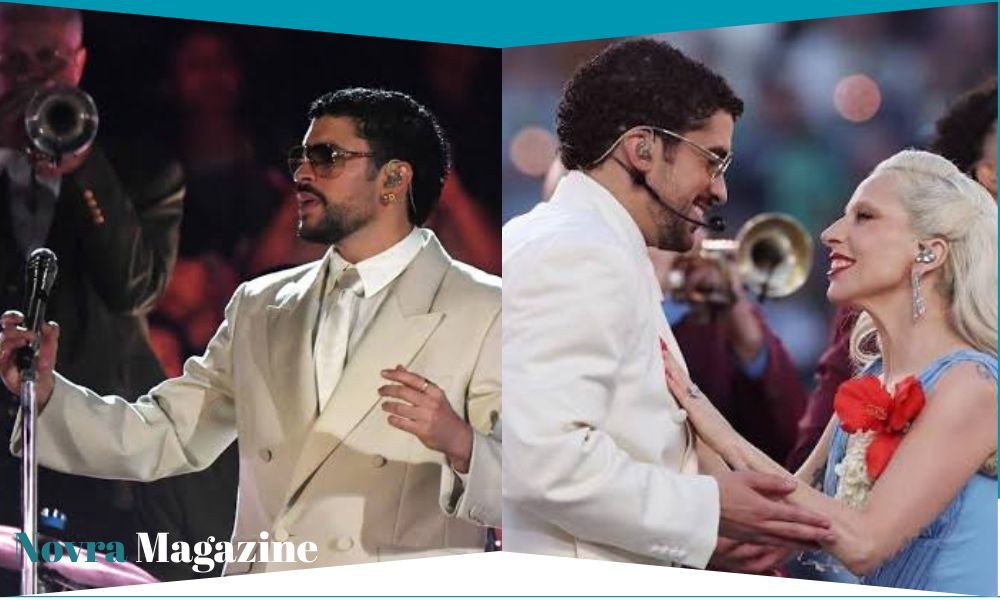
The search phrase “Super Bowl 60 halftime show was terrible” exploded after Bad Bunny headlined the Super Bowl LX halftime show on February 8, 2026, at Levi’s Stadium in Santa Clara, California. The Puerto Rican superstar performed a Spanish-language set that celebrated Puerto Rican and Latin culture, with appearances from Lady Gaga and Ricky Martin. However, the reaction was sharply divided. Some viewers called the show confusing, poorly mixed, or inappropriate for a family broadcast. Others praised it as one of the most ambitious and culturally important halftime shows in years.
Quick Facts About the Super Bowl 60 Halftime Show
| Detail | Information |
|---|---|
| Event | Super Bowl LX |
| Date | February 8, 2026 |
| Stadium | Levi’s Stadium |
| Location | Santa Clara, California |
| Halftime headliner | Bad Bunny |
| Real name | Benito Antonio Martínez Ocasio |
| Main language | Spanish |
| Major guests | Lady Gaga and Ricky Martin |
| Teams | Seattle Seahawks vs. New England Patriots |
| Final score | Seahawks 29, Patriots 13 |
| Reaction | Highly divided |
| Main criticism | Language barrier, sound mix, choreography and adult content |
| Main praise | Cultural celebration, visuals, energy and representation |
Was the Super Bowl 60 Halftime Show Really Terrible?
That depends entirely on who you ask.
There was no clear agreement that the show was terrible.
Instead, it became one of the most divisive halftime performances in recent memory.
Sports Illustrated gave the performance a positive review and argued that the “Benito Bowl” delivered, while The Guardian described it as a thrilling celebration of Puerto Rican identity.
At the same time, plenty of viewers strongly disliked it.
Pro Football Network collected negative reactions from football fans immediately after the performance, including complaints that the NFL had badly missed the mark.
So the more accurate answer is:
Some viewers thought the Super Bowl 60 halftime show was terrible, while others thought it was excellent.
Who Performed at the Super Bowl 60 Halftime Show?
Bad Bunny was the main performer.
His real name is Benito Antonio Martínez Ocasio.
He entered Super Bowl LX as one of the world’s biggest recording artists and had just won the Grammy Award for Album of the Year for Debí Tirar Más Fotos.
His selection had already generated major discussion before game day.
The controversy became even bigger once the performance began.
Was the Super Bowl Halftime Show in Spanish?
Yes.
Spanish was central to Bad Bunny’s performance.
That was not an accident.
Bad Bunny has built his international career largely without abandoning his native language, and his Super Bowl performance followed the same approach.
The show placed Puerto Rican identity and wider Latin American culture at its center.
For many fans, that made the performance special.
However, it also created one of the biggest complaints.
Why Did Some Viewers Hate the Halftime Show?
Several different criticisms appeared after the performance.
They did not all come from the same place.
Some viewers simply did not enjoy Bad Bunny’s music.
Others complained about the audio mix.
Some English-speaking viewers felt disconnected because they could not understand the lyrics.
Meanwhile, another group objected to parts of the dancing and visual presentation.
There were also political objections because Bad Bunny had previously criticized U.S. immigration policies.
Therefore, saying everyone disliked the show for one reason would be inaccurate.
Was the Sound Mixing Bad?
This became an interesting criticism because it appeared even among people who liked Bad Bunny.
In a large Reddit discussion about the performance, some viewers said the vocals and backing music sounded poorly balanced. Others responded that they had no problem hearing the performance.
That distinction matters.
Someone could enjoy the cultural message and visual design while still believing the broadcast audio was weak.
Sound quality was therefore one of the less political criticisms of the night.
Why Did People Complain About Not Understanding Bad Bunny?
Bad Bunny performed primarily in Spanish.
For Spanish-speaking fans, that was completely normal.
For many English-only viewers, however, the experience was different.
Some complained that they could not follow the lyrics.
President Donald Trump became the most prominent person to make this criticism publicly after the show. Reuters reported that he called the performance “absolutely terrible” and one of the worst halftime shows ever.
However, language was also one of the reasons other viewers loved the performance.
They saw the Spanish-language set as meaningful representation on America’s biggest television stage.
What Did Donald Trump Say About the Halftime Show?
Trump strongly criticized Bad Bunny’s performance after Super Bowl LX.
Reuters reported that he called it “absolutely terrible” and “one of the worst, EVER.”
He also objected to the Spanish-language performance and criticized the dancing.
His reaction quickly became part of the larger national discussion surrounding the show.
However, Trump’s opinion was only one side of the response.
Professional music critics and many viewers gave Bad Bunny much more positive reviews.
Did People File Complaints About the Halftime Show?
Yes.
The controversy continued long after Super Bowl Sunday.
By May 2026, FCC records showed more than 2,000 complaints connected with the performance.
The San Francisco Chronicle reported 2,158 entries, with many complaints focusing on sexualized choreography, Spanish-language content, and whether parts of the performance were suitable for a family broadcast.
WIRED also reviewed hundreds of complaints and found similar objections.
That provides stronger evidence of viewer dissatisfaction than simply collecting angry social-media posts.
Did the FCC Find a Problem With the Performance?
Despite the complaints, reporting from the Los Angeles Times said an FCC review found that the lyrics had been appropriately altered for the television broadcast.
That is important.
Complaints do not automatically mean broadcasting rules were broken.
Viewers can find something offensive or inappropriate even when regulators do not determine that it violated broadcast standards.
Was the Dancing Too Sexual?
Some viewers thought so.
Sexually suggestive choreography became one of the main themes in complaints submitted to the FCC.
Parents who expected a more traditional family halftime performance were among those who objected.
However, other viewers saw the choreography as typical of modern pop and Latin music performances.
Again, the disagreement largely came down to expectations.
Why Was the Performance Political?
Bad Bunny had already become part of political debate before Super Bowl LX.
He had publicly criticized U.S. immigration enforcement policies.
His Super Bowl selection therefore attracted political criticism months before he actually performed.
The halftime show itself celebrated Puerto Rican and Latin American identity and included broader messages about unity and belonging.
Some viewers found that emotional.
Others believed politics had become too central to an event they wanted to treat simply as sports and entertainment.
Did Politics Make the Reaction Worse?
Almost certainly.
Bad Bunny was controversial before he stepped onto the field.
That meant many viewers entered the performance with strong opinions already formed.
Some wanted him to succeed.
Others wanted him to fail.
That makes judging the artistic performance separately from politics unusually difficult.
Online discussions reflected exactly that problem, with some viewers trying to separate criticism of the sound and music from the political argument surrounding Bad Bunny.
Who Were the Surprise Guests?
Bad Bunny did not perform entirely alone.
Lady Gaga and Ricky Martin were among the major guest appearances.
Their appearances gave the show more variety and created some of its most discussed moments.
The performance also included dancers, elaborate sets, cultural imagery, and a wedding sequence.
Was There Really a Wedding During the Halftime Show?
Yes.
One of the show’s unusual moments involved an actual wedding.
The spectacle became part of a much larger production filled with small scenes rather than relying on the traditional formula of one singer standing on a huge stage.
That creative choice received both praise and criticism.
Fans called the production ambitious.
Critics thought too much was happening at once.
Why Did Some People Think the Show Was Confusing?
Bad Bunny’s halftime performance relied heavily on cultural references and visual storytelling.
For viewers familiar with Puerto Rican culture, many details had clear meaning.
For others, those references were harder to understand.
Add a language barrier, fast song changes, guest appearances, dancers, political symbolism, and multiple small scenes, and some viewers simply felt overwhelmed.
A traditional rock-band performance would have been easier to follow.
But simplicity was clearly not the goal.
Why Did Other People Love It?
For many viewers, the same things critics disliked were exactly what made the show powerful.
Supporters praised:
- Puerto Rican representation
- Spanish-language music
- Latin American culture
- Large-scale choreography
- Detailed production design
- Surprise guests
- Energy
- Cultural pride
- Messages of unity
The Guardian praised the show as a detailed and powerful celebration of Puerto Rican joy and identity.
Sports Illustrated was also positive, arguing that Bad Bunny delivered despite the controversy surrounding his selection.
Was It the Worst Super Bowl Halftime Show Ever?
There is no objective way to rank it as the worst.
Music taste is personal.
Super Bowl halftime history includes many performances that were heavily criticized when they aired.
Some later gained a better reputation.
Others remained widely disliked.
Bad Bunny’s show had enough positive professional reviews and enthusiastic fan reaction that calling it universally regarded as the “worst ever” would be misleading.
A better description is:
It was one of the most polarizing Super Bowl halftime shows in recent years.
How Many People Watched Bad Bunny?
The audience was enormous.
WIRED reported that the halftime performance was watched by more than 128 million people.
That means even a small percentage of unhappy viewers represents millions of people.
It also explains why reactions appeared everywhere immediately after the show.
Few entertainment events receive that level of simultaneous attention.
Did Bad Bunny’s Halftime Show Fail?
Commercially and culturally, calling it a simple failure would be difficult.
It attracted an enormous audience.
It generated huge media coverage.
People continued discussing it months later.
It also put Spanish-language music and Puerto Rican culture at the center of one of America’s largest broadcasts.
However, pleasing everyone is another question.
The performance clearly failed to connect with a meaningful part of the Super Bowl audience.
Both statements can be true at the same time.
Why Didn’t the NFL Choose a Traditional American Rock Artist?
This question appeared frequently after Bad Bunny was announced.
The Super Bowl halftime show has changed significantly over the years.
Older performances often relied heavily on established rock and pop stars.
More recent shows have included hip-hop, R&B, Latin music, and younger global artists.
Bad Bunny’s selection reflected the NFL’s attempt to appeal to a huge international and multicultural audience.
Whether that strategy worked depends on which audience you ask.
Was Bad Bunny a Strange Choice for the Super Bowl?
Not based on popularity.
Bad Bunny was already one of the world’s biggest music stars.
His albums had generated billions of streams, and his tours had attracted enormous audiences.
He also entered the Super Bowl immediately after a historic Grammy victory.
So the controversy was not about whether he was famous enough.
It was about whether his particular style was right for the traditional Super Bowl audience.
What Was the Alternative Halftime Show?
Turning Point USA organized an alternative “All-American Halftime Show.”
It featured Kid Rock and other performers and was promoted as an alternative for viewers who did not want to watch Bad Bunny.
Reuters reported on the alternative event while covering the political reaction to Super Bowl night.
Its existence showed how unusual the controversy had become.
A halftime entertainment decision had turned into a broader cultural and political event.
Was the Alternative Show More Popular?
No.
Bad Bunny’s official Super Bowl performance reached a vastly larger television audience.
The alternative show attracted millions of online viewers, but it did not come close to the scale of the official Super Bowl broadcast.
Still, its audience showed that opposition to the NFL’s choice was not limited to a handful of social-media posts.
What Happened in Super Bowl 60?
The halftime controversy sometimes overshadowed the actual football game.
The Seattle Seahawks defeated the New England Patriots 29-13 at Levi’s Stadium.
Seattle controlled much of the game and entered halftime ahead 9-0.
The Patriots finally scored in the fourth quarter, but Seattle had already created enough separation to secure the championship.
Why Is “Super Bowl 60 Halftime Show Was Terrible” Trending?
The phrase captures the negative side of a much larger debate.
People continue searching it because they want to know:
- Who performed?
- Why was the show mostly in Spanish?
- Why were viewers angry?
- What did Trump say?
- Were there FCC complaints?
- Who were the surprise guests?
- Was the dancing inappropriate?
- Did other people actually like it?
- Was it really the worst halftime show?
The answer is more complicated than the search phrase suggests.
Super Bowl 60 Halftime Show: Main Complaints vs. Praise
| Critics Said | Supporters Said |
|---|---|
| Hard to understand | Spanish representation mattered |
| Poor sound mix | Production looked impressive |
| Too sexual | Dancing matched the music |
| Too political | Message celebrated unity |
| Not traditional enough | Super Bowl should reflect modern America |
| Too many ideas | Cultural details made it unique |
| Wrong artist for football fans | Bad Bunny is a global superstar |
This divide explains why completely different reviews of the same performance can both appear genuine.
Was the Super Bowl 60 Halftime Show Family-Friendly?
This became one of the hardest-fought questions after the broadcast.
Thousands of FCC complaints show that many viewers did not consider parts of it suitable for children.
Others believed the outrage was exaggerated and saw nothing unusually extreme compared with previous modern halftime shows.
The FCC’s review reportedly found that lyrics had been appropriately modified for broadcast.
So there is a difference between viewers finding something unsuitable and regulators finding a broadcast violation.
Could the NFL Have Avoided the Backlash?
Probably not completely.
Bad Bunny was already a politically and culturally debated choice.
A Spanish-heavy performance was always likely to frustrate some English-speaking viewers.
Likewise, changing the performance to satisfy those critics might have upset fans who valued Bad Bunny precisely because he refused to abandon his language and identity.
The NFL therefore selected an artist who was almost guaranteed to create conversation.
That is exactly what happened.
Will Bad Bunny’s Halftime Show Be Remembered?
Almost certainly.
Whether people remember it positively is another question.
The performance combined:
- A global superstar
- Spanish-language music
- Puerto Rican culture
- Political controversy
- Celebrity guests
- A huge television audience
- Thousands of complaints
- Strong professional reviews
- Fierce online criticism
That combination makes the show historically interesting even for people who hated the music.
Common Misunderstandings About the Super Bowl 60 Halftime Show
One mistake is saying everyone hated it.
That is false.
The show received strong positive reviews from major critics and enthusiastic reactions from many fans.
Another mistake is saying nobody complained and that all criticism was manufactured.
That is also false.
More than 2,000 FCC complaints were recorded, and negative reactions appeared immediately after the performance.
A third mistake is assuming every critic objected because the show was in Spanish.
Some viewers specifically criticized audio mixing, song selection, choreography, or the overall production.
Finally, calling Bad Bunny an unknown performer is inaccurate.
He entered Super Bowl LX as one of the world’s biggest recording stars.
Final Thoughts
So, was the Super Bowl 60 halftime show terrible?
For a significant number of viewers, yes.
They disliked the sound, could not connect with the Spanish-language songs, thought the choreography went too far, or simply wanted a more traditional halftime concert.
The thousands of FCC complaints show that at least some of that dissatisfaction extended beyond angry social-media comments.
However, that is only half the story.
Other viewers thought Bad Bunny delivered something fresh, emotional, visually impressive, and culturally important.
Major reviews from Sports Illustrated and The Guardian were positive.
The fairest conclusion is therefore not that the Super Bowl 60 halftime show was terrible for everyone.
It was deeply divisive.
Bad Bunny gave millions of viewers exactly the bold cultural celebration they wanted.
At the same time, he gave millions of others a halftime show that felt unfamiliar, frustrating, or simply not entertaining.
And that enormous gap between those reactions may ultimately be what Super Bowl LX’s halftime show is remembered for.
Frequently Asked Questions
Who performed at the Super Bowl 60 halftime show?
Bad Bunny headlined the Super Bowl LX halftime show.
Was the Super Bowl 60 halftime show terrible?
Many viewers thought it was, while others strongly praised it. Professional reviews and public reactions were sharply divided.
Why was the Super Bowl halftime show in Spanish?
Bad Bunny is a Puerto Rican artist who performs primarily in Spanish. The show intentionally celebrated his culture and musical identity.
Who appeared with Bad Bunny?
Lady Gaga and Ricky Martin were among the major guest performers.
What did Trump say about Bad Bunny’s halftime show?
Trump called it “absolutely terrible” and one of the worst ever.
How many complaints did the halftime show receive?
FCC records released in May showed more than 2,000 complaints tied largely to the halftime performance.
Why were people complaining?
Major complaints involved sexually suggestive choreography, Spanish-language content, sound quality, and political or cultural messaging.
Did critics like Bad Bunny’s halftime show?
Several professional critics did. Sports Illustrated and The Guardian published strongly positive assessments.
How many people watched the performance?
WIRED reported that more than 128 million people watched it.
Where was Super Bowl 60 played?
It was played at Levi’s Stadium in Santa Clara, California.
Who played in Super Bowl 60?
The Seattle Seahawks faced the New England Patriots.
Who won Super Bowl LX?
The Seattle Seahawks won 29-13.
Was Super Bowl LX the worst halftime show ever?
There is no objective answer. It received major criticism but also significant praise, making “most divisive” more accurate than “worst.”
For more info, visit Novra Magazine.