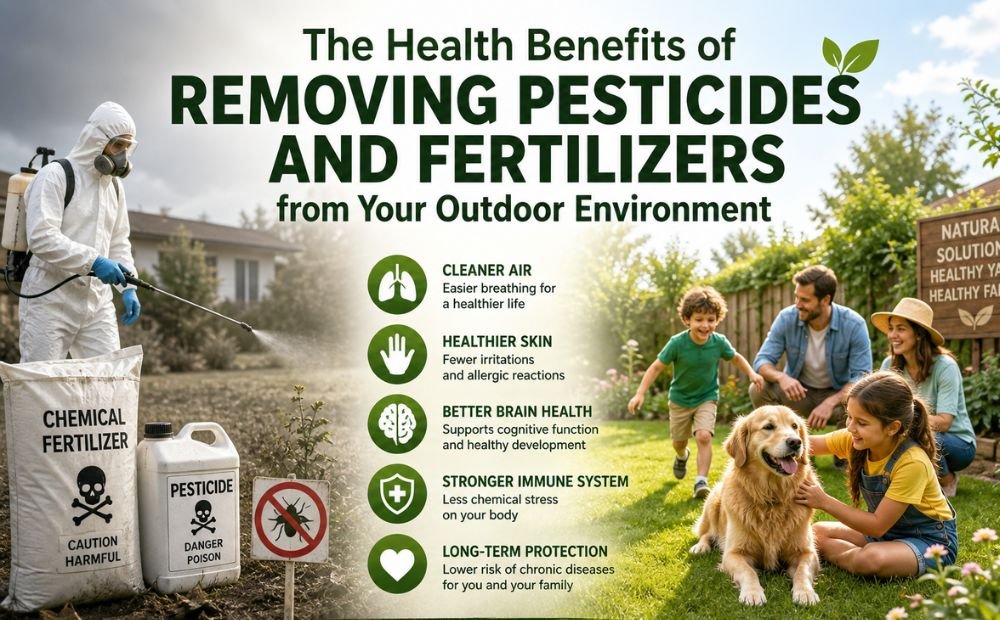
Step outside. Feels safe, right? Familiar. What most people don’t register is that chemical residues are clinging to soil, grass blades, and plant leaves — and every trip out there means contact. Pesticides kill pests. Fertilizers feed plants. That part works as advertised. The collateral damage, though, stretches far beyond any intended agricultural purpose, and most homeowners never see it coming. These substances don’t vanish after application. They linger — weeks, sometimes months — and recognizing what that actually does to the human body is where meaningful change starts.
Understanding Chemical Exposure in Outdoor Spaces
Backyards get treated like second living rooms. Rarely, though, does the chemical load in a treated lawn get the same scrutiny as indoor air quality. Pesticides can remain active in soil for a surprisingly long stretch — how long exactly depends on the compound and local conditions, but “gone after a week” almost never reflects reality. Walk barefoot on freshly treated grass. Let the dog roll around. Let kids do what kids do. Each scenario multiplies direct contact with residual chemistry nobody intended to absorb. Fertilizers compound things differently — leaching into groundwater, creating yet another exposure pathway through contaminated water sources. Small doses, repeated across years, accumulate. Owning the yard doesn’t make it automatically safe.
Respiratory and Skin Health Considerations
Spraying chemicals outside feels low-stakes. It isn’t. Fine particles go airborne the instant pesticides and fertilizers hit a surface — and those particles land in your lungs. For anyone already managing asthma or seasonal allergies, that’s a genuine problem. Airways tighten. Symptoms flare. The culprit stays invisible. Skin tells a parallel story: direct contact with residue on grass, soil, or plant stems triggers irritation, rashes, and allergic reactions in people who’d never expect it. Children carry the highest risk. Their skin absorbs more. Their bodies are still constructing defenses. And they’re the ones sprawled in the grass. Cutting these chemicals out of your outdoor routine removes that friction entirely — cleaner air, fewer reactions, a yard worth actually relaxing in.
Neurological and Developmental Health Impact
The neurological research on pesticide exposure is unsettling, particularly where children are concerned. Developing brains aren’t miniature adult brains — they’re running on a different timetable, and chemical disruption during those critical windows has been linked to developmental delays and behavioral changes. Adults aren’t off the hook, either. Low-level chronic exposure quietly chips away at cognitive function and focus over time. Fertilizer runoff muddies the picture further, reaching water sources and creating ingestion pathways that affect organ systems well beyond the gut. Consider the specifics: a toddler crawling through treated grass, then putting both hands straight in their mouth, faces a fundamentally different risk than an adult who washes up before lunch. For homeowners who’ve already switched to synthetic lawn surfaces as one way to cut chemical use altogether, an artificial grass sweeper keeps the surface clear of debris so kids can play without contacting accumulated organic matter. Eliminating pesticides and fertilizers outdoors is one of the more direct levers available for protecting neurological health — for your children and yourself.
Long-Term Health and Disease Prevention
There’s a cumulative argument here that’s hard to dismiss. Research into pesticide links with various health conditions keeps evolving — but the precautionary logic holds regardless of where the science lands next. Reduce exposure where you reasonably can. Every product you don’t apply is one fewer compound your body has to process and clear. That matters more than it sounds. Your immune system runs better when it isn’t perpetually managing low-grade chemical stress. Your organs get to focus on what they’re actually supposed to be doing. Long-term health isn’t built in dramatic moments; it’s built through daily environmental decisions, stacked across years. Removing chemical sources from your outdoor space is one of those decisions — quiet, unglamorous, and genuinely consequential for everyone living and playing there long after you’ve made the switch.
Conclusion
Strip it back: your outdoor space should be somewhere your family can breathe, play, and unwind without second-guessing what’s on the grass or floating in the air. The health case for removing pesticides and fertilizers touches nearly every system in the body — lungs, skin, brain, immune function, long-term disease risk. None of that is trivial. Yes, the transition takes planning. Natural pest control, organic soil enrichment, adjusted expectations about lawn perfection — it’s a real shift. But the payoff is a yard that’s genuinely safe, not just visually tidy. Make that change, and you’re not only protecting yourself. You’re handing the next generation a healthier place to grow up.