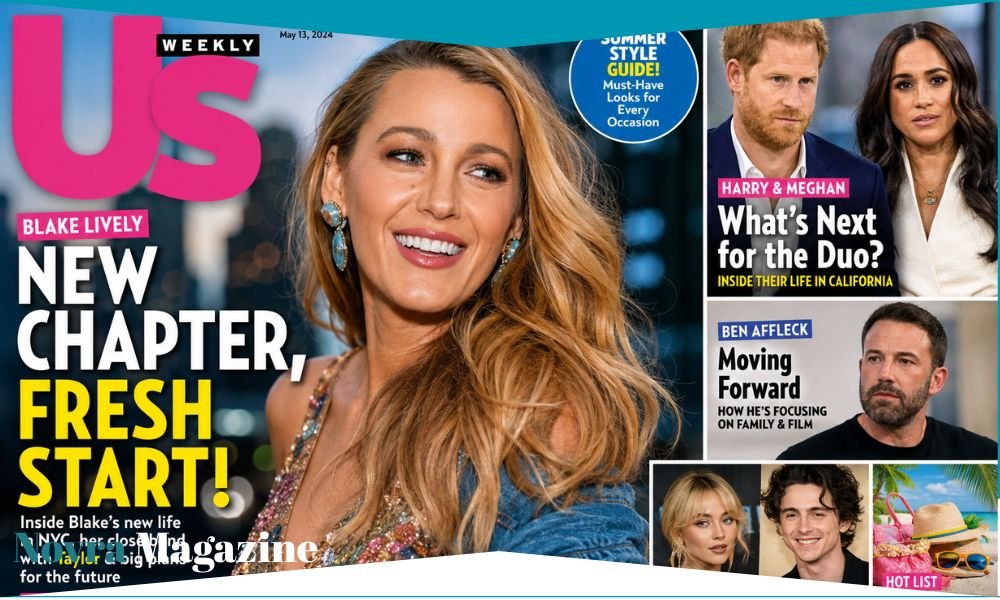
Long before TikTok, Instagram, and celebrity news alerts followed people everywhere, us weekly was already turning Hollywood relationships, red-carpet moments, reality-TV drama, and candid star photos into weekly conversation. The Us Weekly brand says it has covered pop culture since 1977 and today reaches readers through print, digital stories, newsletters, video, and other platforms. But 2026 has also become an important year behind the scenes. The publication has faced staff cuts, closed its longtime New York office, and entered a new editorial period after former editor-in-chief Dan Wakeford left. Through all those changes, one basic idea remains: people still want to know what famous people are doing when the cameras are both on and off.
What Is Us Weekly?
Us Weekly is an American celebrity and entertainment publication.
Its biggest subjects include celebrity relationships, television, movies, music, reality TV, royal-family news, fashion, beauty, lifestyle, sports, and major entertainment events.
The brand is still connected with the familiar printed magazine many people remember seeing at supermarkets and airports.
But modern Us Weekly is much larger than a paper magazine.
Its website publishes new stories throughout the day.
It also offers digital editions, newsletters, videos, photo galleries, games, shopping content, and social-media content.
That change is important.
A magazine once had to wait for its next issue to tell readers what happened.
The internet does not wait.
Us Weekly now has to operate both as a weekly magazine and as a fast-moving entertainment website.
When Was Us Weekly Founded?
The publication began in 1977.
At first, it was simply called Us rather than Us Weekly.
The New York Times Company launched it as a publication focused on entertainment and popular culture.
The original magazine looked very different from the celebrity weekly that readers know today.
Its format changed several times.
Its owners changed.
Its editors changed.
Even how often it appeared changed.
That long history explains why Us Weekly has survived several completely different eras of entertainment media.
Was Us Weekly Always Published Every Week?
No.
This is one of the most confusing parts of its history.
Us originally launched as a publication appearing every two weeks.
Later, it became monthly.
Then came the change that created the modern magazine.
In 1999, plans were announced to move Us into a weekly schedule.
The change took effect in March 2000, and the magazine became known as Us Weekly.
That was much more than a schedule change.
It also changed the type of stories the magazine wanted to tell.
Celebrity lives became much more important.
Why Did Us Become Us Weekly?
Entertainment news was changing quickly around the end of the 1990s.
People wanted more celebrity stories.
Magazines such as People and Entertainment Weekly had shown how large the audience could be for entertainment and star-focused coverage.
Us responded by moving away from a slower monthly style.
It became faster.
More visual.
More focused on personalities.
And much more interested in what celebrities were doing away from movie sets and stages.
That approach helped create the version of Us Weekly that became highly recognizable during the 2000s.
Who Owned Us Weekly Before McClatchy?
Us Weekly has had several owners.
The New York Times Company created Us in 1977.
It later sold the publication in 1980.
Jann Wenner, best known as the cofounder of Rolling Stone, later gained control of the magazine through Wenner Media.
Under Wenner, Us went through the major transformation that eventually made it Us Weekly.
For many readers, the Wenner years are when the magazine developed the personality that made it famous.
Celebrity photographs became central.
Relationship stories became major cover material.
Reality-TV stars became important enough to compete with movie stars.
And the magazine developed features readers could recognize instantly.
Did Disney Ever Own Part of Us Weekly?
Yes.
The Walt Disney Company became involved with Us Weekly in 2001.
Disney and Wenner Media formed a joint venture in which Disney held a 50 percent stake.
The partnership came during a major period of growth.
Disney later said Us Weekly’s circulation grew from about 850,000 to 1.75 million during the joint-venture years, while advertising pages also doubled.
Then the ownership changed again.
In 2006, Wenner Media bought Disney’s 50 percent stake back.
That made Us Weekly fully controlled by Wenner Media again.
When Did Wenner Media Sell Us Weekly?
A major ownership change happened in 2017.
Wenner Media sold Us Weekly to American Media Inc., the publisher known at the time for titles including the National Enquirer.
This was an important moment.
Us Weekly had been part of the Wenner world for decades.
The sale separated it from the publishing company that had helped turn it into one of America’s biggest celebrity magazines.
American Media later changed its corporate identity.
That leads to the ownership structure readers see today.
Who Owns Us Weekly in 2026?
Us Weekly is now part of the McClatchy Media network.
The publication’s current website clearly shows the McClatchy Media name in its footer.
The path to McClatchy requires a little explanation.
American Media became A360media in 2020.
Then, in December 2024, A360media was combined with McClatchy, creating the broader McClatchy Media business.
So when older websites say Us Weekly is owned by American Media or A360media, they may be describing an earlier ownership period.
For 2026, the publication itself identifies as part of the McClatchy Media Network.
Is Us Weekly Owned by People Magazine?
No.
People and Us Weekly are separate publications.
They may cover many of the same celebrities, relationships, weddings, divorces, pregnancies, royal stories, and entertainment events.
But they do not belong to the same magazine brand.
Us Weekly currently sits inside McClatchy Media.
That means the two publications often compete for similar readers and similar exclusives.
A celebrity engagement, for example, might become a major story for both sites.
The difference is in how each publication reports, packages, and presents it.
Who Is the Editor of Us Weekly in 2026?
This question became more complicated in 2026.
Dan Wakeford joined Us Weekly as editor-in-chief in March 2024 and led a major redesign and editorial relaunch.
However, Wakeford left that role in January 2026.
His own professional profile now lists his Us Weekly editor-in-chief position as ending in January 2026.
The most important current source is Us Weekly’s own masthead.
As of August 2026, that masthead does not list a person with the title “editor-in-chief.”
Instead, it lists Brody Brown and Stephanie Radvan as executive editors.
That means articles still calling Dan Wakeford the current editor-in-chief are outdated.
Who Is Brody Brown?
Brody Brown is one of Us Weekly’s current executive editors.
His official biography says he oversees entertainment interviews and news reporting for the publication.
Brown has a long connection with Us Weekly.
He previously worked there between 2012 and 2020 before spending time at E! News.
He later returned to Us Weekly in 2024.
His experience in celebrity booking is especially important for a publication like Us.
A large part of celebrity journalism depends on access.
Getting the star to sit down for an interview can be almost as important as knowing what questions to ask.
Who Is Stephanie Radvan?
Stephanie Radvan is also listed as an executive editor on Us Weekly’s current masthead.
She has spent many years covering pop culture.
Her background includes celebrity magazines, fashion publications, and digital entertainment work.
In 2026, Radvan’s name also appears on several major Us Weekly features and cover stories.
That includes interviews and reported pieces involving well-known public figures.
The current leadership structure therefore looks more shared than it did during the Wakeford editor-in-chief period.
What Did Dan Wakeford Change at Us Weekly?
Wakeford’s 2024 arrival came with an ambitious plan.
He said he wanted Us Weekly to become smarter, more trustworthy, more positive, and more useful while still keeping the celebrity stories and candid photos readers enjoyed.
The print magazine added 12 pages.
It also increased its planned publishing schedule from 48 issues to 52 issues, according to Axios.
Wakeford wanted more interviews.
More entertainment recommendations.
More sports.
More influencer coverage.
And a stronger video operation.
At the time, Axios reported Us Weekly had a print circulation of about 1.95 million.
That showed that even in a digital world, the printed magazine still had a very large audience.
What Happened to Us Weekly in 2026?
The story became much harder in April 2026.
Us Weekly made a major round of staff cuts.
Status reported that nearly half of a workforce of more than 50 people was eliminated.
The cuts reportedly included the social-media team and the Spanish-language operation.
Reporting also said the magazine’s New York office was being closed, with remaining staff moving to remote work.
That was a striking change because Us Weekly had spent decades closely connected with New York’s magazine world.
The cuts also came only about two years after the highly publicized 2024 relaunch.
Is Us Weekly Shutting Down?
No reliable current evidence says Us Weekly has shut down.
The website remains active and was publishing new celebrity and entertainment stories in August 2026.
The official site still offers digital access, print subscriptions, special issues, newsletters, and other services.
The magazine also continued producing 2026 print covers after the staff changes.
So the more accurate description is:
Us Weekly has downsized and changed how it operates, but the brand is still publishing.
That distinction matters.
Layoffs are serious.
They do not automatically mean a publication has closed.
Why Did Us Weekly Cut So Many Jobs?
Reporting around the April cuts pointed to financial pressure.
Status reported that employees were told first-quarter performance had not been as strong as expected.
The changes also fit a much larger media problem.
Magazine readers and advertising money have steadily moved toward phones, social platforms, video, and search.
A celebrity weekly once had days to own a story.
Now a celebrity can announce an engagement directly on Instagram before a magazine reporter even hears about it.
That puts enormous pressure on old magazine businesses.
Us Weekly is not the only publication dealing with that change.
But its 2026 cuts show how difficult the transition can be.
Does Us Weekly Still Have a Print Magazine?
Yes.
Us Weekly continues to offer magazine subscriptions and digital editions through its official website.
2026 issues also continued appearing with celebrity cover subjects.
That means the brand has not become digital-only.
However, its newsroom is now operating very differently after the closure of its New York office and the staff reductions.
For readers, the printed magazine may still look familiar.
Behind the cover, however, the business producing it has changed significantly.
What Does Us Weekly Cover Today?
Us Weekly’s current website divides its content into several large areas.
These include celebrity news, entertainment, star style, lifestyle, shopping, royals, sports, reality TV, photos, and video.
Entertainment coverage includes movies, television, music, country music, books, podcasts, and viewing recommendations.
Lifestyle topics include parenting, pets, food, real estate, and wellness.
This makes Us Weekly broader than a simple “Hollywood gossip magazine.”
Celebrity news remains the heart of the brand.
But the publication is trying to keep readers on the site even when they are shopping, choosing something to watch, or reading about sports.
Why Is Reality TV So Important to Us Weekly?
Reality television fits naturally with Us Weekly’s style.
Reality stars live much more of their public lives outside scripted shows than traditional actors do.
Their relationships continue after an episode ends.
Their marriages, friendships, divorces, arguments, pregnancies, businesses, and reunions can all become separate stories.
Us Weekly currently gives reality TV its own major section.
The magazine has also continued projects such as its Reality Star Style Awards in 2026.
This shows how much celebrity culture changed from the magazine’s early days.
A reality-TV cast member can now generate as much reader interest as a movie star.
What Is “Stars — They’re Just Like Us!”?
This is probably Us Weekly’s most famous recurring feature.
The basic idea is wonderfully simple.
Show celebrities doing ordinary things.
Buying groceries.
Carrying bags.
Eating food.
Walking dogs.
Waiting in line.
Doing the kinds of things everyone else does.
The feature became strongly associated with the magazine during the early 2000s and helped make candid celebrity photos feel like stories by themselves.
The feature remains active today.
Us Weekly was still publishing “Stars — They’re Just Like Us!” content in August 2026.
Why Did “Stars — They’re Just Like Us!” Become So Popular?
Because it changed the emotional distance between celebrities and readers.
A movie premiere says:
“Look how glamorous this person is.”
A candid picture of the same actor carrying coffee says:
“They do normal things too.”
That seems very simple now.
In the early celebrity-weekly era, it was powerful.
The feature created a feeling that famous people were not only distant stars on giant screens.
They were people who missed flights, bought snacks, carried children, and walked through parking lots.
That feeling became a huge part of 2000s celebrity culture.
Who Helped Create the Modern Us Weekly Style?
Editor Bonnie Fuller played a major role.
Fuller became editor-in-chief in 2002 and helped shape the fast, visual, personality-driven format associated with the modern celebrity weekly.
Janice Min then became editor-in-chief in 2003.
Her years were another major period of growth and influence for the publication.
The magazine became deeply interested in relationships, reality stars, celebrity families, style, candid pictures, and recurring visual features.
That formula spread far beyond Us Weekly.
Celebrity websites, television shows, blogs, and social platforms eventually began offering similar material every hour of every day.
Is Us Weekly a Tabloid?
People often use the word “tabloid” loosely for celebrity magazines.
Us Weekly is a celebrity and entertainment news publication with a strong history of gossip, relationship coverage, candid photography, and attention-grabbing covers.
But calling every story “tabloid gossip” can be too simple.
The publication also runs interviews, entertainment reporting, reviews, features, and reported exclusives.
Its official editorial policy says stories are vetted, information from other outlets is independently checked, confidential-source reporting is labeled, and representatives are contacted for comment in sensitive stories.
That is the publication describing its own standards.
Readers should still judge individual stories based on the evidence supporting them.
Is Us Weekly a Reliable Source?
Us Weekly is an established professional entertainment publication, but readers should still notice what type of story they are reading.
A direct celebrity interview is different from a story based on an unnamed insider.
A public court document is different from a relationship rumor.
An official announcement is different from a source saying a couple is “having problems.”
Us Weekly says it independently verifies reported information and clearly identifies stories relying on reports or confidential sources.
Its policy also says the publication reaches out to celebrity representatives for comment when dealing with sensitive reports.
That is a positive standard.
Still, readers should always separate confirmed facts from anonymous-source claims.
Why Does Us Weekly Use Anonymous Sources?
Celebrity reporting often involves people who know information but cannot publicly attach their names to it.
A friend may know a couple has separated.
A production source may know someone has joined a television show.
A person connected with a celebrity may know about a pregnancy, engagement, or private conflict.
But anonymous sources create risk.
Readers cannot personally judge who the source is.
That is why Us Weekly’s policy says it clearly labels reporting based on confidential sources.
For readers, language matters.
“Us Weekly confirmed” is stronger than “a source tells Us.”
Those sentences should not be treated as exactly the same thing.
What Is the Difference Between Us Weekly and People?
The two publications overlap heavily.
Both cover celebrities.
Both publish interviews.
Both follow relationships, weddings, babies, royal families, entertainment, television, and major cultural moments.
Us Weekly historically became especially known for fast celebrity gossip, candid photography, reality-TV coverage, relationship reporting, and playful recurring features.
People traditionally has a broader human-interest identity alongside entertainment coverage.
That does not mean one publication only does gossip and the other only does serious stories.
Modern digital media has blurred those lines.
The biggest difference for readers often comes down to tone, access, sources, and which outlet gets the exclusive.
Does Us Weekly Only Cover American Celebrities?
No.
The site covers international entertainment figures and has dedicated royal-family coverage.
Current staff also include journalists connected with London and Australia.
British royal stories are especially important.
Prince William.
Princess Kate.
Prince Harry.
Meghan Markle.
King Charles.
Each has a dedicated presence in Us Weekly’s current royal coverage structure.
This reflects how celebrity news has become global.
A British royal story can become a top American entertainment headline within minutes.
How Big Is Us Weekly Today?
Us Weekly says the brand reaches more than 40 million consumers per month across print, digital, and social platforms.
Because this figure comes from the publication’s own About page, it should be understood as the company’s stated audience figure rather than an independent audit presented here.
For print specifically, Axios reported a circulation of about 1.95 million during the 2024 relaunch.
Those figures show why Us Weekly remains commercially important despite its recent newsroom cuts.
A legacy magazine does not have to dominate social media every day to still have a large recognizable audience.
Why Does Us Weekly Have Shopping Articles?
Like many digital publishers, Us Weekly now publishes shopping and product content.
Its website has dedicated areas for deals, fashion, beauty, wellness, home products, and gift guides.
The site also tells readers that some links are affiliate partnerships.
That means the publication may receive compensation when someone purchases through certain links.
This business model has become common across digital media.
Advertising alone is difficult.
Affiliate commerce gives publishers another way to make money.
Readers should simply understand when they are reading editorial celebrity coverage and when they are reading shopping content that may generate revenue.
Is Us Weekly Free Online?
Many Us Weekly stories can be read on its website.
The brand also offers accounts, newsletters, magazine subscriptions, digital editions, and other subscriber services.
Access rules can change over time, so old articles explaining exactly what is free may become outdated.
The safest description is that Us Weekly operates a mix of free digital publishing and paid magazine products.
Its website is designed to reach a much larger audience than traditional print alone could reach.
Does Us Weekly Still Matter When Celebrities Have Instagram?
This is probably the biggest question facing all celebrity magazines.
A star no longer needs Us Weekly to announce a baby.
They can post it themselves.
A singer can announce an engagement on Instagram.
An actor can deny a rumor on X.
A reality star can explain a breakup on a podcast.
That removes some of the old magazine’s power.
But it creates another job for entertainment reporters.
Someone still has to ask:
What does the announcement mean?
What happened before it?
Is the rumor true?
What has the celebrity said in previous interviews?
Who else is involved?
And what is actually confirmed?
The internet created more celebrity information.
It did not automatically create more clarity.
Why Did Us Weekly Survive When Other Celebrity Magazines Struggled?
Part of the answer is its brand.
“Us Weekly” is easy to recognize.
Its bright covers and giant celebrity photographs became familiar to generations of readers.
Another reason is that it moved online.
Its current website publishes continuously rather than waiting for the magazine’s weekly schedule.
It also expanded into reality TV, royals, sports, shopping, video, newsletters, and digital entertainment recommendations.
However, surviving does not mean the business is easy.
The layoffs and office closure in 2026 show that even a famous brand must keep changing.
What Is the Future of Us Weekly?
Nobody outside McClatchy can know exactly what the long-term business plan will be.
But the direction is visible.
The brand is still publishing print issues.
Its website remains active.
Its editorial team continues producing breaking entertainment stories and magazine features.
At the same time, the operation is smaller after the 2026 layoffs.
It no longer has the same New York office structure.
And its official masthead no longer lists a traditional editor-in-chief.
So the next version of Us Weekly may look less like the classic magazine newsroom of the 2000s.
It may become an even more distributed digital entertainment brand supported by print, commerce, video, and breaking news.
Why Are People Still Searching for Us Weekly in 2026?
Because celebrity curiosity has not disappeared.
The platforms changed.
The basic human interest did not.
People still want to know:
Who is dating?
Who broke up?
Who is pregnant?
Who got married?
What happened backstage?
What did a celebrity really say?
What is coming next on a favorite show?
And what happened after the cameras stopped?
Us Weekly has spent decades building a business around those questions.
That is why even after several owners, editors, redesigns, and major changes in technology, the brand is still recognizable.
FAQs About Us Weekly
What is Us Weekly?
Us Weekly is an American celebrity and entertainment publication covering stars, relationships, television, movies, music, reality TV, fashion, royals, sports, and lifestyle stories.
When was Us Weekly founded?
The publication began in 1977 as Us.
Who founded Us Weekly?
Us was launched by The New York Times Company in 1977.
Was Us Weekly always weekly?
No. It began on a less frequent schedule and later became monthly before switching to weekly publication in March 2000.
Who owns Us Weekly in 2026?
Us Weekly is part of the McClatchy Media Network.
Was Us Weekly owned by Disney?
Disney owned a 50 percent stake through a joint venture with Wenner Media beginning in 2001. Wenner bought the stake back in 2006.
Did Jann Wenner own Us Weekly?
Yes. Wenner Media controlled the publication for many years before selling it to American Media in 2017.
Is American Media still the owner of Us Weekly?
No. American Media later became A360media, which was combined with McClatchy in 2024. Us Weekly now identifies itself as part of the McClatchy Media Network.
Who is the editor-in-chief of Us Weekly in 2026?
The current official masthead does not list an editor-in-chief. It lists Brody Brown and Stephanie Radvan as executive editors.
What happened to Dan Wakeford?
Wakeford led Us Weekly as editor-in-chief beginning in 2024 but left the position in January 2026.
Did Us Weekly have layoffs in 2026?
Yes. Reporting in April said nearly half of its workforce of more than 50 people was cut.
Did Us Weekly close its New York office?
Yes. Reporting said the New York office was closed and remaining staff moved toward remote work beginning in May 2026.
Is Us Weekly closing completely?
There is no evidence that the publication has closed. Its website and magazine products remain active in August 2026.
Does Us Weekly still print a magazine?
Yes. The official site continues to offer magazine subscriptions, digital access, and special issues.
Is Us Weekly the same as People?
No. They are separate celebrity and entertainment publications owned by different companies.
What is “Stars — They’re Just Like Us!”?
It is a famous Us Weekly feature showing celebrities doing ordinary everyday activities. The franchise remains active in 2026.
Does Us Weekly cover reality TV?
Yes. Reality television is one of the publication’s major current content areas.
Does Us Weekly cover the royal family?
Yes. The site has dedicated coverage for major British royal figures including Prince William, Princess Kate, Prince Harry, Meghan Markle, and King Charles.
Is Us Weekly reliable?
It is an established entertainment publication with a stated editorial policy requiring verification, clear labeling of confidential-source reporting, opportunities for representatives to comment, and noted corrections. Readers should still distinguish confirmed information from anonymous-source claims.
How many people read Us Weekly?
Us Weekly says its brand reaches more than 40 million consumers monthly across print, digital, and social platforms. Axios reported print circulation of about 1.95 million during the 2024 relaunch.
What does Us Weekly cover in 2026?
Its current areas include celebrity news, entertainment, fashion and beauty, lifestyle, shopping, games, royals, sports, reality TV, photos, videos, and newsletters.
Final Thoughts
The story of us weekly is really the story of how celebrity culture changed.
It started in 1977.
There was no TikTok.
No Instagram.
No YouTube.
And no celebrity could instantly send a message to 100 million followers from a phone.
The magazine changed because the audience changed.
Us became Us Weekly in 2000 and moved deeply into the world of celebrity relationships, candid photographs, reality stars, style, and quick entertainment news.
Features such as “Stars They’re Just Like Us!” helped change how readers looked at famous people.
Stars were no longer only people standing on red carpets.
They could become stories simply by carrying shopping bags or drinking coffee.
Ownership changed too.
The New York Times Company created the magazine.
Wenner Media later helped transform it.
Disney briefly owned half.
American Media bought it in 2017.
Today, Us Weekly sits inside McClatchy Media.
Then came another major turning point.
Dan Wakeford tried to rebuild the brand in 2024 with more pages, more interviews, stronger video, and a wider entertainment focus.
Less than two years later, he was gone.
In April 2026, Us Weekly cut nearly half of its staff.
Its New York office also closed as the publication moved toward remote work.
That sounds like a story about decline.
But it is also a story about survival.
As of August 2026, Us Weekly is still publishing.
Its website is active.
Its print magazine still exists.
Its current masthead lists a large group of writers, reporters, editors, producers, and visual staff led editorially by executive editors including Brody Brown and Stephanie Radvan.
The biggest question is what comes next.
Celebrity culture is no longer controlled by magazines.
Celebrities can speak directly to fans.
Influencers can become more famous than actors.
A reality star can start a podcast and explain a controversy before a weekly magazine reaches the newsstand.
But there is still value in someone checking what is true.
There is still value in an interview that asks better questions.
And there is still a huge audience for stories about fame, love, money, family, television, fashion, and the strange lives of people everybody recognizes.
That is the space Us Weekly has lived in for almost 50 years.
The technology changed.
The covers changed.
The owners changed.
The newsroom changed.
The curiosity did not.
For more info, visit novra magazine