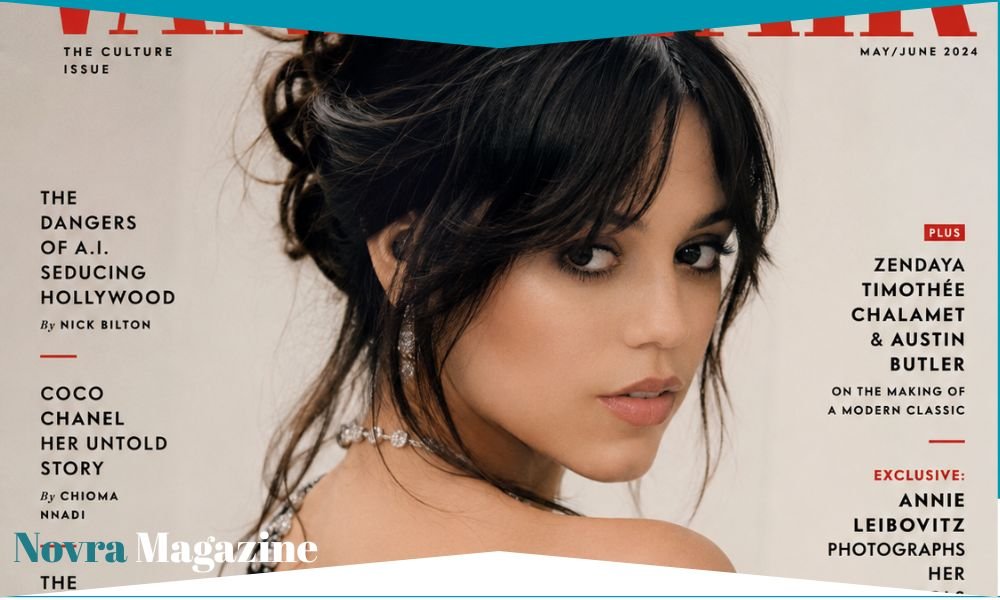
A glamorous Hollywood cover can make vanity fair look like it is only about movie stars, expensive clothes, and famous parties. But Vanity Fair has built its identity around something much wider: celebrities, politics, power, money, technology, culture, investigations, and the people shaping society. In 2026, the magazine is also in a new era. Mark Guiducci now leads the brand globally, its famous Oscar party has moved to LACMA, and a publication whose history stretches back to 1913 is trying to remain important in a world ruled by phones, video, social media, and fast-moving online news.
What Is Vanity Fair?
Vanity Fair is a magazine and digital media brand owned by Condé Nast.
It covers entertainment, Hollywood, politics, celebrity culture, fashion, business, technology, royalty, crime, and major cultural stories.
The publication is especially famous for long profiles and large photographs of well-known people.
But it does much more than photograph celebrities.
One issue might contain an actor interview.
Another story might investigate a powerful businessperson.
The website may cover an election, a royal-family dispute, an awards show, a technology company, or a Hollywood scandal.
That mix is a major part of Vanity Fair’s identity.
When Did Vanity Fair Begin?
The Condé Nast history of Vanity Fair begins in 1913.
Publisher Condé Montrose Nast had already purchased Vogue when he developed the publication that became Vanity Fair.
The early version became closely connected with art, literature, theatre, society, and the famous people of its time.
Under editor Frank Crowninshield, Vanity Fair published major writers and artists and became strongly associated with the cultural life of the 1920s.
Names connected with its early years included Dorothy Parker, T. S. Eliot, Gertrude Stein, P. G. Wodehouse, and other important writers.
That sounds very different from celebrity social media today.
But the basic idea was surprisingly similar.
Vanity Fair wanted to watch the people who were influencing culture.
Why Is It Called Vanity Fair?
The words “Vanity Fair” existed long before the modern magazine.
The name is famously connected with John Bunyan’s The Pilgrim’s Progress, where Vanity Fair is a place filled with worldly attractions and temptations.
Different publications also used the Vanity Fair name during the 19th century.
Condé Nast later acquired rights to use the name in the United States when developing his magazine.
The name works well for a publication about fame and power.
“Vanity” can suggest pride, appearance, status, and the desire to be noticed.
Those ideas fit naturally with Hollywood, fashion, politics, and wealthy society.
Did Vanity Fair Ever Stop Publishing?
Yes.
The original Condé Nast-era Vanity Fair stopped publishing in 1936.
The Great Depression badly damaged advertising and magazine economics, and the title was merged into Vogue.
For decades, Vanity Fair disappeared as an active Condé Nast magazine.
Then came a surprising decision.
Condé Nast decided to bring it back.
When Was Vanity Fair Relaunched?
The modern version of Vanity Fair was revived in 1983.
Condé Nast had announced plans to bring the title back in the early 1980s, and the first issue of the new version arrived with a March 1983 cover date.
The revival was not immediately perfect.
Richard Locke served briefly as editor.
Leo Lerman followed him.
Then Tina Brown arrived in 1984.
That is when the modern Vanity Fair personality began becoming much clearer.
Why Was Tina Brown Important to Vanity Fair?
Tina Brown became editor in 1984 and helped turn the revived magazine into a major cultural publication.
Her Vanity Fair mixed celebrity glamour with journalism, scandal, society, politics, and powerful photography.
Famous photographers became a major part of the magazine’s visual identity.
These included Annie Leibovitz, Herb Ritts, Helmut Newton, and others.
The covers became events.
People did not only read them.
They talked about them.
That ability to turn a magazine cover into a cultural moment became one of Vanity Fair’s greatest strengths.
What Is the Famous Demi Moore Vanity Fair Cover?
One of the most famous Vanity Fair covers featured actress Demi Moore while pregnant.
Annie Leibovitz photographed Moore for the magazine’s 1991 cover.
The image became widely discussed because a heavily pregnant movie star appearing that way on a major magazine cover was considered unusually bold at the time.
It later became one of the photographs most closely connected with Vanity Fair’s history.
The cover demonstrates something the magazine learned to do very well.
Take a famous person.
Create a striking image.
Then turn that image into a larger conversation about culture.
Who Was Graydon Carter?
Graydon Carter became editor of Vanity Fair in 1992.
He remained in charge for about 25 years, making him one of the most important people in the modern magazine’s history.
Under Carter, Vanity Fair expanded its mix of Hollywood, politics, business, investigations, celebrity profiles, and photography.
His years also produced two traditions now closely tied to the Vanity Fair name.
The annual Hollywood Issue.
And the Vanity Fair Oscar Party.
Both became major pieces of the brand.
What Is the Vanity Fair Hollywood Issue?
The Hollywood Issue is a special Vanity Fair edition celebrating actors, filmmakers, and the movie business.
The tradition began in 1995, when Vanity Fair created a Hollywood-focused issue marking 100 years of motion pictures.
The early covers became known for large groups of stars photographed together.
Annie Leibovitz photographed the first Hollywood cover, which featured 10 actresses including Sandra Bullock and Gwyneth Paltrow.
Since then, the Hollywood Issue has become one of Vanity Fair’s most recognizable yearly projects.
It mixes current stars with a larger question:
Who represents Hollywood right now?
What Was Different About the 2026 Hollywood Issue?
The 2026 Hollywood Issue arrived during Mark Guiducci’s new editorial era.
Instead of simply repeating the old formula, the issue focused partly on a new generation of male movie stars and on wider changes happening inside Hollywood.
It also examined subjects such as artificial intelligence and the changing movie business.
The issue introduced visual changes influenced by both Vanity Fair’s Jazz Age roots and later periods in its design history.
That is important for a magazine more than 100 years old.
Nostalgia can help.
But copying the past forever can make a publication feel old.
Vanity Fair is trying to keep recognizable pieces of its history while making the brand look current.
Who Runs Vanity Fair in 2026?
Mark Guiducci is Vanity Fair’s Global Editorial Director.
Condé Nast appointed him in June 2025, and he officially began the job on June 30.
This was a new title for the brand.
Condé Nast described Guiducci as Vanity Fair’s first global editorial director.
He oversees the magazine’s editorial and creative direction across its markets.
Vanity Fair says those markets include the United States, United Kingdom, France, Italy, and Spain.
That makes his role wider than simply editing the American print magazine.
Who Is Mark Guiducci?
Guiducci already had a long history inside Condé Nast.
He actually began his Condé Nast career as a features assistant at Vanity Fair.
He later worked at Vogue and became its creative editorial director.
There, he worked across print, digital, social media, video, audio, and events.
Then he returned to Vanity Fair in 2025 to run the brand globally.
That gave his appointment an unusual full-circle feeling.
He returned to a publication where he had once held a much more junior role.
This time, he came back to lead it.
What Happened to Radhika Jones?
Radhika Jones became editor-in-chief of Vanity Fair in late 2017 after Graydon Carter’s departure.
She led the publication for more than seven years.
In April 2025, Jones announced that she would step down.
Her final period at the magazine ended in June 2025, shortly before Guiducci began his new role.
Jones’s years included major cultural and political events, as well as a continuing push toward a more diverse group of cover subjects and contributors.
So articles that still call Radhika Jones the current Vanity Fair editor are now outdated.
In 2026, the current editorial leader is Mark Guiducci.
Who Owns Vanity Fair?
Vanity Fair is part of Condé Nast.
Condé Nast also operates major brands such as Vogue, GQ, The New Yorker, Wired, Architectural Digest, and Condé Nast Traveler.
Above Condé Nast sits Advance, a private family-held company founded by the Newhouse family.
Advance lists Condé Nast as one of the major companies in its portfolio.
So if someone asks, “Who owns Vanity Fair?” the easiest answer is:
Vanity Fair is a Condé Nast brand, and Condé Nast is part of the privately held Advance group.
Is Vanity Fair Owned by Anna Wintour?
No.
Anna Wintour does not personally own Vanity Fair.
She has held major leadership power inside Condé Nast, but the publication itself belongs within the Condé Nast and Advance corporate structure.
This distinction is important.
A powerful editor or executive can influence a publication.
That does not make that person its owner.
What Does Vanity Fair Cover?
Vanity Fair describes its mission as looking at global culture while also investigating the forces that shape it.
Its current site covers areas including:
Hollywood.
Television.
Celebrities.
Politics.
Fashion.
Beauty.
Royal families.
Technology.
Money.
Culture.
Awards.
Books.
True crime.
Media.
That variety explains why the publication can sometimes be difficult to classify.
It is not simply a fashion magazine.
It is not simply a celebrity website.
It is not simply a political publication.
Vanity Fair lives where those worlds meet.
Is Vanity Fair a Celebrity Magazine?
Partly, but that description is too small.
Celebrity coverage is extremely important to Vanity Fair.
Actors, directors, musicians, royals, models, and other famous people regularly appear in its stories and on its covers.
But Vanity Fair has also built a reputation around long-form journalism and reporting on politics, powerful institutions, scandals, business, and technology. Condé Nast describes the brand through long-form journalism, essays, and distinctive photography.
Think about it like this.
A celebrity magazine may mainly ask:
“What is this famous person wearing?”
Vanity Fair may ask that too.
But it may also ask:
“How did this person become powerful?”
“What happened behind the scenes?”
“Who benefited?”
“What does this story tell us about society?”
That is a bigger editorial space.
Does Vanity Fair Cover Politics?
Yes.
Political reporting has become a significant part of Vanity Fair’s digital identity.
Its coverage includes Washington, elections, powerful political figures, media, and the relationship between politics, wealth, and culture.
In April 2026, Vanity Fair also hosted an event connected with White House Correspondents’ Dinner weekend under Guiducci’s leadership.
Political articles should still be understood separately from entertainment pieces.
A profile of an actor and a report about government power require very different forms of journalism.
Vanity Fair chooses to do both.
What Is the Vanity Fair Oscar Party?
The Vanity Fair Oscar Party is one of the publication’s most famous events.
It takes place around the Academy Awards and brings together actors, filmmakers, musicians, fashion figures, business leaders, and other invited guests.
The first Vanity Fair Oscar Party was held in 1994.
Graydon Carter and producer Steve Tisch helped create the event after the death of Hollywood agent Irving “Swifty” Lazar, whose own Oscar-night party had been famous for years.
The first Vanity Fair event was much smaller than the modern version.
It began with around 150 dinner guests.
Over time, it became one of Hollywood’s most famous invitation-only nights.
What Changed at the Vanity Fair Oscar Party in 2026?
The 2026 event marked a major change.
Vanity Fair moved its Oscar Party to the Los Angeles County Museum of Art, or LACMA.
The party was held on March 15, 2026, following the Academy Awards.
Its new home was connected with LACMA’s David Geffen Galleries.
The move happened during Guiducci’s first Oscar season leading Vanity Fair.
He described the relationship between Hollywood, art, media, technology, politics, and fashion as increasingly connected—exactly the mix Vanity Fair tries to cover.
Was the 2026 Event the 31st or 32nd Vanity Fair Oscar Party?
Readers may notice conflicting numbers.
A Condé Nast announcement described the 2026 event as Vanity Fair’s 32nd annual Oscar Party.
However, a Vanity Fair story about the event called it the 31st Oscar Party.
The safest way to avoid creating false certainty is to focus on facts that are clear:
The tradition began in 1994, and the 2026 party moved to LACMA.
The different numbering appears to reflect different ways of counting the event’s history, including years when normal celebrations were disrupted.
Why Is the Vanity Fair Oscar Party So Famous?
Part of its fame comes from timing.
Oscar night already gathers many of the world’s biggest movie stars in one city.
Vanity Fair then brings many of those people together after the ceremony.
That creates memorable photographs.
Oscar winners can arrive carrying their statues.
Actors who competed against one another may suddenly be standing together.
Musicians, models, directors, executives, and other famous guests join them.
The party therefore becomes its own celebrity event.
For many fashion and entertainment fans, watching who attends can be almost as interesting as the Academy Awards themselves.
Is Vanity Fair Famous for Photography?
Yes.
Photography is one of the strongest parts of the magazine’s identity.
Vanity Fair has worked with some of the most influential portrait photographers of the modern era.
Annie Leibovitz is especially closely connected with the brand.
Her work includes the famous Demi Moore pregnancy cover and many Hollywood portfolios.
Other photographers connected with Vanity Fair history include Herb Ritts, Helmut Newton, Bruce Weber, Edward Steichen, and many others.
The pictures matter because Vanity Fair often tries to create portraits that feel larger than ordinary promotional photography.
The goal is not simply:
“Here is an actor.”
The image tries to say something about fame, personality, power, or a moment in culture.
What Is the Vanity Fair Archive?
Vanity Fair maintains a large digital archive.
Its current subscriber information says the archive includes every issue going back to 1913.
That makes the archive useful for more than celebrity nostalgia.
Readers can see how culture changed.
Clothing changed.
Photography changed.
Ideas about fame changed.
Political language changed.
Even advertisements tell a story about what earlier generations wanted to buy.
For a magazine built around society and power, more than a century of old issues becomes a historical record.
Do You Have to Pay to Read Vanity Fair?
Vanity Fair uses a subscription model.
Its current FAQ says subscriptions include unlimited access to the website, access to the archive dating back to 1913, and subscriber newsletters.
The exact price or promotional offer can change.
That is why an old article saying Vanity Fair costs a particular amount may quickly become outdated.
The more stable fact is that Vanity Fair combines free discovery with paid digital and subscription access.
Is Vanity Fair Still a Print Magazine?
Yes.
Vanity Fair remains part of Condé Nast’s print portfolio while also operating heavily across digital media.
The modern brand is much bigger than printed pages, though.
It operates a website.
It publishes newsletters.
It makes videos.
It runs social accounts.
It organizes major events.
It offers a digital archive.
That is now normal for major magazine companies.
A publication can no longer depend only on someone buying a paper copy at a shop.
Where Is Vanity Fair Published Around the World?
Under Mark Guiducci, Vanity Fair’s global editorial structure includes the United States, United Kingdom, France, Italy, and Spain.
Condé Nast lists separate editorial leaders for some of these markets on its current Vanity Fair brand page.
This means Vanity Fair is an international brand rather than only an American magazine.
Local editions can focus more strongly on celebrities, culture, fashion, and political subjects relevant to their own readers.
At the same time, the global editorial structure allows important work to travel across markets.
Is Vanity Fair the Same as Vogue?
No.
Both belong to Condé Nast, but they are separate brands.
Vogue is especially identified with fashion, designers, models, beauty, and style.
Vanity Fair also covers fashion, but its editorial world is broader in a different direction.
It spends much more space mixing entertainment, politics, society, wealth, investigations, and powerful personalities.
The two brands sometimes photograph the same famous people.
They may even share senior Condé Nast talent.
But they are not the same magazine.
Is Vanity Fair the Same as Variety?
No.
The names sound slightly similar, especially to someone new to entertainment media.
But Vanity Fair and Variety are completely different publications.
Vanity Fair belongs to Condé Nast and mixes culture, celebrity, politics, style, and long-form journalism.
Variety is an entertainment-industry trade publication focused heavily on the business of film, television, streaming, and media.
So if you want breaking information about a studio deal, Variety may be closer to an industry trade.
If you want a deeply photographed celebrity profile mixed with cultural storytelling, Vanity Fair may feel more natural.
Is Vanity Fair a Reliable Source?
Vanity Fair is an established professional publication with a long history and experienced journalists, editors, photographers, and contributors. Its stated mission includes both cultural coverage and investigation.
However, readers should still notice what kind of story they are reading.
A reported investigation is different from commentary.
A celebrity interview may contain the subject’s own claims.
An awards prediction is not a fact about who will win.
A fashion opinion is naturally subjective.
The smartest approach with any major publication is to look at evidence and distinguish reporting from opinion, prediction, and entertainment.
Why Do Vanity Fair Covers Matter So Much?
A strong cover can become part of how people remember a celebrity or moment.
That is especially true when famous photographers are involved.
Vanity Fair has spent decades treating cover photography almost like its own storytelling form.
The Hollywood Issue adds another layer.
Instead of putting one star on the cover, Vanity Fair can create a picture of an entire generation of actors.
Years later, people can look back and ask:
Which stars became legends?
Who disappeared?
Who changed Hollywood?
Who was missing?
That gives an old magazine cover a second life as cultural history.
Why Is Vanity Fair Still Important in 2026?
Media has changed enormously since Vanity Fair returned in 1983.
Celebrities can now communicate directly with fans on social media.
Breaking news travels in seconds.
Anyone with a smartphone can publish photographs.
Video dominates many online platforms.
That makes the old magazine model much harder.
Vanity Fair’s response has been to operate across formats while trying to keep the things that made its brand distinctive: ambitious profiles, photography, access, cultural storytelling, investigations, and major events.
Its 2025 leadership change and 2026 Oscar Party move show that the publication is not simply protecting old traditions.
It is changing them.
What Is New About Vanity Fair in 2026?
The biggest recent change is Mark Guiducci’s leadership.
He became the brand’s first global editorial director in June 2025 and now oversees Vanity Fair across several international markets.
The 2026 Hollywood Issue also introduced a refreshed visual identity and a different look at Hollywood stars and the entertainment industry.
Then the Oscar Party entered a new chapter at LACMA in March 2026.
Vanity Fair has continued hosting cultural events as well.
In May 2026, it held an event connected with the Tony-nominated Broadway production Giant, and in April it participated in White House Correspondents’ Dinner weekend.
Those moves show the same strategy.
Hollywood matters.
But Vanity Fair wants to sit wherever entertainment, politics, art, fashion, money, and influence meet.
FAQs About Vanity Fair
What is Vanity Fair?
Vanity Fair is a Condé Nast magazine and digital publication covering Hollywood, entertainment, politics, fashion, celebrity culture, business, technology, society, and major cultural stories.
When was Vanity Fair founded?
The Condé Nast version of Vanity Fair dates to 1913.
Did Vanity Fair stop publishing?
Yes. The original magazine ended in 1936 and was merged into Vogue. Condé Nast revived Vanity Fair in 1983.
Who owns Vanity Fair?
Vanity Fair is a Condé Nast brand. Condé Nast is part of Advance, a private family-held company associated with the Newhouse family.
Who is the editor of Vanity Fair in 2026?
Mark Guiducci is Vanity Fair’s Global Editorial Director. He began the role on June 30, 2025.
Is Radhika Jones still Vanity Fair editor?
No. Jones stepped down in 2025 after more than seven years leading the magazine.
Who was Vanity Fair editor before Radhika Jones?
Graydon Carter led Vanity Fair from 1992 until 2017.
What is Vanity Fair famous for?
It is famous for celebrity profiles, long-form journalism, Hollywood coverage, striking photography, the Hollywood Issue, memorable covers, and its Oscar Party.
When did the Vanity Fair Oscar Party begin?
The first Vanity Fair Oscar Party was held in 1994.
Where was the Vanity Fair Oscar Party held in 2026?
The March 15, 2026 party was held at the Los Angeles County Museum of Art, or LACMA.
What is the Vanity Fair Hollywood Issue?
It is a special annual project focused on Hollywood and movie stars. The tradition began in 1995.
Who photographs Vanity Fair covers?
Many famous photographers have worked for the magazine. Annie Leibovitz is one of the photographers most strongly associated with its modern covers and Hollywood portfolios.
Is Vanity Fair owned by Vogue?
No. Vanity Fair and Vogue are separate Condé Nast brands.
Is Vanity Fair still printed?
Yes. Vanity Fair remains part of Condé Nast’s print publishing portfolio while also operating as a large digital brand.
Is Vanity Fair free online?
Some content can be accessed without a full subscription, while subscribers receive unlimited website access and access to the complete digital archive.
How far back does the Vanity Fair archive go?
The subscriber archive includes issues going back to 1913.
Does Vanity Fair cover politics?
Yes. Politics and powerful public figures are part of its wider coverage alongside entertainment, culture, fashion, technology, and celebrity news.
Is Vanity Fair the same as Variety?
No. They are separate publications owned by different media groups and have different editorial styles.
Final Thoughts
The story of vanity fair is really about a magazine that has repeatedly learned how to reinvent itself.
It began under Condé Nast in 1913.
Its first life became part of the cultural world of the early 20th century.
Then the magazine disappeared in 1936.
Almost 50 years later, Condé Nast brought it back.
Tina Brown helped turn the revived Vanity Fair into a glamorous mix of journalism and celebrity culture.
Graydon Carter expanded that formula for 25 years and helped create traditions such as the Oscar Party and Hollywood Issue.
Radhika Jones then led the magazine through another period of huge cultural and media change.
Her tenure ended in 2025.
Now Mark Guiducci is leading the next version.
He is Vanity Fair’s first global editorial director and oversees the brand across the United States, United Kingdom, France, Italy, and Spain.
The changes were easy to see in 2026.
The Hollywood Issue received a visual refresh.
The famous Oscar Party moved to LACMA.
Vanity Fair continued mixing Hollywood with politics, art, technology, fashion, and powerful cultural figures.
That combination may explain why the magazine has lasted.
Vanity Fair has never been only about beautiful people wearing expensive clothes.
Its strongest stories are usually about something underneath the beautiful picture.
Ambition.
Money.
Reputation.
Power.
Success.
Failure.
Scandal.
And the human desire to be noticed.
Those themes worked in the Jazz Age.
They worked during Hollywood’s late-20th-century celebrity boom.
And in a social-media world where millions of people are constantly building public images of themselves, they may be even more relevant now.
Vanity Fair’s challenge in 2026 is not simply surviving as an old magazine.
It is proving that carefully reported stories and unforgettable images can still matter when the next viral story is always only one swipe away.
For more info, visit novra magazine