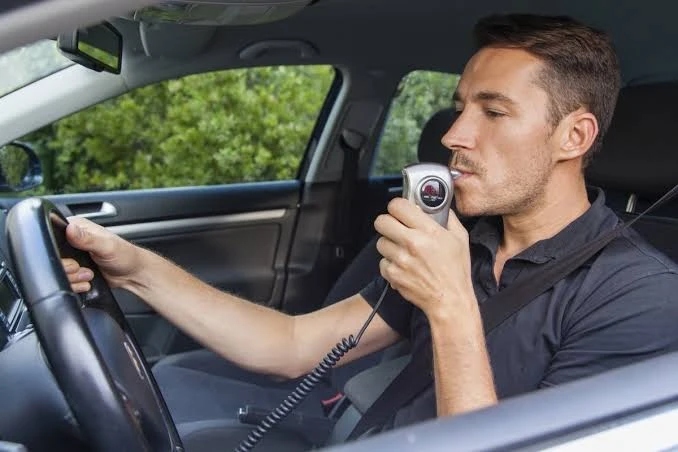
Below is a scenario for when you might find yourself needing an ignition interlock device installed in your vehicle and how that might work.
Ignition Interlock Devices are often viewed by many as another tool of punishment for the guilty, and for good reason- they do lock the ignition of a vehicle until the driver has completed a proper breath sample using the mouthpiece on the device. It is, however, also used to protect all other drivers on the road from the repeat offender. It is often surprising to many people how the requirement of an IID can be required by almost anyone.
The obvious cases: DUI convictions
In many states the installation of an IID is required by law for DUI and DWI offenders. For a first time offense the minimum requirement is six months; however, repeat offenders can expect to have to install an IID for longer periods of time. Some states even require the installation of an IID for up to a year or more for repeat offenders.
Even before a conviction has occurred for a DUI, an IID can be required to be installed by a driver who has had their license administratively suspended for a DUI arrest. This is often the case in states like California where an IID can be required to be installed prior to a conviction even occurring and the case resolved.
Surprise #1 – Before You’re Even Convicted of a DUI Offense You May Have To Install An Ignition Interlock Device (IID) As Part of Your Administrative License Suspension.
It’s a surprise to many that the administrative suspension of a driver’s license and the criminal process are two completely independent processes. In some cases, one process may be proceeding before the other process has even ended. During that time, the administrative process may require an IID to be installed as part of the suspension of the driver’s license prior to the final disposition of the criminal charges. The criminal process and the DMV’s administrative process are two separate and independent processes and it is not clear how one process proceeds before the other process is complete. In the meantime, a person’s license may be suspended and IID requirement imposed during that time before a person is even convicted of a DUI offense.
So what else can trigger a requirement?
Most people assume that if they have ever been arrested for or charged with driving under the influence (DUI) then they will be required to have an ignition interlock device (IID) installed in their vehicle if they are subsequently convicted of DUI. However, while this is true for the most part, there are a number of other situations in which a court may require an individual to have an IID installed in their vehicle. Typically, these situations involve situations in which an individual has been convicted of driving under the influence, but they can also include situations in which an individual has been involved in an accident and tested for blood alcohol content (BAC) while at the scene of the accident with a BAC of .08% or higher. As noted above, however, there are a number of situations in which a court would not require an individual to have an IID installed in their vehicle.
- Underage drinking and driving: Many states impose IID requirements on drivers under 21 caught with any measurable blood alcohol content, even below the standard legal limit.
- High BAC readings: Drivers whose blood alcohol concentration clears 0.15% or higher often face enhanced penalties, including substantially longer IID installation periods.
- Refusal to submit to chemical testing: In some states, refusing a breathalyzer or blood test at the scene can itself trigger an IID requirement, entirely separate from any DUI charge.
- Probation conditions: A judge can order an IID as part of a probation agreement, sometimes even in cases that aren’t strictly DUI-related, if alcohol played a role in the underlying offense.
- Restricted license programs: Drivers seeking to restore limited driving privileges during a suspension may voluntarily enroll in an IID program, not because they’re forced to, but because it’s the only viable path back to legal driving.
IID Laws by State
Most states have enacted laws requiring the use of an ignition interlock device as part of a suspension or revocation of a driver license after a DUI/DWI offense. Find IID laws by state below and review installation requirements and rules for each state.
There are many different situations in which a person may need to have an ignition interlock device installed in their vehicle. A person who has been convicted of a DUI may need an IID installed in their vehicle for a period of time. There are many different circumstances in which a DUI conviction can occur, for example, a person who has been convicted of a DUI for the first time may need to have an IID installed in their vehicle for a period of time, while a person who has been convicted of a DUI for the second time may need to have an IID installed in their vehicle for a longer period of time.
In some states, the installation of an IID is left up to the discretion of the judge, meaning that some DUI offenses may result in the installation of an IID, while other DUI offenses may not result in the installation of an IID. In addition to the circumstances in which a person who has been convicted of a DUI may need an IID installed in their vehicle, there are also many different circumstances in which a person who has not been convicted of a DUI may need an IID installed in their vehicle. A person who has been accused of driving under the influence and whose driver’s license has been administratively suspended may need to have an IID installed in their vehicle prior to a final determination being made with respect to the offense for which their license was accused. Additionally, a person who has been accused of driving under the influence and who has had their driver’s license previously administratively suspended for a prior DUI offense may need to have an IID installed in their vehicle prior to a final determination being made with respect to the offense for which their driver’s license has been suspended. As noted above, the circumstances in which a person may need to have an IID installed in their vehicle vary from state to state. Therefore, a person who believes that they may need to have an IID installed in their vehicle should contact the DMV in their state to find out whether or not
| Situation | IID likely required? | Typical duration |
| First-time DUI, standard BAC | Often yes (varies by state) | 6 months to 1 year |
| First-time DUI, high BAC (0.15%+) | Yes, in most states | 1 to 2 years |
| Second or subsequent DUI | Yes, nearly universally | 2 to 5+ years |
| DUI with minor in vehicle | Yes, often with enhanced penalties | Varies, often extended |
| Administrative suspension (pre-conviction) | Sometimes, for restricted license | Duration of suspension |
In addition to DUI convictions California has recently made the IID program mandatory in several pilot test areas throughout the state. These areas include Sacramento, Stockton, Santa Ana, Chula Vista and others. And as of 2019 the IID program is mandatory throughout the entire state of California. If you reside in the central valley of California for example, it would be in your best interest to work with a provider that is located near you as well as familiar with the specific court that you are required to report to in order to have your IID removed from your vehicle. For example, an ignition interlock device Modesto provider would be able to inform you of the specific requirements of the Modesto, CA area as well as be able to install your IID and service it as needed.
What the compliance period actually looks like
While the IID is installed on your vehicle as part of your sentence, there are a few things that you must comply with during the time that it is installed on your vehicle. First, each time you start your vehicle to drive, the IID will take a sample of your breath to determine whether you have been drinking. In addition to taking a sample of your breath when you start your vehicle, at random times after you start your vehicle to drive, the IID will demand a new sample of your breath. This is to insure that you have not been drinking after you started your drive. In addition to the samples that the IID takes while you are driving your vehicle, if you are pulled over by a police officer for any reason while the IID is installed on your vehicle, you will be required to provide a sample of your breath using the IID in order to prove that you have not been drinking.
- Blow into the device before every engine start
- Complete random “rolling retests” while driving (the device prompts you mid-trip)
- Bring the car in for periodic calibration and data downloads, usually every 30 to 60 days
- Avoid failed attempts, any tampering, or missed service appointments, all of which get flagged
Failed tests and/or violations reported by an IID are reported to the court or DMV and extend the requirements of the offender. Most IID violations are not the result of an offender having been drinking while operating a vehicle. Many violations are the result of the blowing of pure alcohol in the form of mouthwash, or from the consumption of fermented foods. Other violations are the result of simply forgetting to schedule a required calibration. The IID does not know the intent of the offender.
More Information on Interlock Requirements
Verify in writing IID requirements for a reduced charge DUI or dismissed DUI case with your attorney or DMV representative. The criminal process and DMV administrative process are two separate processes that do not communicate well and can cause very expensive problems for individuals that believe because of some action by the criminal process that the DMV process will be waived.
(Also, keep in mind that if you are a co-owner of a vehicle or vehicles then as a co-owner, you can be required to have an IID installed on all of the vehicles that you are required to drive as part of your sentence, regardless of whether or not the vehicle(s) are registered in your name. All of the vehicles that you are required to drive as part of your sentence will need to have an IID installed on them. If you are a co-owner of multiple vehicles, this could mean installation on several vehicles, not just one.)
The cost to install the IID and for following services are the driver’s responsibility to pay for. So if you need an IID for 6 months then that would be $7 x 6 = $420 for the 6 month monitoring period. Also, the IID will need to be calibrated every 30 days and that will cost approximately $67 per calibration. So all in all the IID’s will cost the driver $487 in just 6 months.
How much do IIDs cost? Determining how much IIDs will cost is largely dependent on the state where the DUI offense occurred and the terms of the offense. However, there are also the terms of the judge, and how these interact with the above elements can be confusing. A good lawyer can help you get a handle on the costs of IIDs for the offense of your DUI.